Poor influencer vetting is costing brands over $2 billion annually in fraud and wasted spend, according to recent industry reports. If you’re wondering how to vet influencers effectively to avoid these pitfalls, you’re not alone. Businesses seeking reliable partners for campaigns often struggle with fake followers, mismatched audiences, and low engagement that tanks ROI. This guide provides a comprehensive, step-by-step process to evaluate influencers for authenticity, fit, and performance—ideal for brands considering outsourcing to an agency. By the end, you’ll know how to select creators who drive real results and protect your reputation.
Table of Contents
- What Is Influencer Vetting and Why Does It Matter?
- Understanding Your Brand and Audience Before Vetting
- Step-by-Step Influencer Vetting Process
- Conduct a Social Media Audit
- Evaluate Engagement and Content Quality
- Assess Brand Fit and Values
- Common Mistakes to Avoid When Vetting Influencers
- Tools and Best Practices for Efficient Vetting
- Conclusion
What Is Influencer Vetting and Why Does It Matter?
Influencer vetting is the process of thoroughly evaluating potential creators before partnering on campaigns. It goes beyond surface-level stats to assess authenticity, audience quality, and alignment with your brand. In 2026, with the influencer marketing industry valued at around $24 billion globally, the stakes are higher than ever. Fake influencers—those inflating numbers with bots or purchased followers—continue to plague the space. Research indicates that up to 15% of followers are fake on average, and over 55% of Instagram engagement was fraudulent as recently as 2024.
Vanity metrics, like follower counts, can mislead. These often stem from abandoned accounts, hacked profiles, or engagement pods that simulate interest without genuine interaction. Real influencers build audiences around shared niches like fitness, tech, or lifestyle, ensuring sponsored content resonates. Bought followers, however, rarely engage, and algorithms on platforms like Instagram, TikTok, and YouTube prioritize authentic behavior—meaning your campaign might never reach intended viewers.
The consequences? Wasted resources and damaged trust. About 59.8% of brands reported experiencing influencer fraud in 2024, up sharply from prior years. Regulatory bodies are cracking down too. The FTC now enforces rules against fake social media indicators, with penalties up to $51,744 per violation. In the UAE, influencers must be licensed or work through agencies. Major brands like Unilever refuse to collaborate with those buying followers, prioritizing transparency.
Emerging trends in 2026, such as AI-generated influencers, add complexity. Vetting ensures compliance, brand safety, and measurable ROI. Without it, even solid campaigns fail due to inauthentic reach.
Understanding Your Brand and Audience Before Vetting
Before diving into how to vet influencers, clarify your own audience. Who are your customers? What demographics, interests, and behaviors define them? This foundation prevents mismatches that doom partnerships.
For instance, a fashion brand might target young urban professionals, while a health food company could appeal to fitness enthusiasts. Crossovers work—think a vegan snack brand partnering with a wellness influencer—but only if audiences overlap. Tools like audience analytics from platforms or software can map this out.
Avoid tunnel vision within your industry. Opportunities exist in adjacent niches, but always prioritize relevance. A misaligned influencer, no matter their clout, won’t convert. Start here to streamline your search and focus on creators whose followers mirror your ideal buyers.
Step-by-Step Influencer Vetting Process
Here’s a structured approach to vetting, blending manual checks with tools for efficiency. This ensures you spot fakes early and select partners who align perfectly.
Conduct a Social Media Audit
Begin with a profile review to gauge legitimacy. Key questions:
- Is the profile picture clear and matching the content? Fake accounts often use stock photos—run a reverse image search to verify.
- Does the bio include specific details, like niche focus, experience, or a collaboration email? Authentic bios sound human and personable, with links to landing pages.
- What’s the follower-to-following ratio? Aim for 3:1 or better (e.g., 5,000 followers to 1,000 followed). A 1:1 ratio signals bots.
Check audience size against your campaign needs—micro-influencers (10K-50K followers) often deliver higher engagement. Tools like HypeAuditor or Modash can automate this, detecting fake followers with over 95% accuracy.
Finally, scan the feed for cohesion. Quality edits, consistent aesthetics, and appropriate formats (videos vs. images) indicate professionalism.
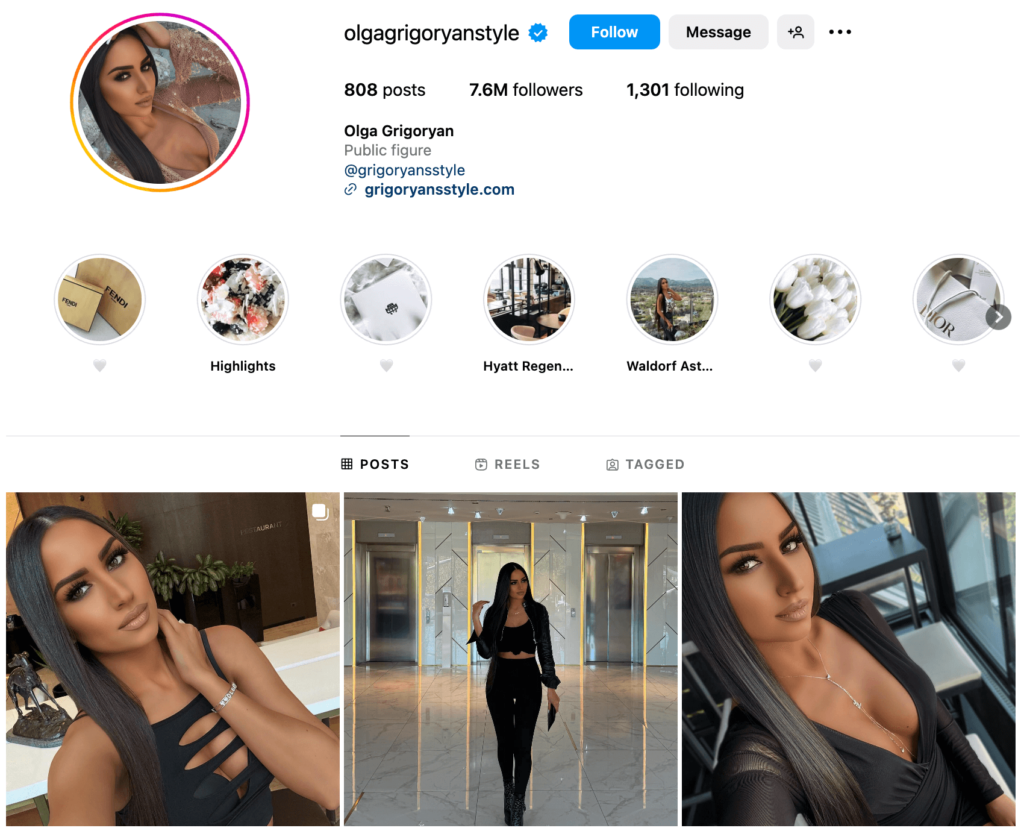
This screenshot shows an example of an authentic Instagram profile with a clear bio, professional photo, and relevant highlights.
Evaluate Engagement and Content Quality
Numbers alone deceive—dig into interactions. Calculate engagement rates (likes + comments + shares divided by followers). Benchmarks vary: under 0.5% for large accounts might indicate fakes, while 2-5% is ideal for midsize influencers.
Review comments: Are they genuine discussions or generic bots (e.g., “Nice!” with emojis)? Check if the influencer responds—this builds community and influence, not just reach.
Sponsored posts should show organic interest. If comments on a coffee promo discuss unrelated topics like beauty, there’s a disconnect. Prioritize engaged, niche audiences over massive, passive ones.
Assess Brand Fit and Values
Treat influencers like hires—they represent your brand. Ensure their values align: A vegan brand shouldn’t partner with someone posting meat photos.
Evaluate past partnerships for professionalism. Red flags include unprofessional behavior, scandals (Google them), or mismatched language—too salesy can erode authenticity, which followers crave like friend recommendations.
In 2026, compliance is key: Check for proper #ad disclosures to avoid FTC fines.
Common Mistakes to Avoid When Vetting Influencers
Even seasoned brands falter. Here’s what to watch for:
- Inconsistent processes: Define criteria upfront (e.g., minimum engagement, follower thresholds) to save time.
- Unrealistic expectations: No influencer is perfect—balance standards with availability.
- Over-relying on tools: They’re helpful but not foolproof; manual reviews catch nuances like content tone.
- Halting after selection: Monitor ongoing—track performance and adjust.
Avoiding these ensures campaigns succeed without surprises.
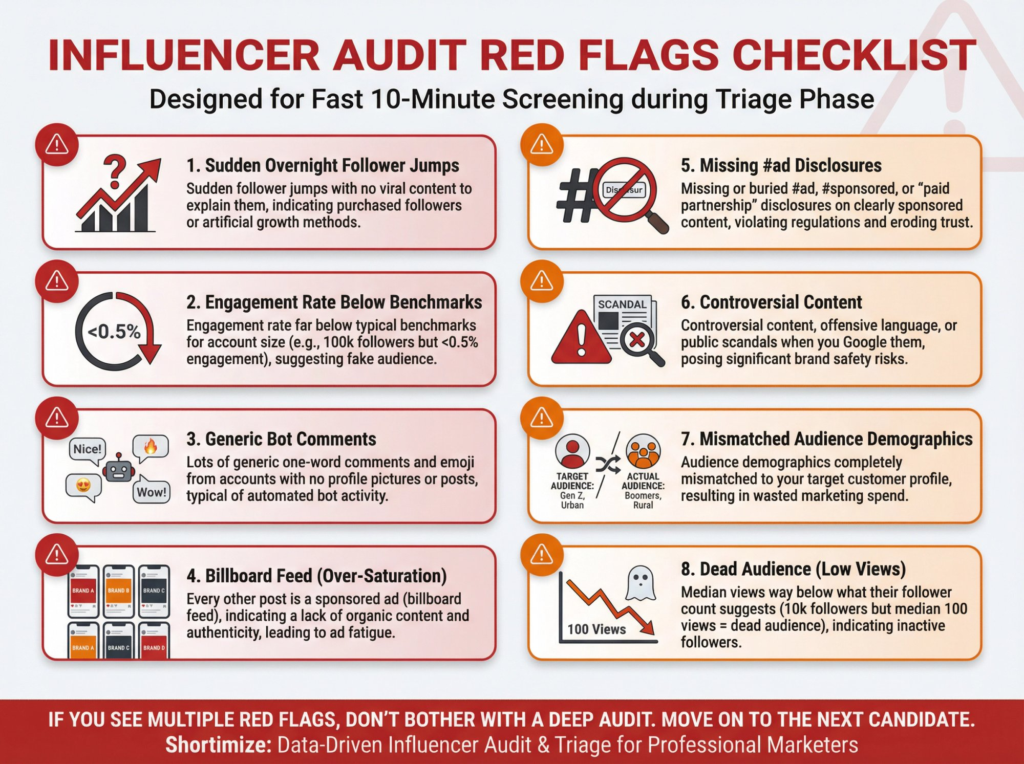
This checklist highlights key red flags to spot during audits, helping you quickly triage candidates.
Tools and Best Practices for Efficient Vetting
Streamline with software: Modash for audience authenticity, HypeAuditor for fraud detection, or Grin for partnership management. AI tools now predict campaign outcomes and flag mismatches.
For businesses, outsourcing to a top influencer marketing agency simplifies everything—from vetting to execution. Agencies like HireInfluence specialize in matching brands with vetted creators, leveraging expertise to boost ROI by up to 40% in our case studies.
Best practices include testing with small collaborations first and staying updated on trends like AI influencers.
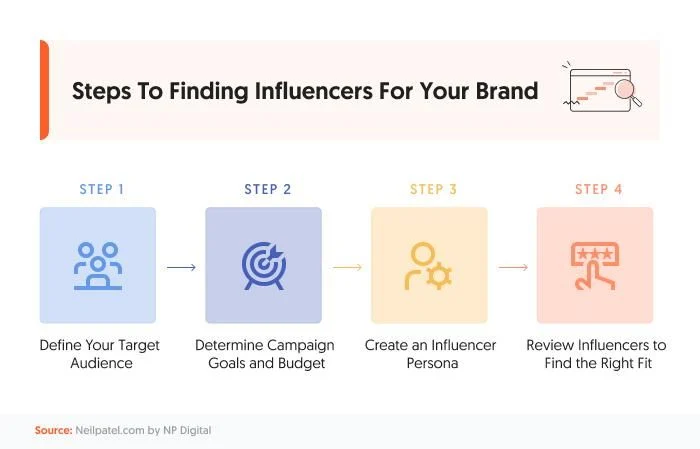
This infographic outlines steps to finding influencers, complementing your vetting process.
Conclusion
Vetting influencers involves understanding your audience, auditing profiles, evaluating engagement, assessing fit, and avoiding common pitfalls—backed by tools and ongoing monitoring. By following this guide, you’ll minimize risks like the $2 billion in annual fraud losses and maximize campaign success. Ready to outsource? Contact a professional agency for vetted, high-ROI campaigns. Explore related topics like 2026 influencer trends or measuring ROI for deeper insights.