
Influencer marketing delivers an average of 5x ROI for brands that manage it effectively, but orchestrating campaigns can be overwhelming without the right tools.
Table of Contents
- What Is Influencer Marketing Management?
- Key Steps in Influencer Marketing Management
- Outlining Campaign Goals
- Creating a Strategy
- Finding and Verifying Influencers
- Content Briefs and Execution
- Tracking and Optimization
- The Top 10 Influencer Marketing Management Platforms for 2026
- 1. Upfluence
- 2. Grin
- 3. Aspire
- 4. Brandwatch
- 5. Sprout Social
- 6. HypeAuditor
- 7. Modash
- 8. Collabstr
- 9. Influencity
- 10. Meltwater
- Alternatives to Influencer Marketing Management Platforms
- In-House Management
- Social Media Built-In Tools
- Partnering with an Influencer Marketing Agency
- Conclusion
If you’re searching for the best influencer marketing management platforms 2026 to streamline your efforts, this guide compares the top options based on current features, pricing, and user feedback. We’ll cover everything from discovery to analytics, plus alternatives like partnering with an agency for hands-off expertise. By the end, you’ll know how to choose the platform—or service—that maximizes your results and fits your business needs.
What Is Influencer Marketing Management?
Influencer marketing management encompasses the full lifecycle of campaigns, from initial planning to post-launch analysis. It’s essential for achieving high ROI, as poorly managed efforts can lead to mismatched partnerships or untracked performance. Key components include goal-setting, strategy development, influencer selection, content creation, execution, and measurement. Without proper management, brands risk wasting budgets on ineffective collaborations—studies show that 88% of consumers trust influencer recommendations as much as personal ones, but only when they feel authentic.
For businesses eyeing influencer campaigns, management ensures alignment with objectives like boosting sales or building brand authority. Platforms automate much of this, but for complex needs, external expertise can elevate outcomes.
Key Steps in Influencer Marketing Management
Outlining Campaign Goals
Start by defining clear, measurable objectives. For DTC brands, this might mean increasing e-commerce sales by 20%; for startups, it could involve establishing thought leadership in a niche. Align goals with broader business KPIs to ensure campaigns contribute to growth. Tools like performance dashboards help track progress against these targets.
Creating a Strategy
Develop a roadmap that matches your goals, including campaign type (e.g., affiliate-driven or UGC-focused) and platform selection (Instagram, TikTok, etc.). Experienced managers prioritize ROI alignment, incorporating trends like AI-powered matching for better results.
Finding and Verifying Influencers
This step involves searching databases for creators whose audiences match your demographics, then verifying engagement rates and authenticity to avoid fraud. Advanced filters for location, niche, and metrics streamline this; platforms with AI fraud detection, like those achieving 98% accuracy, are invaluable.
Content Briefs and Execution
Craft detailed briefs outlining content requirements, timelines, and deliverables. Execution launches the campaign, which could be a one-off post or multi-month rollout. Automation for contracts and payments reduces friction.
Tracking and Optimization
Monitor metrics like reach, engagement, and conversions in real-time. Adjust ongoing elements as needed and analyze post-campaign data to refine future efforts. Comprehensive analytics ensure continuous improvement.
| Step | Key Tools/Features | Recommended Platforms |
|---|---|---|
| Outlining Goals | KPI dashboards, ROI calculators | Upfluence, Grin |
| Creating Strategy | Campaign templates, AI insights | Brandwatch, Aspire |
| Finding Influencers | Database search, fraud detection | HypeAuditor, Modash |
| Content Briefs & Execution | Collaboration hubs, automated workflows | Collabstr, Sprout Social |
| Tracking | Real-time analytics, reporting | Influencity, Meltwater |
The Top 10 Influencer Marketing Management Platforms for 2026
Based on recent reviews and benchmarks, these platforms stand out for their features, scalability, and integration capabilities. We’ve prioritized those with strong AI enhancements and e-commerce ties, reflecting 2026 trends.
1. Upfluence
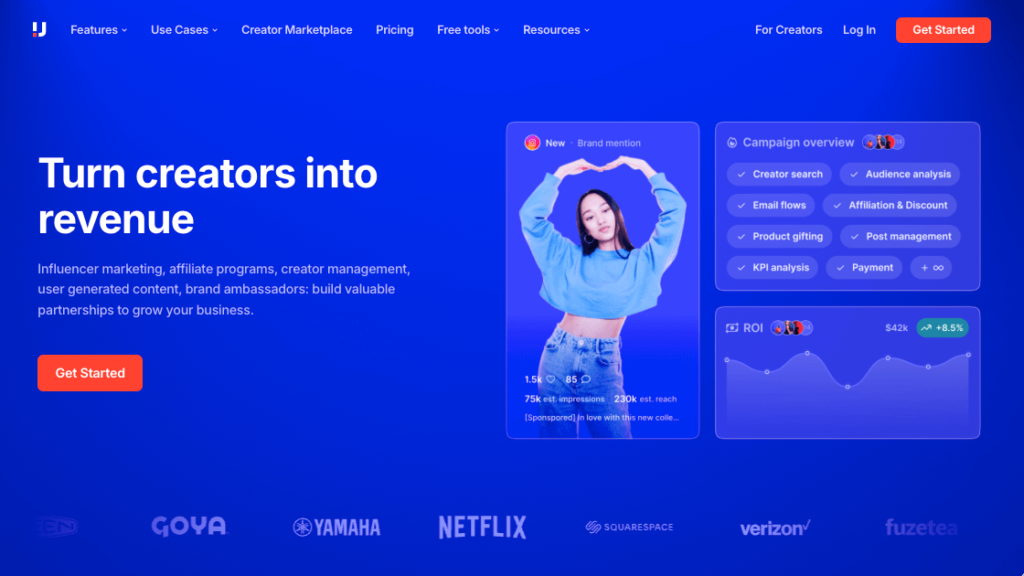
Upfluence remains a leader with its massive 12 million+ creator database and AI-driven tools for discovery and affiliate management.
Ideal for mid-sized brands scaling campaigns, it offers real-time analytics and e-commerce integrations like Shopify for tracking ROI. Pricing starts at custom tiers, often $500+/month for full access.
Unique Features:
- Advanced search with audience demographics and engagement filters
- Built-in CRM for partnership tracking
- AI workflow automation for outreach and contracts
Pros: High ROI focus; cons: Steeper learning curve for beginners.
2. Grin
Grin excels in DTC and e-commerce, emphasizing long-term creator relationships with tools for content management and sales tracking. Its automated workflows handle contracts and payments efficiently, making it a top choice for revenue-focused campaigns.
Key Features:
- Influencer discovery with niche-specific filters
- E-commerce sync for conversion attribution
- Performance dashboards with ROI metrics
Pricing: From $999/month. Best for high-growth brands seeking measurable results.
3. Aspire
Aspire is enterprise-grade for compliance and long-term partnerships, with strong reporting and creator recruitment. It integrates well with social platforms and offers data-driven insights for optimizing budgets.
Overview:
- Database of millions for targeted discovery
- Automated deliverables management
- Granular analytics for campaign ROI
Pricing: Custom, starting around $800/month. Suited for large teams.
4. Brandwatch
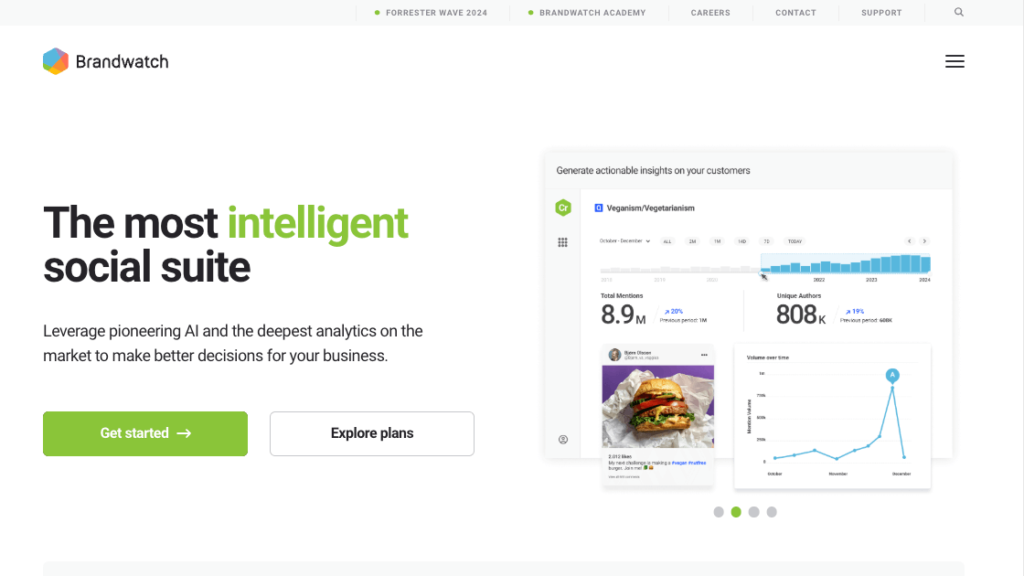
Brandwatch combines influencer tools with social listening, using AI for trend prediction and sentiment analysis.
It’s perfect for proactive brands monitoring conversations to find aligned creators.
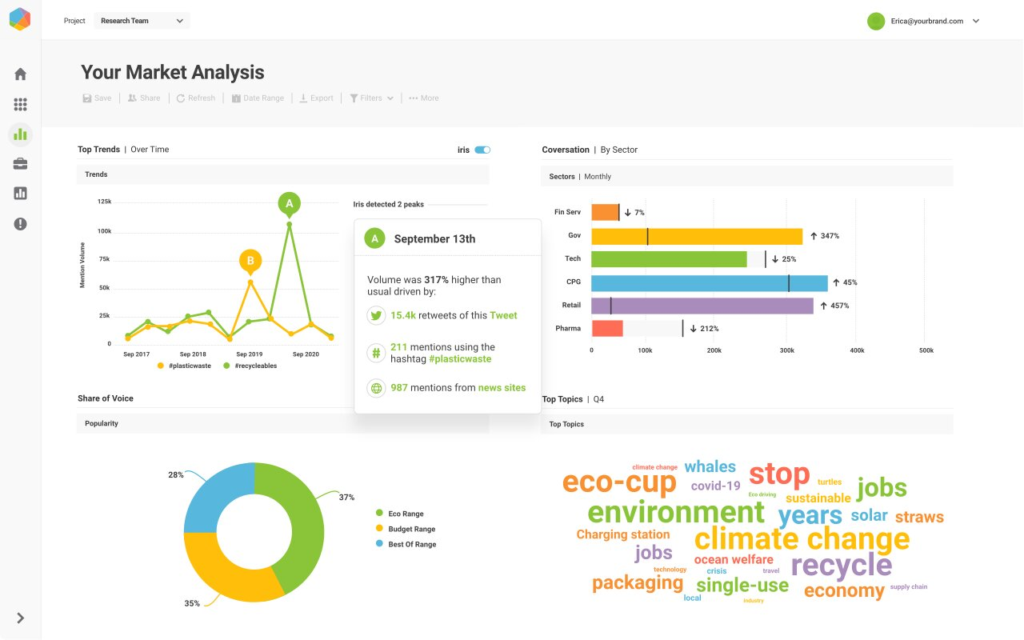
Key Features:
- AI-powered insights and competitive benchmarking
- Custom dashboards for KPIs
- Integration with publishing tools
Pricing: Enterprise-level, $1,000+/month. Strong for data-depth needs.
5. Sprout Social
Sprout Social unifies social management with influencer features, offering user-friendly analytics and collaboration. It’s highly rated for ease of use across platforms like Instagram and TikTok.
Key Features:
- Centralized inbox for communications
- Advanced reporting and social listening
- Scalable plans for various budgets
Pricing: From $249/month. Ideal for startups to mid-tier businesses.
6. HypeAuditor
HypeAuditor specializes in authenticity, with AI fraud detection at 98.3% accuracy. It’s essential for verifying audiences and predicting performance.
Key Features:
- Lookalike audience matching
- Detailed audience demographics
- Campaign forecasting tools
Pricing: $99–$999+/month. Best for risk-averse brands.
7. Modash
Modash is budget-friendly for DTC brands, focusing on Instagram and TikTok discovery with solid analytics. It’s praised for affordability without sacrificing core features.
Key Features:
- Engagement rate filters
- Audience insights
- Basic campaign management
Pricing: Cheaper tiers, starting under $200/month. Great for small businesses.
8. Collabstr
Collabstr tops for ROI emphasis, with an open marketplace of 350,000+ creators and end-to-end management including payments and reporting.
Key Features:
- Performance tracking across content types
- Tax compliance automation
- Team collaboration tools
Pricing: Up to $399/month. Versatile for UGC and affiliates.
9. Influencity
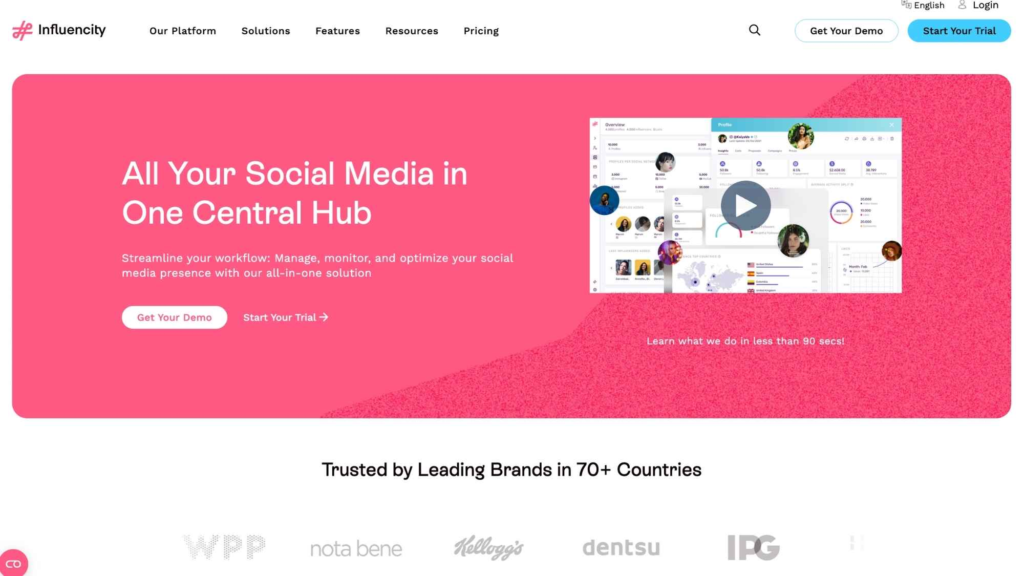
Influencity offers a centralized hub for research and reporting, with strong analytics for vetting and measuring success.
Key Features:
- Millions in database with advanced filters
- Social listening integration
- Workflow efficiency tools
Pricing: Custom. Good for comprehensive coverage.
10. Meltwater
Meltwater blends business intelligence with influencer tools, including PR outreach and competitor analysis. It’s robust for large organizations.
Key Features:
- Real-time media monitoring
- Custom alerts and reports
- API integrations
Pricing: High-end, $800+/month. For data-driven strategies.
| Platform | Best For | Starting Price | Key Integration | ROI Focus |
|---|---|---|---|---|
| Upfluence | E-commerce scaling | $500+/mo | Shopify | High |
| Grin | DTC revenue | $999/mo | E-commerce | Very High |
| Aspire | Enterprise compliance | $800/mo | Social platforms | High |
| Brandwatch | Social listening | $1,000+/mo | Analytics tools | Medium-High |
| Sprout Social | Ease of use | $249/mo | Major social | Medium |
| HypeAuditor | Authenticity | $99/mo | Forecasting | High |
| Modash | Budget-friendly | <$200/mo | Instagram/TikTok | Medium |
| Collabstr | Marketplace access | $399/mo | Payments | Very High |
| Influencity | Research hub | Custom | Listening | High |
| Meltwater | Business intel | $800+/mo | PR tools | Medium-High |
Alternatives to Influencer Marketing Management Platforms
While platforms are powerful, they may not suit every budget or need—costs can reach thousands monthly, and some offer more features than required.
In-House Management
Handle everything internally for full control and direct influencer ties. Pros: Customization; cons: Time-intensive discovery and negotiations. Best for niche brands with existing expertise.
Social Media Built-In Tools
Use free options like TikTok Creator Marketplace or YouTube BrandConnect for basic discovery. They’re cost-effective starters but lack advanced analytics.
Partnering with an Influencer Marketing Agency
For optimal results, consider a top influencer marketing agency like HireInfluence. Agencies provide end-to-end services, including strategy, execution, and proprietary analytics, often yielding higher ROI through years of experience. Unlike platforms, they handle creativity and relationships, making them ideal for businesses seeking expert guidance without the hassle.
Conclusion
The best influencer marketing management platforms 2026—like Upfluence and Grin—offer robust tools for discovery, management, and measurement, helping businesses achieve strong ROI. However, for hands-off, expert-driven campaigns, partnering with an agency often delivers superior results. Take the next step: Assess your needs and contact a professional service for a consultation. Explore related topics like “Measuring Influencer ROI” or “2026 Influencer Trends” for deeper insights.