Retail marketing teams evaluating a social media influencer agency face a specific set of capability requirements that have been documented clearly in the National Retail Federation’s 10 Trends and Predictions for Retail in 2026 report. The NRF findings surface the dynamics that now shape what a social media influencer agency has to deliver for retail enterprise brands. Retailers are navigating rapid technological shifts led by artificial intelligence, economic volatility, regulatory complexities, and critical workforce issues. Gen Z and Gen Alpha behaviors are creating conditions where traditional retail playbooks do not apply: both cohorts expect integrated omnichannel experiences, demand retailers prove inclusivity and authenticity, and punish brand missteps quickly. Immersive, in-person experiences capture attention. Celebrity and influencer partnerships also capture attention, but these come with significant price tags, and, per NRF, brands that get partnerships wrong will be punished by audiences.
Table of Contents
- Why NRF’s 2026 Retail Data Reshapes the Social Media Influencer Agency Decision
- What Enterprise Retail Brands Should Expect From a Social Media Influencer Agency
- What Enterprise Retail Social Media Influencer Delivery Produces
- How Enterprise Retail Brands Should Evaluate a Social Media Influencer Agency
- The Social Media Influencer Agency Model for Retail Brands
For retail marketing teams, those NRF findings establish a specific capability profile a social media influencer agency has to deliver. Creator program decisions are now high-consequence for retail brands. Selecting the wrong creator, directing content that feels inauthentic, or launching a partnership that does not fit the retail brand’s actual positioning produces measurable audience backlash that retailers cannot afford in an attention economy where shopper patience is low. The agency that serves retail enterprise clients has to combine creator selection sophistication, authentic content direction, multi-channel distribution capability, and attribution infrastructure that connects social media activity to in-store and e-commerce outcomes. This guide breaks down what enterprise retail brands should expect from a social media influencer agency in 2026, how NRF’s 2026 trend data reshapes the capability requirements, and what separates a partner built for retail-specific creator marketing from a generalist offering.
Why NRF’s 2026 Retail Data Reshapes the Social Media Influencer Agency Decision
NRF’s documentation of Gen Z and Gen Alpha consumer dynamics changes the structural logic of retail social media influencer marketing. When audiences demand both inclusivity and authenticity, and when missteps get punished quickly, the agency’s creator vetting capability becomes a material risk factor for the retail brand. A partner that sources creators based on follower count and engagement rate metrics without the deeper vetting of creator audience alignment, values match, and community context exposes the retail brand to the kind of partnership failures NRF’s data identifies as consequential in the current environment.
NRF also documented that shopping mall traffic has been shifting upward for most of 2025, with indoor malls seeing a 1.8% increase in visits and visit durations rising 3.3% year over year. That data point matters for social media influencer programs because it reinforces how creator content now drives both digital discovery and physical retail traffic. The retail brand running a creator program that generates awareness but fails to connect to in-store visit conversion is leaving measurable value unexecuted. Social media influencer agencies serving retail enterprise clients have to be capable of structuring programs that support both e-commerce conversion and physical retail traffic, which requires geo-targeting capability, store locator integration, in-store experiential activation, and attribution infrastructure that can connect creator content exposure to physical store visits.
NRF’s emphasis on unified commerce (the full integration of systems and customer touchpoints so consumers do not see boundaries between physical and digital retail) further shapes the creator marketing requirements. Creator content should flow across social media organic distribution, paid amplification, retail media network placement, connected TV inventory, email, SMS, and physical store screens without separate production cycles. That is a multi-channel content operating model that requires rights structure, production discipline, and distribution infrastructure most traditional agency models are not built to deliver.
The NRF finding on influencer partnerships specifically reinforces the stakes. Celebrity and influencer partnerships capture attention when they work and get punished when they do not. The retail brand’s social media influencer agency has to protect against partnership failures through rigorous creator vetting, authentic content direction, values alignment assessment, and brand safety infrastructure. An agency without those capabilities functions less as a strategic partner and more as a risk multiplier for the retail brand.
What Enterprise Retail Brands Should Expect From a Social Media Influencer Agency
A credible social media influencer agency for retail brands operates across eight coordinated service functions calibrated specifically to retail category dynamics and the NRF trend profile.
Retail social media influencer strategy and attribution design. The engagement begins with business objectives tied to retail outcomes (e-commerce conversion, in-store traffic, retail partner co-marketing, loyalty engagement, basket size) and a measurement framework that connects creator activity to those outcomes across both digital and physical channels. HireInfluence structures retail social media influencer strategy through dedicated campaign services built for enterprise retail engagements.
Rigorous creator sourcing and vetting. NRF’s data on partnership missteps getting punished makes vetting central. The agency has to source creators based on audience authenticity, values alignment with the retail brand, category fit, community context, and brand safety signals beyond standard engagement metrics. Tier-matched sourcing from nano through celebrity requires vetting infrastructure that protects against the partnership failures the data identifies as consequential.
Creative direction calibrated to authenticity and inclusivity. NRF’s data on Gen Z and Gen Alpha demanding both values means creative direction has to support authentic creator voice while ensuring content fits the retail brand’s actual positioning and values. A retail creator program that feels inauthentic or fails on inclusivity triggers the backlash NRF documented as consequential.
Contracting and rights management calibrated to unified commerce distribution. Rights structure has to cover the full unified commerce environment NRF described: social media organic and paid, retail media networks, connected TV, email, SMS, retailer digital channels, in-store screens, and owned channels. Multi-channel rights negotiated at the contract phase enable creator content to flow across the full retail distribution footprint.
Long-term creator partnership infrastructure. Sustained creator relationships protect against the partnership failure risk NRF’s data surfaces. Ambassador programs, multi-year partnerships, and always-on content programs build the creator understanding of brand values and positioning that reduces misstep risk over time.
Paid media amplification with retail media integration. Creator content performs best when organic distribution is paired with paid amplification across retail media networks. HireInfluence delivers this through its specialties and services capability, including whitelisting, dark posting, cross-platform paid amplification, and retail media network coordination for retail brands whose creator programs need to connect to measurable retail commerce outcomes.
Commerce-connected attribution infrastructure. UTM frameworks, promo code systems, pixel tracking, conversion event integration, platform commerce measurement (TikTok Shop, Instagram Shopping, YouTube Shopping), in-store traffic attribution, retail partner tracking, and retail media network measurement. HireInfluence’s analytics capability is designed to give enterprise retail clients the attribution depth required across both e-commerce and physical retail environments.
Brand safety infrastructure. NRF’s data on partnership missteps makes brand safety a core capability. Automated content scanning, customizable safety parameters, creator vetting protocols, ongoing relationship monitoring, and rapid response infrastructure for emerging issues. An agency without brand safety infrastructure is operating outside the standard the current retail environment requires.
What Enterprise Retail Social Media Influencer Delivery Produces
Retail enterprise brands evaluating a social media influencer agency should look at programs that demonstrate what enterprise-scale retail creator marketing produces.
The Ricola #CoatYourThroat program is a reference benchmark for retail-connected creator marketing. The campaign drove 26 million impressions, 20.5 million reach, a 13.17% engagement rate across 18 creators spanning micro to celebrity tier, and 62,500 MikMak retail purchase clicks. The MikMak integration is the specific capability that demonstrates creator content connected directly to trackable retail purchase activity. The Ricola case study documents how creator tier selection, content strategy, and retail attribution came together.
The Grammarly engagement demonstrates multi-platform scale. The program activated 133 creators across YouTube, TikTok, and Instagram, producing 214 million impressions, 33.1 million views, and $15 million in earned media value. For retail brands running multi-platform social media influencer programs, the Grammarly scale numbers establish what enterprise delivery produces when creator sourcing, production direction, and amplification are coordinated as a single system.
HireInfluence’s engagement with retail brands including Walmart, Target, and Coca-Cola demonstrates retail category depth. The imPress Nails campaign at New York Fashion Week shows how creator marketing adapts to retail-adjacent brand moments, with luxury-aligned creator selection and direct-to-website CTAs structured to convert attention into purchase activity. The work portfolio documents additional retail-relevant case examples.
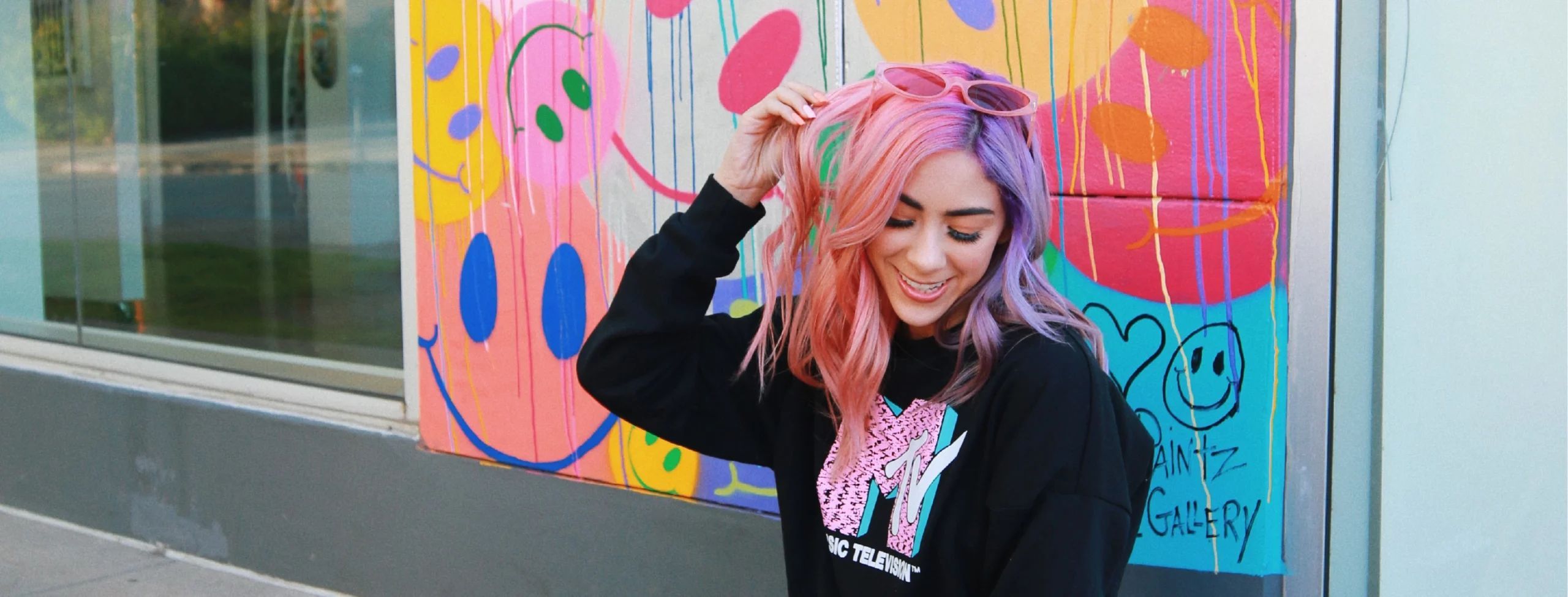
The MTV #MyMTVStyle TikTok campaign generated 16.1 million impressions at $0.01 CPV and $1.50 CPM with 216,600 engagements. Those efficiency numbers are what retail enterprise finance teams benchmark when comparing social media influencer spend against other paid media channels.
How Enterprise Retail Brands Should Evaluate a Social Media Influencer Agency
Five evaluation questions separate credible retail social media influencer partners from generalist agency offerings.
First, ask about creator vetting methodology in specific detail. NRF’s data on partnership missteps getting punished makes this consequential. The agency should describe audience authenticity analysis, values alignment assessment, category fit screening, community context vetting, and brand safety signal evaluation. Generic “we vet creators” answers do not meet the current retail enterprise standard.
Second, ask about unified commerce content lifecycle management. NRF’s unified commerce framing means creator content should flow across social, retail media, CTV, email, SMS, retailer digital channels, in-store screens, and owned channels. The agency should describe how rights structure and production discipline enable that flow without separate production cycles for each channel.
Third, ask about attribution methodology across digital and physical retail. UTM infrastructure, promo code systems, pixel tracking, retail media network measurement, retail partner tracking, and in-store traffic attribution. A retail creator program that cannot connect to outcomes across both channel types is not serving current enterprise requirements.
Fourth, ask about retail category experience specifically. Fashion, beauty, home, grocery, electronics, specialty retail, and mass retail all have distinct audience dynamics and commerce behaviors. The agency should demonstrate direct experience in the specific retail categories where the brand operates.
Fifth, ask about retail calendar coordination. Retail operates on specific promotional windows (back-to-school, holiday, summer, spring reset) that shape creator activity timing. An agency without retail calendar expertise will miss timing dependencies that are central to retail program effectiveness.
The Social Media Influencer Agency Model for Retail Brands
HireInfluence runs enterprise social media influencer programs for retail and retail-adjacent brands across multiple categories. The agency was founded in 2011 and maintains offices in Houston and The Woodlands, TX; Austin, TX; Los Angeles, CA; and New York, NY. That national footprint, combined with retail category depth built across more than a decade, positions the agency to deliver creator programs calibrated to retail commerce requirements and the trend profile NRF documented.
Engagements typically start at approximately $100,000, aligned with the enterprise delivery standard. Confirmed clients include Microsoft, Southwest Airlines, Target, Coca-Cola, Walmart, Meta, McDonald’s, Oreo, Grammarly, Ricola, and MTV, multiple of which are direct retail engagements or retail-adjacent programs. Award recognition across 2024 and 2026 includes the MUSE Creative Awards, Netty Awards, NYX Awards, Global Digital Excellence Awards, U.S. Agency Awards, and Vega Digital Awards. The agency is also an exclusive TikTok Shop Lite Program partner since July 2024, providing direct access to TikTok’s commerce infrastructure for retail social media influencer programs.
Jason Pampell, Founder and CEO, launched HireInfluence in 2011 after managing content rights and strategic media partnerships for Forbes and Billboard. His 30+ years of leadership experience in sales, marketing, and team building for Fortune 1000 organizations informs how the agency structures retail social media influencer engagements. His approach to building the agency shaped how enterprise programs get delivered for retail clients today.
For enterprise retail brands ready to evaluate what a social media influencer engagement calibrated to the current retail environment should include, the HireInfluence team handles initial conversations directly. Brands benchmarking pricing should reference the cost of influencer marketing guide for context on enterprise engagement costs. Those evaluating TikTok-focused strategies should review the TikTok influencer marketing resource, and brands integrating creator content with broader UGC strategy should review the UGC overview.
NRF’s 2026 retail trend data makes the operating environment direct. Consumers demand authenticity and inclusivity, partnerships get punished when they miss, unified commerce integration is baseline, and creator content has to support both digital and physical retail outcomes. The social media influencer agency decision for retail enterprise brands is the decision about which partner has built the capability profile the trend data describes. The brands winning in the current retail environment are working with partners calibrated to current consumer and channel dynamics, not those still operating on reach-focused creator marketing models from an earlier moment in the discipline.