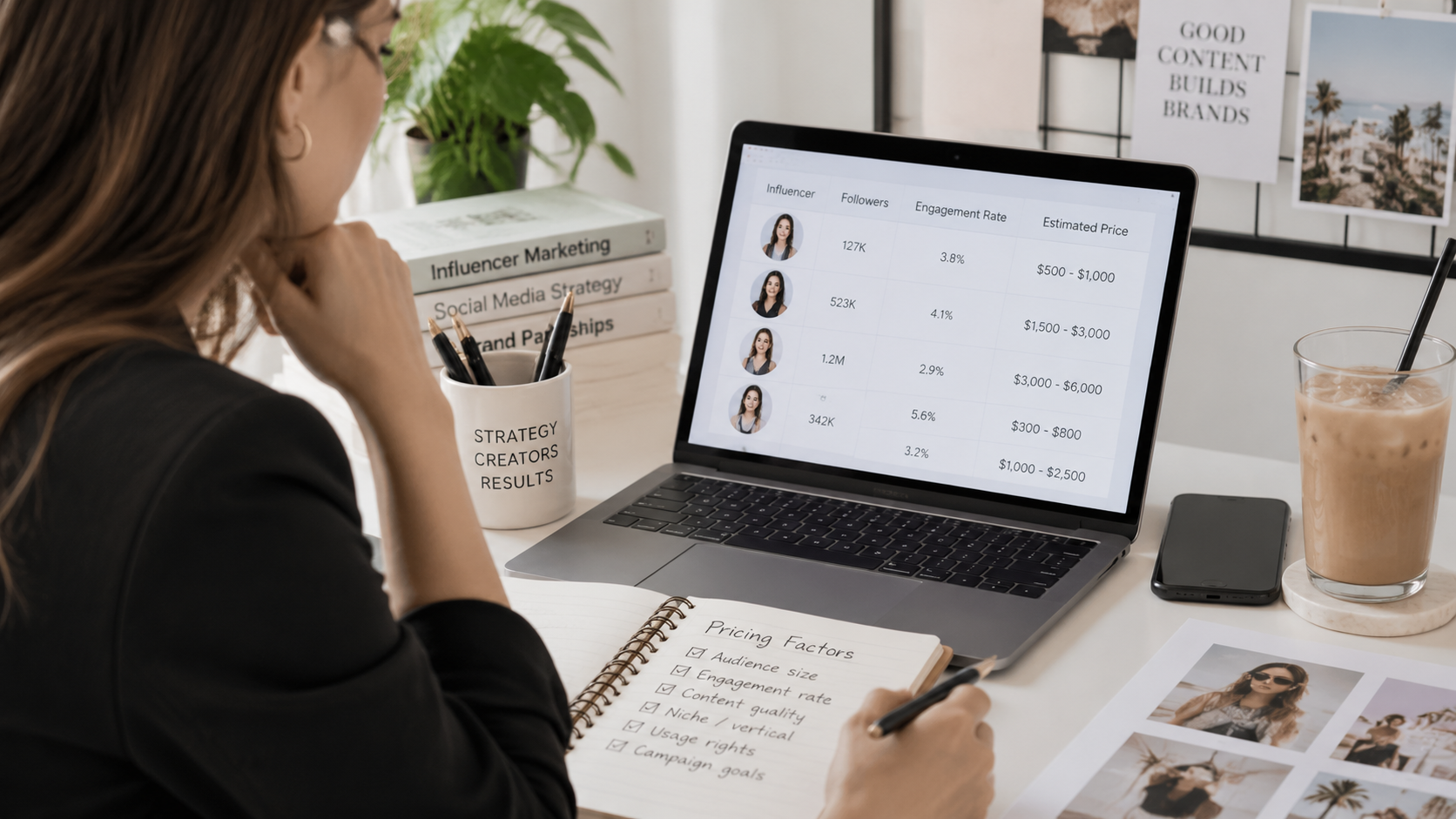
Decide which owned surfaces will carry creator content before contracting, because integration fails on rights rather than on planning. A creator paid to publish a post has granted that post existing on their channel. Putting it on a product page, in email, or into paid media is a separate grant with a separate price. Most guidance treats this as a calendar exercise: map creator activity against content pillars, sequence it…
They do different jobs and the difference is ownership. A content marketing agency produces assets the brand owns outright for channels the brand controls. An influencer agency licenses assets made by people it does not employ, published on channels it does not control. Most brands need both, and the overlap is repurposing. Brands comparing a best content marketing agency shortlist against an influencer shortlist usually frame it as a budget…
There is no standard definition, which is the problem. Sourcing, briefing, scheduling, and reporting are almost always included. Contracting, rights negotiation, disclosure verification, platform authorisation, and paid amplification vary enormously between agencies quoting the same phrase, and those are the expensive ones. Two agencies can both offer influencer campaign management and be describing scopes that differ by half the work. The phrase has no governing definition and no industry convention…
Creator videos are linked to a Google Ads account and then promoted as ads through campaigns, running from the creator’s own channel. The critical point is that linking a video conveys promotion capability, not usage rights. Google states plainly that the advertiser is responsible for securing sufficient rights, which may require a separate agreement with the creator. Brands evaluating a youtube paid media agency for creator work are usually looking…
Brands and creators who can’t add a paid partnership label on Instagram are facing a different problem from a tag that got rejected: here the option itself is missing. The creator opens the advanced settings expecting to find the branded content control and it is not there. This is almost always an eligibility condition rather than a bug, and the causes are specific and fixable, an account that is not…
Brands and creators who see a branded content tag rejected on Instagram usually experience it the same way: the paid partnership label was applied, and then it vanished or the brand’s name never attached. That is not a glitch, and it is not random. Instagram’s branded content tag is a two-sided handshake, so a tag is “rejected” for one of a small set of concrete reasons, the brand declined the…
Brands searching for Instagram branded content tools are usually looking for the setup steps, and the more valuable thing to understand first is what the tools are as a set: Meta’s built-in suite for creator-brand collaborations, comprising the branded content tags and paid partnership label, partnership ads, and the partnership approval workflows that connect them. They are not a single button. They are a system that takes a creator-brand relationship…
Brands hearing about Instagram trial reels in a creator context are usually wondering what they are and whether they matter for a brand program, and the answer is that they are a testing feature with a genuine strategic use. A trial reel is a Reel a creator publishes initially only to people who do not follow them, so its performance can be judged against a cold audience before it is…
Brands researching a Meta brand lift study want to know what it measures and whether their campaign qualifies, and the short version is that it is a controlled experiment inside Meta Ads Manager that measures the incremental effect of ads on brand perception across Facebook and Instagram. It works by splitting the target audience into an exposed group and a held-out control group, surveying both, and attributing the difference in…
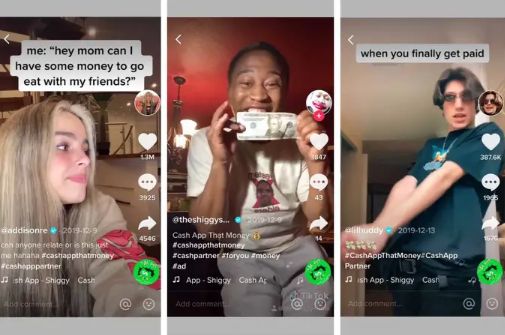
Brands searching what paid partnership means on TikTok often assume it is a marketing term, and on TikTok it is a specific, enforced disclosure with real consequences. Paid partnership is TikTok’s official label for content a creator was compensated to make, in cash or in kind, which includes free product, and the creator applies it through TikTok’s content disclosure setting before publishing. The label tags the brand and tells viewers…
Brands encountering TikTok One for the first time often meet it as the place their old TikTok Creator Marketplace login now points, and that redirect is the clearest way to understand what it is. TikTok One is TikTok’s unified hub for marketers, announced in 2024 as a single login that consolidates the tools brands used to reach through separate doors: creator discovery, creative production, campaign briefing, and performance reporting, all…
Brands running into TikTok Symphony usually meet it as one of the AI tools bundled inside TikTok One, and the plain description is that Symphony is TikTok’s suite of AI-powered creative tools for producing, adapting, and scaling advertising content on the platform. It sits inside the unified marketer hub alongside creator discovery and reporting, and it exists to help brands generate and iterate creative faster than a traditional production cycle…
Brands and creators looking up the branded content toggle on TikTok want to know what the switch does, and the mechanical answer is short: it is the in-app setting a creator turns on to disclose that a post is a paid partnership, which labels the content for the audience and makes the partnership official to the platform. The setting is small and the consequences of skipping it are not, because…
Brands and creators searching how to add a brand partner on a TikTok post are usually trying to do one specific thing: formally tag the paying brand as a partner on a piece of content, so the partnership is disclosed and, where relevant, so the post can be used in the brand’s paid workflows. On TikTok this is done through the same Ad settings and branded-content controls that handle disclosure,…
Brands researching Instagram Creator Marketplace should know two things before they build a plan around it: what it does today, and that Meta has announced it is changing. As it stands, Instagram Creator Marketplace is Meta’s built-in platform for connecting brands with creators for paid partnerships and branded content, launched in 2022, where brands discover creators through search and AI recommendations and reach them through a dedicated partnership inbox. What…
Brands researching TikTok Branded Mission often expect another ad unit, and it is closer to a crowdsourcing engine with paid amplification attached. Branded Mission sources videos from the creator community and turns the top-performing ones into ads: a brand publishes a brief, eligible creators submit videos, the brand selects the best, and those videos run as guaranteed ad impressions in the For You feed while the selected creators get paid….
Brands evaluating TikTok Promote usually meet it as the simplest way to advertise on the platform, and the simplicity is both the feature and the boundary. Promote is an in-app tool that turns an existing video or LIVE into an ad in a few taps, without opening TikTok Ads Manager. A brand picks a post, chooses a goal, sets a budget and duration, pays, and the promotion runs. That is…
Brands looking into a branded effect on TikTok usually picture a logo filter, and the format is both more capable and more demanding than that picture suggests. A branded effect is a custom augmented-reality asset, a filter, lens, sticker, or interactive overlay, that a brand commissions so users can apply it to their own videos, putting the brand into the content people are already making rather than interrupting it. Brands…
Brands searching for what TikTok Spark Ads cost want a number, and the most useful thing to say first is that the platform does not publish one and neither should anyone else. Spark Ads is a format, not a price. What a brand actually pays is the sum of three things: media bought through TikTok’s live auction, the fee paid to the creator whose content runs, and the cost of…
Brands weighing TikTok Spark Ads vs boosting usually frame it as a budget question, and the framing hides the only distinction that matters. Boosting, which TikTok delivers through its in-app Promote tool, amplifies a post the brand already owns. Spark Ads runs an organic post as a formal ad inside TikTok Ads Manager, and it can run a post that belongs to someone else. One tool extends the brand’s own…
Enterprise brands evaluating an instagram paid media agency are responding to a structural shift in where purchases now start. NielsenIQ’s 2026 global report, The Commerce Revolution: Where East Meets West, finds that social commerce in the United States is growing 62.9% and now outpaces traditional online retail growth, while nearly one third of consumers in Western markets purchase products they first discovered on social platforms. An instagram paid media agency…
Most enterprise brands treat live commerce as a broadcast problem, which is why a live shopping agency spends the first month of a new program arguing about inventory rather than production. The assumption is that a livestream is a television segment with a checkout button bolted on, and that the work is making the segment compelling enough to convert. The platform data points the other direction. Brands and creators hosted…
The instinct that a bigger production budget makes a better ad runs deep, and on paid social it is mostly wrong. A ugc advertising agency builds around a finding that still surprises marketing teams: the phone-shot, creator-made video that makes a creative director wince routinely outperforms the polished studio spot it sits next to in the feed. The platform data is direct about it. One major platform’s own case studies…
Brands often assume the way to keep influencer marketing fresh is to keep changing the creators, cycling through new faces every campaign for new audiences. A brand ambassador marketing agency starts from the opposite premise: that a small, committed core of aligned creators, activated over time, builds something a rotating cast never can. The data on long-term partnerships is striking. One 2025 analysis of ambassador programs found that a decade-long…
Standing up a creator affiliate marketing agency program for a subscription brand is usually framed as paying creators a commission for every sign-up they drive, when the economics of subscriptions argue for a very different design. Recent subscription research spanning more than 20,000 direct-to-consumer brands found that subscribers place nearly 3x more orders than one-time shoppers, that those brands now power well over 100 million active subscriptions, and that the…
Bringing on a travel influencer marketing agency is often treated as a way to buy wanderlust, on the assumption that creators sit at the top of the funnel and the booking happens somewhere else. The research points to a more direct role. A major traveler study drawing on more than 11,000 consumers across 11 markets found that 73% of travelers say an influencer recommendation has influenced a decision to book…
Selecting an esports influencer marketing agency is often reduced to a single question of which streamer has the largest audience, when the market data argues for a more careful read. The global games industry generated roughly $188.8 billion in 2025, a 3.4% year-on-year rise, with about 3.6 billion players worldwide and China and the United States together accounting for close to half of all consumer spending. That audience is split…
Brands deciding how to choose an influencer marketing agency usually weigh reputation and roster, and a survey of 84 client-side advertisers who lead influencer marketing suggests the decision that actually matters is transparency. Only 51% of those marketers had full visibility into the exact payments reaching their influencers, 61% were paying their agencies through compensation models that were non-transparent or outright unknown to them, and across the market roughly 30%…
Marketing teams asking whether influencer marketing brand recall justifies the spend usually assume the win is being seen, and an analysis of more than 1,000 measured U.S. campaigns says the win is being remembered. Across podcasts, social influencer content, and branded content spanning ten categories, brand recall was the single largest driver of brand lift, shaping 38.7% of the result, just ahead of a person’s baseline awareness at 37.5%. Influencer…
Enterprise brands setting a creator marketing budget tend to treat the size of the number as the decision, and a survey of 1,723 marketers, agencies, and creators across seventeen industries suggests the size is the least interesting part of it. Reported annual creator budgets rose 171% year over year, 71% of organizations increased their investment, and nearly two-thirds of that new money was reallocated out of paid media rather than…
Marketing teams designing an influencer content approval process usually frame the question as how much creative control to hand over, and a survey of 204 marketing leaders reports that the handover already happened. Sixty-two percent of CMOs now leave interpretation to creators and supply only general brand guidelines, and almost 40% give creators full creative control outright. Ninety-seven percent plan to expand creator budgets, 65% run teams working with more…
Enterprise brands building creator affiliate marketing programs generally assume affiliate is where creator content naturally ends up, and a survey of 204 marketing leaders at organizations above $10M in revenue found it is where creator content ends up least. Creator content now flows into display advertising at 46%, content marketing at 44%, and user-generated content at 41%, while affiliate marketing trails at 38% and connected TV sits at 35%. On…
Marketing teams asking how to measure influencer brand lift usually assume the task is finding a better number than engagement, and the 2026 creator effectiveness research says the task is coping with the spread. Sixty-one percent of marketers plan to increase investment in creators and influencers, which makes it the top-ranked channel for future budget growth. Creator content, executed well, delivers over 2 times the impact of traditional branded digital…
Studios and streamers buying influencer marketing for entertainment brands almost always build the program around a launch window, and a 2026 survey of 3,575 consumers aged 14 and older suggests the audience stopped behaving that way some time ago. 52% of fans say social platforms are their primary route to discovering new content, rising to 73% among Gen Z fans. 44% say they discover something on social and then go…
Enterprise brands asking how to choose a platform for influencer marketing usually rank the options by size, and a 2025 survey of 5,022 American adults suggests that size is the least informative thing about them. 84% of U.S. adults use YouTube and 71% use Facebook. Half use Instagram, making it the only other platform in the study that reaches even 50% of the country. TikTok reaches 37%, WhatsApp 32%, and…
Marketing teams asking how to measure influencer marketing roi usually begin by hunting for the right metric, and a 2025 study of the global marketing profession found that the metric was never the problem. Confidence and capability have come apart. 85% of marketers report confidence in their ability to measure return on investment, and only 32% actually measure it holistically across both traditional and digital channels. Meanwhile 38% now name…
Marketing teams asking how to run a ugc campaign almost always begin by briefing creators toward enthusiasm, and a 2025 study of more than 8,000 shoppers across six markets found that 52% of them distrust creator content that feels overly promotional. The same research found that 43% locate authenticity specifically in creators who acknowledge a product’s pros and cons, while 44% lose trust the moment a creator refuses to mention…
Enterprise marketers assume influencer brand safety is covered by the governance they already own, and research into the responsible marketing frameworks operated by the world’s largest advertisers suggests roughly a quarter of them are wrong. 88% of large corporates have a responsible marketing framework or set of policies in place, and 87% agree those frameworks are increasingly critical to their longer-term licence to operate. Yet coverage is uneven. The most…
Brands learning how to source ugc creators usually import the habits of influencer sourcing, and a 2026 marketplace report built on first-party data from 21,000 brand collaborations across more than 200,000 creators indicates those habits are the wrong toolkit for the job. Content campaigns unattached to any single platform rose from 15% to 35% of all engagements in a single year, more than doubling, while platform-specific TikTok campaigns fell 48%…
Enterprise brands evaluate instagram creator collaborations as a media efficiency question, and the 2025 platform performance research suggests that framing understates what is actually being purchased. Partnership ads deliver 19% lower cost per acquisition and 13% higher click-through rates than standard formats, which is a real advantage and a modest one. The behavioral numbers are not modest. 71% of consumers say they have made a purchase shortly after seeing relevant…
Every tiktok creator brief is a record of what a brand actually believes, as opposed to what it says it believes, and a 2026 survey of more than 250 marketing leaders captured the distance between the two with unusual precision. 93% of marketers agree that campaigns perform best when creators use their own voice. 7% give creators full creative freedom. That is not a rounding difference or a matter of…
Brands building tiktok shop influencer marketing programs frequently treat the storefront as the product and the creator as the promotion, and a 2026 consumer study built on a nationally representative survey of 6,000 US shoppers aged 16 and older suggests that the relationship runs the other way. 70% of TikTok Shop consumers report having purchased a product a creator recommended. 88% of the shoppers who buy on creator recommendations made…
Enterprise brands adopt tiktok spark ads because the format promotes an existing organic post rather than a purpose-built commercial, and platform research explains why that distinction produces different economics. Nearly 9 in 10 TikTok users say they discover new content they enjoy while using the app, and roughly half say they discover new products through ads posted by a brand. 84% of people report being convinced to buy a product…
For online sellers, influencer marketing for ecommerce brands has merged with the checkout itself, turning creator content into a direct path to purchase rather than a top-of-funnel nudge. A 2026 forecast on where shopping is heading makes the scale plain: US social commerce sales topped $87 billion in 2025, a 21.5% jump, and will pass $100 billion for the first time in 2026 on 18% growth. Social commerce still represents…
A good influencer agency RFP checklist forces every prospective partner to answer the same questions on the things that actually determine results. A 2026 dataset of social media benchmarks found that 94% of organizations say influencer marketing outperforms traditional digital advertising, often returning two to three times the spend, that more than 60% of product discovery now happens on TikTok, Instagram, and YouTube rather than on Google, and that short-form…
Comparing an influencer marketing agency vs pr agency means comparing two disciplines that overlap in reputation but differ sharply in mechanics. A 2026 report of more than 1,500 marketers found that just 21.2% of brands say they use influencer marketing, split into 23.6% of business-to-consumer brands and 18.6% of business-to-business brands, and that marketers saw the most success with micro-influencers at 32.4%, ahead of macro-influencers at 30.2% and mega-influencers at…
The influencer agency vs freelancer question is really a question about scale, and the shape of modern programs makes that clear. A 2026 industry report found that 52% of business-to-consumer brands work with 6 to 10 influencers at once and 23% work with 11 to 19, that beauty is the most-discussed category on TikTok with 3.63M posts at a 2.46% engagement rate, and that travel, though smaller at 300,000 posts,…
A ugc agency exists to give brands what audiences increasingly demand: content that feels made by a real person rather than a marketing department. A 2026 pulse survey of more than 2,000 social media users found that 40% of consumers frequently discover a product or service through employee-generated content, a figure that rises to 61% among Gen Z, and that 60% of users are certain none of the influencers they…
A youtube influencer marketing agency works with a platform built for depth, where audiences arrive to research and decide rather than only to scroll. A 2026 social media content strategy report found that 24% of users turn to YouTube for product discovery, that consumers are now slightly more likely to interact with short-form video at 52% than with long-form at 48%, and that 56% of companies plan to invest more…
The in-house vs agency influencer marketing question is rarely all-or-nothing, and 2026 benchmark data shows most brands landing somewhere in between. A 2026 benchmark survey of more than 600 marketers found that brands increasingly use agencies as execution and scale partners rather than end-to-end owners, that the most commonly outsourced function is creator sourcing and vetting at 19.44%, followed by content production at 15.28%, and that the least outsourced function…
Figuring out where to find influencers to hire is now less about scarcity and more about sorting signal from noise, because the creator pool has grown enormous while the tools to filter it stay uneven. A 2026 industry report counted more than 100,000 TikTok creators in the United States alone, with followings that range from 5,000 to more than 1,000,000, and found that social platforms including TikTok, Instagram, and YouTube…
Before hiring an influencer, an enterprise brand needs a clear read on a market that has grown more crowded, more expensive, and more exposed to fraud than it was even two years ago. A 2026 benchmark study found that creator sourcing and vetting is now the single most outsourced function in influencer programs at 19.44%, that rising creator costs rank as the top challenge marketers report at 35.4%, that fake…
For enterprise brands, influencer affiliate marketing has become the clearest way to tie creator partnerships to actual sales, because it pays for results rather than for posts. Affiliate marketing has grown into a channel where United States spending reached roughly $12 billion in 2025, up from $9.56 billion in 2023, and the global market, valued near $27.8 billion, is projected to approach $48 billion by 2027. The economics explain the…
Influencer product seeding is the most widely practiced tactic in creator marketing and, by the numbers, one of the most widely wasted. A late 2025 industry analysis reports that 94 percent of marketers send free products to influencers, yet fewer than one in five, 19 percent, see any meaningful advocacy in return, a gap the analysis describes as brands shoveling product into the market while the intended impact never arrives….
A brand ambassador program is the structure the influencer industry keeps saying it wants and keeps failing to build, and new practitioner research documents both halves of that sentence. A March 2026 industry analysis, drawing on 70 marketing professionals and citing an IAB study, reports that nearly 60 percent of brand and agency buyers ranked creator partnerships as their top advertising priority for the year. The same analysis finds that…
Influencer outreach has quietly become a rejection filter run by the creators themselves, and the numbers show how strict the filter is. A 2026 outreach guide, citing a Statista survey of creators, reports that 72 percent of creators have rejected partnerships based on poor outreach alone, before compensation, product fit, or timing ever entered the conversation. The same guide finds that response rates rise three to five times when the…
Knowing how to vet influencers is the difference between buying an audience and buying a number, and 2026 industry data now puts a measurable value on doing it properly. According to a recent compilation of verified market statistics, brands using three-layer verification, combining AI fraud detection, manual audience audits, and performance-based payment structures, report 89 percent lower fraud exposure than brands relying on follower counts alone. The same dataset sizes…
Learning how to write an influencer marketing brief well is one of the highest-return skills in the channel, and creators themselves have now said so in survey form. A recent survey of 311 creators asked what brands most often get wrong when building successful partnerships, and communication problems topped the list: unclear briefs, slow response times, last-minute changes, and general unresponsiveness. The same research found that only 16 percent of…
Knowing the influencer marketing agency red flags has become a budget protection skill, because new fraud research shows how contaminated the creator supply actually is. A February 2026 study analyzed 100,000 Instagram and TikTok accounts across 120 million data points and found that 37.2 percent of influencer followers show signs of being fake, purchased, or otherwise inauthentic, with only 62.8 percent of accounts classified as likely authentic and another 22.4…
The questions to ask an influencer marketing agency before signing matter more now than at any point in the channel’s history, because consumer trust has become both selective and measurably softer. A major 2025 consumer research guide found that trust in influencers among Gen Z and millennial audiences declined five percentage points between 2023 and 2024, a notable reversal after years of steady growth. Even so, a majority of those…
Deciding how to hire influencers has become a revenue question, and new consumer research explains why. A November 2025 survey found that 76 percent of Americans follow influencers, that half of those followers made at least one influencer-driven purchase in 2025, and that the average buyer completed three purchases totaling $372 in a single year. The same study found that 60 percent of followers remember a brand mention from an…
Retail marketing teams evaluating a content creator agency in 2026 are operating against a shopper environment where social discovery, agentic AI, unified commerce, and creator-driven product inspiration are all reshaping how brands need to reach consumers. Salesforce’s Sixth Edition Connected Shoppers Report, released March 24, 2025, documents the structural reality directly. Retail is transforming, becoming more digital, social, connected, and experiential. Salesforce’s primary research surveyed shoppers and retailers globally to…
CPG marketing teams evaluating a content creator agency in 2026 are operating against a consumer environment where community engagement, wellness focus, hyper-personalization, private label competition, and shoppable formats are all reshaping how creator programs need to deliver impact. Circana’s “Consumer Marketing Trends That Will Drive Growth in 2026” report, published January 27, 2026, documents the structural reality directly. The consumer landscape continues to shift as marketers face a complex environment…
Enterprise marketing teams evaluating a macro-influencer agency in 2026 are operating against an environment WARC’s Marketer’s Toolkit 2026 frames as “the creator gamble.” The report, published November 11, 2025 and now in its 15th year, surveyed more than 1,000 marketing executives globally using WARC’s proprietary GEISTE methodology covering government, economy, industry, society, technology, and environment macro trends. The report identifies five critical disruptive trends shaping 2026 marketing strategy, and the…
Enterprise beauty marketing teams evaluating a UGC services agency in 2026 are operating in a beauty category environment where authentic creator content has become central to how consumers discover and evaluate beauty products. Circana’s “US Prestige and Mass Beauty Retail Deliver a Positive Performance in 2025” report, published February 10, 2026, documents the scale and dynamics shaping beauty UGC program requirements. The U.S. beauty industry closed 2025 with healthy gains:…
Travel marketing teams evaluating a social media influencer agency in 2026 are operating against a demand environment that has shifted from post-pandemic recovery momentum to a more measured pace. Deloitte’s 2026 Travel Industry Outlook, based on synthesized findings from three primary 2025 research efforts including the 2025 Deloitte Summer Travel Survey, 2025 Deloitte Holiday Travel Survey, and 2025 Deloitte Corporate Travel Study, documents the reality travel brands now face. Over…
Food and beverage marketing teams evaluating a social media influencer agency in 2026 are operating in a platform environment that has shifted significantly. Collabstr’s 2026 Influencer Marketing Report, published in January 2026 and based on anonymized first-party marketplace data from more than 21,000 collaborations, more than 200,000 creators, 472,000+ listings, and 2.3 million searches, documents the structural shift that now reshapes what a social media influencer agency has to deliver…
Entertainment marketing teams evaluating a social media influencer agency are operating in a category where social discovery has overtaken traditional discovery channels. SQ Magazine’s Media & Entertainment Industry Statistics 2026 report, updated March 17, 2026, documents the structural reality entertainment brands now face. The global media and entertainment industry is projected to reach $3,080.52 billion in 2026, up from $2,870.56 billion in 2025, and is forecast to grow to $4,146.36…
Telecom brands face a marketing challenge that few other categories share: they sell an invisible product to consumers who rarely think about it until something goes wrong. A wireless carrier’s network, a home broadband service, a streaming bundle — these are utility purchases for most consumers, made under contract and switched infrequently. The brand that wins is not necessarily the one with the best network. It is the one that…
An enterprise influencer partnership is not a transaction. It is a structured relationship between a brand and a creator that is designed to produce compounding value over time — building audience familiarity, deepening brand trust, and generating content that works across organic, paid, and retail channels simultaneously. The brands that understand this distinction are building programs that look very different from the one-off activation model that still dominates most influencer…
Influencer gifting, which is the practice of sending products to creators without requiring a formal posting obligation, has crossed from tactical experiment to strategic investment in enterprise marketing programs. According to Aspire’s March 2026 analysis of influencer marketing strategies, product seeding accounted for 31% of all influencer campaigns on the platform in 2025, up from 20% the year before. The same report notes that many brands running seeding campaigns gifted…
Most enterprise brands understand that influencer marketing drives organic reach and audience trust. Fewer have fully operationalized the paid media component that turns high-performing organic creator content into a scalable performance asset. Influencer whitelisting — the practice of running paid ads from a creator’s account rather than the brand’s own ad accounts — is where the organic and paid channels converge, and where a significant portion of influencer marketing ROI…
The paid media agency market is large and the quality range is wide. According to inBeat’s 2026 paid media agency report, US digital ad spending reached $324.9 billion in 2025 and is projected to hit approximately $351 billion in 2026. That volume of spend creates enormous demand for agency partners, and it has also produced a crowded market where meaningful capability differences are easy to obscure behind polished websites and…
The difference between a UGC marketing company that moves the needle and one that delivers a pile of social posts comes down to one question: does the content produced in a campaign have value beyond the day it posts? For most brands working with most UGC vendors, the answer is no. Content goes live, generates organic reach, and sits idle. The creator owns the rights. The brand cannot use it…
B2B paid media has a trust problem. Display ads are ignored. Branded LinkedIn content reaches a fraction of what it once did. Programmatic impressions accumulate in reports that nobody reads to leadership. The buyers who matter (VPs, CMOs, procurement directors) have learned to filter brand-produced advertising out of their professional attention. The agencies solving this problem are not the ones buying more inventory. They are the ones putting creator voices…
Not every agency that calls itself a UGC marketing agency operates at the level enterprise brands require. The gap between agencies that produce creator content and agencies that convert creator content into measurable business outcomes is significant, and it shows up clearly when brands start evaluating actual performance data rather than case study narratives. The top UGC marketing agencies share a common set of operational characteristics: they source creators based…
Most brands that run influencer campaigns are leaving the most valuable part of the strategy unused. The organic post goes live, performs reasonably well with the creator’s existing audience, and then fades. The creator-produced content that could have become the brand’s highest-performing paid social creative never gets activated. The rights to amplify it were never negotiated. The paid team was not involved in the brief. By the time anyone asks…
CPG brands face a paid media challenge that most agencies are not built to solve. The product is low-consideration, purchased frequently, and won or lost at the shelf or digital equivalent. Paid media alone can reach the right audience. But getting that audience to change what they reach for at a grocery display or click add-to-cart instead of a competitor’s listing requires something paid inventory alone cannot deliver: cultural relevance,…
Product seeding had a breakout year in 2025. According to Aspire’s analysis of its platform data, seeding accounted for 31% of all campaigns run through the platform in 2025, up from 20% the year before. Many of those programs were not small gifting experiments. Brands running seeding campaigns gifted over $20,000 in product to more than 100 creators in a single activation. That level of investment signals growing confidence in…
LinkedIn has crossed 1.3 billion members globally and receives 1.4 billion monthly visits, according to Sprout Social’s 2026 LinkedIn statistics. Of those members, 40 million are senior decision-makers and 61 million hold senior influencer titles. The platform delivers two times the buying power of the average web audience, and 80% of B2B leads generated through social media originate on LinkedIn. For B2B brands targeting enterprise buyers, these are not just…
Influencer marketing for pharmaceutical brands is one of the most technically complex challenges in the entire category. The reach opportunity is real: according to the Influencer Marketing Hub’s State of Influencer Marketing Benchmark Report 2026, the influencer marketing industry has grown to a $32.55 billion global market, and health and wellness content consistently ranks among the highest-engagement categories across every major platform. Consumers in 2026 actively seek health information from…
Des Moines has a corporate density that most people outside the Midwest never fully appreciate. According to the Greater Des Moines Partnership, the region’s major employers span financial services giants like Principal Financial Group, Wells Fargo, Nationwide, and Athene, alongside healthcare systems, agricultural technology leaders like John Deere and Corteva, and logistics operations anchored by UPS and Amazon. The metro also holds the distinction of being one of the largest…
Tucson runs deeper than its size suggests. According to the Arizona Commerce Authority, Raytheon Missiles and Defense is the largest private-sector employer in the city with more than 12,000 employees, and the region’s share of aerospace and defense employment is nearly eight times the national average. The University of Arizona, Davis-Monthan Air Force Base, and a growing cluster of photonics, renewable energy, and bioscience companies round out a corporate landscape…
Clean beauty and sustainable brands face a harder credibility test than almost any other consumer category. Their target consumers are informed, skeptical, and actively looking for evidence that brand claims are genuine. Greenwashing, vague sustainability language, and transactional influencer partnerships that feel commercially motivated get called out publicly and spread fast. The brands that win in this space are the ones whose influencer programs actually reflect their values, featuring creators…
Nano influencers, defined as creators with between 1,000 and 10,000 followers, are the most misunderstood tier in influencer marketing. The common assumption is that small followings mean small impact. The data says otherwise. Nano influencers consistently produce the highest engagement rates of any tier, generate content that audiences treat as personal recommendations rather than advertising, and deliver conversion efficiency that larger tiers cannot match. According to Social Cat’s Influencer Marketing…
Celebrity influencer marketing is not the right strategy for every campaign, and the agencies that tell you otherwise are the ones you should avoid. But when it is the right strategy, and when it is executed correctly, celebrity tier delivers impact that no other level of the creator ecosystem can produce. It creates cultural moments. It gives brands immediate credibility signals with massive audiences. It generates press, earned media, and…
Most brands searching for an influencer talent agency are not looking for a database of faces with follower counts attached. They need a strategic partner that can identify the right creators, structure the partnership terms, manage the relationship through execution, and produce results that hold up to scrutiny in a Monday morning CMO review. That distinction matters more now than it ever has. According to the 2026 Creator Economy M&A…