
For enterprise brands, learning how to negotiate with influencers starts with accepting that there is no fixed price list, because creator rates span an enormous range. A 2026 rate analysis put a single sponsored post anywhere from about $20 to $200 with a nano creator, roughly $100 to $5,000 with a micro creator, about $5,000 to $10,000 or more with a macro creator, and $10,000 to $50,000 or more with a mega or celebrity creator. The same analysis stressed that pricing is not driven by follower count alone: the platform matters, with long-form video such as YouTube typically costing more, and the content type matters just as much as audience size. That range is the whole challenge. Two creators with identical follower counts can quote wildly different numbers, and brands overpay when they treat a headline rate as a fixed cost rather than an opening position. The brands that negotiate well anchor on the value signals that actually predict performance, not on the follower count printed at the top of a media kit.
Table of Contents
Why Follower Count Is the Wrong Anchor When You Negotiate With Influencers
The rate ranges, published by Meltwater in its 2026 breakdown of influencer costs, make one point unavoidable: follower count is a weak predictor of what a creator is worth. A nano creator in a high-intent niche can command more than a larger creator in a saturated one, and a highly engaged mid-tier account can outperform a mega account with a passive audience. Negotiation, then, is not about pushing a number down; it is about pricing the signals that actually drive results.
The strongest of those signals is engagement, because it measures whether an audience acts rather than merely exists. A creator with a smaller but highly engaged following often delivers a lower cost per engagement than a larger one, which is why a disciplined negotiation compares creators on cost per engagement and cost per view rather than on flat rate alone. Anchoring on those efficiency measures reframes the conversation from what a post costs to what an outcome costs.
Format and rights are the next levers, and they move price more than most brands expect. A long-form video costs more than a static post because it takes more work and carries longer visibility, and repurposing a creator’s content for paid ads or extending exclusivity so the creator cannot work with competitors both add real cost on top of the base rate. Negotiating these terms deliberately, rather than discovering them late, is what keeps a budget from drifting.
Volume and duration are the final levers. A brand committing to a series of posts or an ongoing partnership can reasonably negotiate a lower per-post rate than a brand booking a single post, because the creator gains predictable work in exchange. The goal throughout is not the lowest possible number; it is a fair rate that keeps a strong creator motivated to deliver, since a creator squeezed on price rarely produces their best work.
A good negotiation also protects the relationship, not just the budget. The creators worth working with have options, and a brand that treats every deal as a zero-sum fight to the lowest number quickly earns a reputation that pushes the best talent toward competitors. The aim is a rate both sides can defend: high enough that a strong creator stays invested in the work, and grounded enough in engagement and outcomes that the brand can justify it internally. That balance is easier to strike when a brand comes to the table with real market data and a clear view of what a given audience is actually worth, rather than with a target number pulled from a spreadsheet.
What Enterprise Brands Should Expect From an Influencer Negotiation Partner
An agency that negotiates creator deals well coordinates eight functions at once, and a fair, efficient deal depends on every one of them working together.
Program strategy and design. Before any rate is discussed, the agency has to define the campaign’s objective and the creator mix, because the right deal structure depends on what the program is for, which is the core of its dedicated campaign services. A campaign built for reach is negotiated differently from one built for conversion.
Creator sourcing and verification. The agency has to confirm that a creator’s audience and engagement are authentic before negotiating, because a rate is only fair when the metrics behind it are real. Inflated followings are the most common reason brands overpay, so verification comes before any number is agreed.
Platform and commerce integration. The agency has to weigh how platform and format affect both price and outcome, since a creator’s rate on one channel does not translate to another and the right platform can justify a higher rate. The mechanics of creator pricing and performance on that channel are covered in this TikTok influencer marketing resource.
Creative direction and content production. The agency has to define deliverables precisely, because a vague scope is where budgets balloon and disputes begin. Clear terms on the number of assets, the revisions included, and the reusable content the brand keeps, a topic covered in this UGC overview, keep a negotiated rate from quietly expanding after the deal is signed.
Audience and segment-specific execution. The agency has to judge whether a creator’s specific audience justifies their rate for a given campaign, since the same creator can be a bargain for one brand and overpriced for another. Fit, not fame, is what makes a rate reasonable.
Cross-platform orchestration. The agency has to structure deals that span several platforms or creators coherently, so terms, timelines, and usage rights stay consistent across a program. Negotiating each piece in isolation is how brands end up with mismatched rights and uneven pricing.
Paid amplification. The agency has to negotiate usage and whitelisting rights up front when a brand intends to amplify creator content, which is where its specialties and services capability becomes decisive. Securing paid rights during the initial deal is far cheaper than renegotiating them once a post is performing.
Attribution and measurement. The agency has to tie negotiated rates back to delivered outcomes, which is the purpose of its analytics capability. Measuring cost per engagement and cost per view across creators is what turns the next negotiation from a guess into a data-backed position.
Program Delivery Across Negotiated Creator Deals
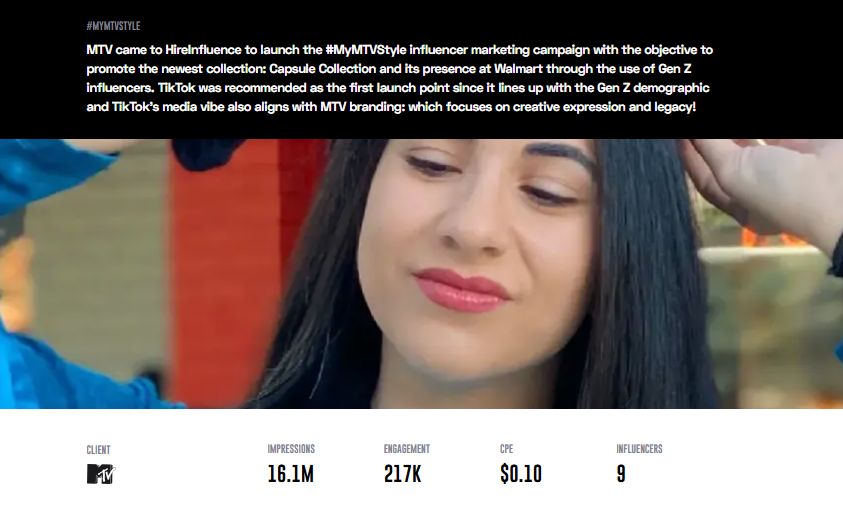
The payoff of disciplined negotiation shows up in efficiency, not just price. The MTV #MyMTVStyle program, built on TikTok, delivered 16.1M impressions and 216,600 engagements at a $0.01 cost per view and a $1.50 CPM, the kind of efficiency that comes from matching the right creators and formats to the goal rather than simply paying for reach.
The #OREOShamROCKout program for Oreo and McDonald’s produced 1.7M impressions at a $0.06 cost per engagement, a figure that reflects deals structured around engagement value rather than flat follower-based pricing. On the Ricola #CoatYourThroat program, 18 influencers spanning micro-to-celebrity tiers generated 26M impressions, 20.5M reach, and a 13.17 percent engagement rate, a mix that shows how blending tiers can hold down cost while lifting participation.
The full arc of the Ricola work appears in the Ricola case study, and the broader set of enterprise programs lives in the work portfolio. Across these programs, the pattern holds: the best rates are the ones negotiated against engagement and outcomes, not against the follower count at the top of a media kit. It also shows why the same budget can produce very different results depending on how it is negotiated, since the efficiency in these numbers came from structuring deals around engagement and format rather than from paying the going rate for reach.
How to Evaluate an Agency’s Negotiation Approach
Choosing a partner to handle creator negotiation comes down to five questions.
First, ask how the agency verifies a creator’s metrics before agreeing to a rate. The agency should describe how it confirms audience authenticity and engagement, because a fair price depends on real numbers. A partner that negotiates without verifying is a partner overpaying with the brand’s money, because a rate agreed against unverified metrics has no floor beneath it.
Second, ask which value signals it negotiates on. The agency should explain how it prices engagement, format, and audience fit rather than defaulting to follower count, and how it compares creators on cost per engagement and cost per view. The signals it anchors on determine whether the brand gets efficiency or just exposure, and a partner that cannot name them is negotiating on instinct.
Third, ask how it handles usage rights, whitelisting, and exclusivity. The agency should describe how it negotiates these terms up front, since they are the costs that most often surprise brands after a deal is signed. Securing them early is far cheaper than adding them later.
Fourth, ask how it structures volume and long-term deals. The agency should explain how it negotiates multi-post and ongoing partnerships to lower per-post rates while keeping creators motivated. A deal that underpays a creator tends to underdeliver, and the savings on paper rarely survive contact with the finished content.
Fifth, ask how the agency benchmarks rates and what a realistic budget looks like. The agency should give real-number examples from comparable campaigns and be candid about market ranges; the cost of influencer marketing guide is a useful reference for setting expectations. A partner that answers with specifics is the one worth shortlisting.
The Model Behind Negotiated Creator Partnerships
HireInfluence has operated as a full-service influencer marketing agency since 2011, with a team of more than 25 people across 10 or more states and offices in Houston and The Woodlands, Austin, Los Angeles, and New York. That footprint and volume of campaigns give the agency a broad view of current market rates, which is what makes a negotiation position credible.
The agency’s enterprise experience spans brands including MTV, Coca-Cola, McDonald’s, Oreo, Target, and Walmart, work that typically begins at a six-figure engagement floor. Its standing as a TikTok Shop Lite Program partner since July 2024 adds commission-based structures to the negotiation toolkit, and recognition including the 2024 MUSE Creative Awards Marketing Agency of the Year and the 2026 U.S. Agency Awards Digital Marketing Agency of the Year gives enterprise buyers a track record to check.
Founder and CEO Jason Pampell brings a background built directly on deal-making. Before launching the agency in 2011, he spent years managing content rights, licensing, and strategic media partnerships for Forbes and Billboard, experience in negotiating and protecting the terms behind creative partnerships, which is the same discipline a creator negotiation demands. That grounding informs how the HireInfluence team structures rates, rights, and deliverables on a brand’s behalf. Brands weighing a program can reach the team through the contact page or learn more through the about section.
The throughline from the 2026 rate data is direct: creator pricing has no fixed list, and the brands that negotiate against engagement, format, and rights rather than follower count are the ones that pay fairly and perform well. For enterprise marketers, negotiating with influencers is less about driving a hard bargain than about pricing what actually drives results. Done that way, a negotiation protects the budget and the working relationship at once, which is what makes the next campaign easier to build.