
Enterprise brands approaching creator marketing in retail media networks usually treat the network as a media buy that creator content can be poured into, and a survey of 204 marketing leaders suggests the relationship runs the other way. Within retail media networks, creator marketing has risen to the second highest investment priority, up from third in 2024. Ninety-seven percent of CMOs plan to expand creator budgets, and creators now rank above AI-driven search, paid social, and paid search as the channel marketers intend to fund. Consumer trust in creators rose 21% year over year, and CMOs name awareness and brand perception as the greatest value creators deliver, with awareness alone up 27%. Creator partnerships now run through seven or more departments. A channel does not climb from third to second inside someone else’s network by being poured in. It climbs because the network needed something it did not have.
Table of Contents
Why Retail Media Needed Creators Rather Than the Reverse
A retail media network sells proximity to a transaction. That is its entire proposition and it is a good one: the shopper is already in a purchasing context, the intent is real, and the attribution is unusually clean because the network owns both the impression and the basket. What a retail media network does not sell, and structurally cannot manufacture, is a reason to look. Its inventory is banners, sponsored listings, and on-site placements, and every one of those is interruption purchased against intent that already existed. They work by being in the way at the right moment. Nobody chooses them.
Creator content is the only inventory a retail media network can carry that a shopper would have watched anyway. That is not a claim about quality; it is a claim about how the attention was obtained. A sponsored listing borrows attention that the retailer’s own environment generated. A creator’s video arrives with attention it brought from somewhere else, produced by a relationship the network had no part in building. When that asset is placed inside a retail environment, the network is not distributing an ad. It is hosting a thing that already had an audience. Placement and attraction are unrelated properties, and retail media has always been rich in the first and structurally poor in the second.
That asymmetry explains the ranking movement in the data better than any story about creator marketing maturing. Retail media networks did not discover creators because creators got good. They reached for creators because their own inventory is functionally indistinguishable from a shelf tag, and a shelf tag cannot carry a proposition. As every major retailer stood up a network, the inventory converged, and a brand choosing between three retail media networks was choosing between three versions of the same banner. Creator content is the only component of that stack that differentiates, because it is the only component the network cannot generate from its own assets.
The consequence for brands is a sequencing decision most get backwards, and getting it backwards is expensive in a specific way. The instinct is to treat retail media as a distribution channel for creator content the brand already made, which produces an asset that was optimized for a feed and is now sitting in a shopping context where the viewer’s mental state is entirely different. A person scrolling is available for a story. A person shopping is executing a task and resents being slowed down. Creator content that succeeds in a retail media placement is content built for a task-oriented viewer: short, specific, and answering a question the shopper already had rather than raising one they did not.
The deeper structural point is about what the brand is actually buying, and it determines whether the whole arrangement is worth doing. In a retail media network, the retailer owns the audience, the placement, the data, and the attribution. The brand supplies budget and creative. That is a weak position, and the only thing that strengthens it is bringing an asset the retailer cannot replicate. A brand whose creator relationships exist independently of the network arrives with a bargaining position, because the content is portable and the roster is not the retailer’s. A brand that sources creators through the network’s own tooling has handed over the one component that was theirs. Seven or more departments now touch creator partnerships, and the department negotiating retail media is rarely the one that built the roster, which is how that position gets given away without anyone deciding to.
What Enterprise Brands Should Expect From a Retail Media Creator Partner
Program strategy and design. The agency has to decide what the creator asset is for before the network placement is bought, because content built for a feed and content built for a task-oriented shopper are different products and the retail buy will not distinguish them. That determination belongs inside dedicated campaign services, where creative direction can still follow from placement rather than being retrofitted to it.
Creator sourcing and verification. The agency has to build the roster outside the network’s tooling, since a roster sourced through a retailer’s platform is a roster the brand does not own and cannot carry to the next network. Verification matters doubly here because retail media attribution will report a result either way, and a clean-looking basket number attached to a fabricated audience is the most persuasive wrong answer available.
Platform and commerce integration. The agency has to understand what each network exposes and what it withholds, because retail media networks vary enormously in whether a brand can see creator-level performance or only aggregate campaign delivery. That difference determines whether the program can be optimized or merely reported, and it is a procurement question rather than a media one.
Creative direction and content production. The agency has to direct for the shopping context specifically, producing content that answers a question rather than raising one, since a task-oriented viewer abandons anything that costs them time. The UGC overview covers how that supply gets structured at the volume a multi-network program consumes.
Audience and segment-specific execution. The agency has to accept that a retail media network’s audience is the retailer’s shopper base rather than the brand’s target, and plan for the mismatch. A creator selected for a brand’s segment may be reaching a fraction of it inside any given network, and treating network reach as brand reach overstates the program.
Cross-platform orchestration. The agency has to manage the same creator asset across networks with incompatible specs, reporting, and rules, because a brand running three retail media networks is running three regimes. Adjacent-channel reading helps, and the TikTok influencer marketing resource is useful on how a commerce-native surface handles the same problem.
Paid amplification. The agency has to resolve where retail media budget sits relative to social amplification, since the same creator asset promoted in both places competes with itself for the same shopper at different points in the same week. That allocation runs through the specialties and services capability rather than being settled by whichever team has budget left.
Attribution and measurement. The agency has to read the network’s attribution skeptically, because a retail media network grading its own homework will report favorably and the brand has no independent view. An analytics capability that can compare network-reported results against the brand’s own data is the only defense, and most programs do not have one.
Program Delivery Across Retail Media Creator Programs
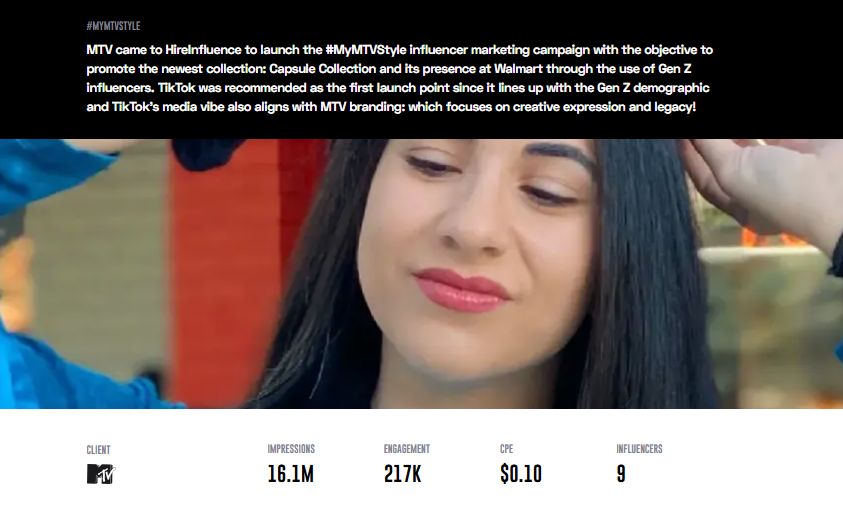
Southwest Airlines #SouthwestSaysAloha produced 56M impressions and 3M engagements, a scale that shows what creator attention looks like when it is generated rather than purchased adjacent to intent. The Grammarly creator program ran 133 creators to 214M impressions and 33.1M views. The MTV #MyMTVStyle activation returned 16.1M impressions and 216,600 engagements at $0.01 CPV and a $1.50 CPM.
The Oreo and McDonald’s #OREOShamROCKout campaign delivered 1.7M impressions at a $0.06 cost per engagement. The Ricola #CoatYourThroat program is the direct analogue to the retail media problem: 18 influencers, 26M impressions, 20.5M reach, a 13.17% engagement rate, and 62,500 MikMak retail clicks, which is creator attention converted into a recorded step toward a purchase without a network owning the path. The Ricola case study and the work portfolio show how that route was constructed.
How to Evaluate a Retail Media Creator Agency
First, ask who owns the creator relationships. The agency should be able to confirm the roster exists independently of any network’s tooling, because a roster inside a retailer’s platform is not a brand asset.
Second, ask what the network discloses about creator-level performance. The agency should know before the buy whether optimization is possible, since a network reporting only aggregate delivery cannot support it.
Third, ask how the creative differs from the brand’s social assets. The agency should describe a different product for a task-oriented viewer rather than proposing to repurpose, and a plan that repurposes is a plan that will underperform quietly.
Fourth, ask how network attribution will be checked. The agency should propose an independent comparison against the brand’s own data, because a network reporting on itself has an interest in the answer.
Fifth, ask what this costs against running the creators directly. The agency should be candid that retail media adds a margin for proximity to a transaction the brand may be able to reach on its own; the cost of influencer marketing guide frames that comparison.
The HireInfluence Model for Retail Media Creator Programs
HireInfluence has run enterprise influencer programs since 2011, with 25 or more people across 10 or more states and offices in Houston and The Woodlands, Austin, Los Angeles, and New York. Engagements begin at six figures, which reflects the roster and verification infrastructure required to arrive at a network with an asset the network cannot replicate. The firm won Marketing Agency of the Year at the 2024 MUSE Creative Awards and Digital Marketing Agency of the Year at the 2026 U.S. Agency Awards, and has been a TikTok Shop Lite Program partner since July 2024, which is the same structural problem in a different building: a commerce environment that needs content it cannot produce. Programs for Walmart, Target, Coca-Cola, Microsoft, Meta, and Southwest Airlines have been built on rosters the brand retained. The contact page and the about section describe how engagements are structured.
Before founding the firm, Jason Pampell spent years managing content rights, licensing, and strategic media partnerships for Forbes and Billboard. A publisher discovers eventually that its most valuable pages are the ones it did not commission, because a page people sought out is worth more than a page they were served on the way to something else. The licensing desk’s standing came from controlling material other outlets wanted and could not make. A brand walking into a retail media network with a creator roster it owns is holding exactly that position, and a brand renting one from the network is the outlet paying for access.
The benchmark research makes the final case on its own terms. When creator marketing climbs from third to second priority inside retail media while trust in creators rises and marketers rank them above every paid channel they could buy instead, the networks are not adopting creators as an enhancement. When a network can sell proximity to a purchase but cannot manufacture a reason to look, the brand that brings the reason is the one setting the terms.