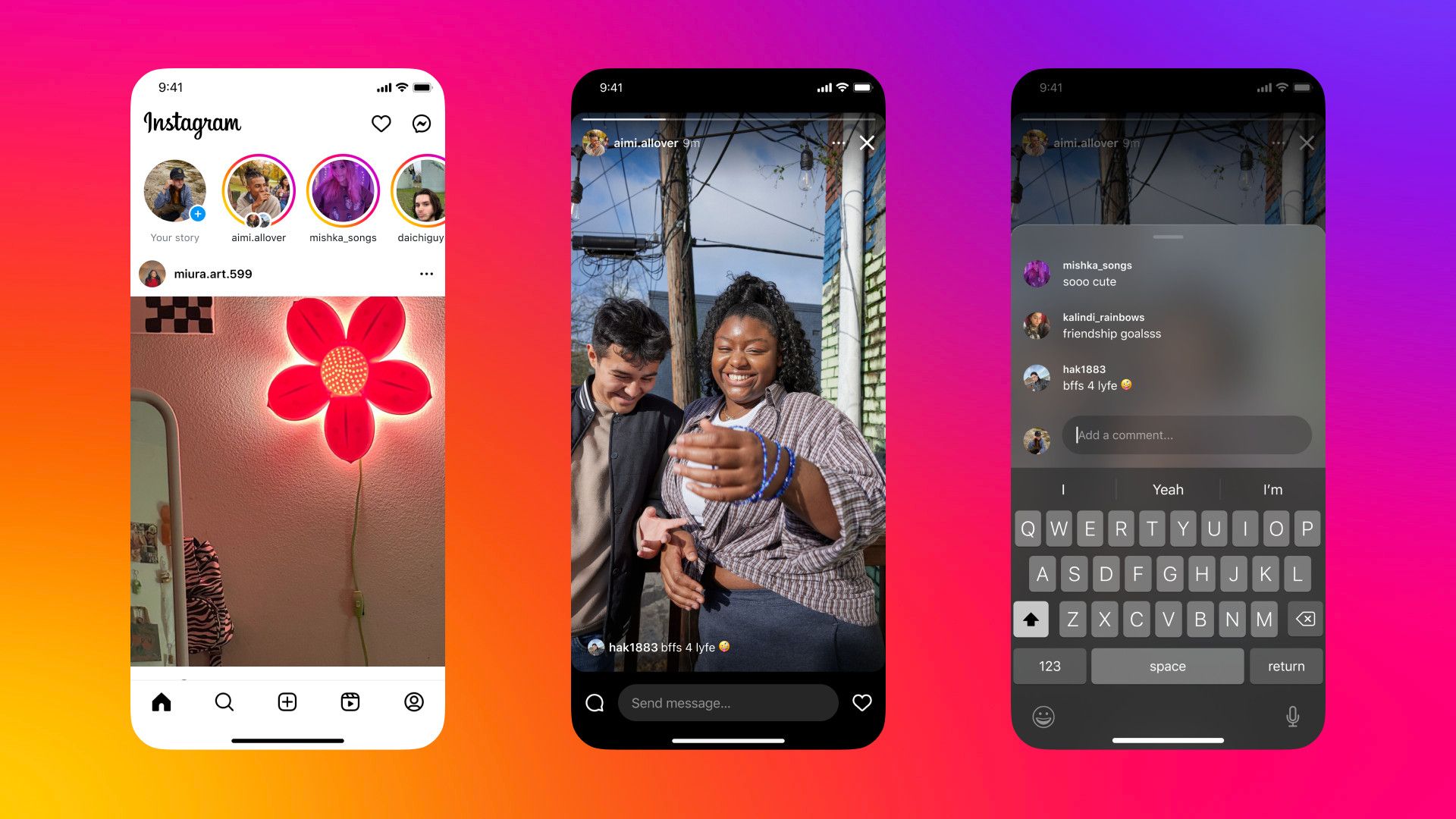
Enterprise marketing teams evaluating a content marketing agency in 2026 are buying into a channel where discovery has moved. Salsify’s 2026 Consumer Research, a survey of 2,712 shoppers across the United States, the United Kingdom, and Canada, found that social media is the favorite discovery channel for 73% of Gen Z shoppers and 67% of millennials, and that 52% of shoppers overall now count social platforms among their top channels for finding new products. A content marketing agency built for enterprise work treats those numbers as a job description: the content has to work in the places where buying decisions actually begin to form.
Table of Contents
The same research explains why the work cannot stop at discovery. Sixty-three percent of Gen Z shoppers name social platforms as their top channel for researching products before purchase, and 55% of millennials say the same, a channel that sat in fifth place for millennials only a year earlier. At the decision stage, 61% of shoppers call product images and videos the most important element on a product page, and 57% point to customer ratings, reviews, and user generated content. Content is not a single asset living in one channel. It is the connective layer that carries a buyer from first sighting through research and into the purchase itself.
Trust runs through that entire journey, and the data puts a price on it. In the Salsify findings, 68% of shoppers paid more for a product in the past year because they trust the brand, and 50% of Gen Z shoppers say high quality product content is a reason they extend that trust in the first place. The penalties are just as concrete: 38% of shoppers cite inconsistent product information across websites as a leading cause of cart abandonment, and 45% returned an online purchase in the past year because the content did not match the product. The stakes of content are commercial, not cosmetic, which is why enterprise brands increasingly hand the function to a specialist partner instead of treating it as overflow work for an internal team.
Why Content Output and Commercial Outcome Are Unrelated Properties
The most common mistake enterprise brands make when they buy content marketing is assuming that output and outcome are the same property measured at different points in time. They are not related. Output is a production fact: how many assets shipped, how many posts published, how many videos delivered against the quarter’s plan. Outcome is a market fact: whether a buyer who encountered the content moved closer to a purchase, and whether the brand can demonstrate that movement. A program can be enormous on the first axis and invisible on the second, and many are.
The reason the two properties come apart is that content does its commercial work at specific moments in a buying journey: the moment a shopper verifies a claim, compares an alternative, reads what other buyers experienced, or watches a product demonstrated by a person whose judgment they already follow. Publishing more does not create more of those moments. Only content matched to the moment does. A brand can double its publishing calendar without touching a single one of those verification points, in which case it has doubled its cost while leaving its outcomes exactly where they were.
The reverse holds as well, which is what makes the two properties genuinely unrelated rather than loosely correlated. A disciplined program built around the small set of assets that shoppers actually consult, the demonstration video that answers the real objection, the creator review that carries weight with a specific audience, the product content that stays accurate everywhere it appears, can move revenue on a fraction of the volume. Scale amplifies a program that is already pointed at the right moments. It cannot rescue one that is not.
The confusion persists because output is easy to see and outcome is not. A content calendar fills, a channel grows, a dashboard turns green, and the activity itself starts to feel like evidence. Meanwhile the outcome question, whether any of it changed what a buyer did, requires instrumentation, patience, and a willingness to learn that some of the work is not working. Organizations drift toward the property they can observe weekly. A serious partner exists partly to resist that drift on the brand’s behalf, holding the program to the harder standard when the easier one is always available.
This is why the enterprise buyer profile has shifted toward specialist partners rather than volume vendors. An agency whose model is creator led content starts from the outcome side of the ledger: which audiences, which moments in their journey, which formats carry proof, which voices are trusted enough to deliver it. Production volume becomes a derived quantity, sized to the strategy rather than substituted for one. The question a serious partner asks first is never how much content the brand wants. It is what the content is supposed to change.
The unrelatedness has a budget consequence as well. When output is treated as the objective, spend distributes evenly across the calendar, because every planned asset looks equally necessary in advance. When outcome is the objective, spend concentrates, because evidence accumulates about which moments, formats, and voices actually move buyers, and the rational response is to fund the winners disproportionately. Two programs with identical budgets can therefore produce entirely different results purely on the basis of which property their governance takes seriously.
The distinction also settles the measurement argument before it starts. If output were the goal, reporting would be a delivery log. Because outcome is the goal, reporting has to trace content to behavior: engagement that is qualified rather than merely counted, movement into research and consideration, and conversion signals that finance will accept. An enterprise brand that holds this line in agency selection filters out most of the market in a single pass.
What Enterprise Brands Should Expect From a Content Marketing Agency Partner
A strategy anchored to buying moments, not a publishing calendar. The agency has to map where the brand’s buyers discover, research, and decide, then build the content plan backward from those moments, with full service campaign strategy as the starting engagement rather than a menu of deliverables.
Creator sourcing treated as editorial hiring. The agency has to select creators the way a publication hires contributors, on demonstrated credibility with a defined audience, verified engagement quality, and fit with the brand’s voice, rather than pulling names from a database ranked by follower count.
A user generated content engine with rights settled up front. The agency has to run a repeatable system for briefing, collecting, and licensing authentic customer and creator material, because user generated content is now a decision stage asset that shoppers weigh alongside official product imagery.
Platform native production across formats. The agency has to direct short form video, long form explainers, and photography to the conventions of each platform, applying the same discipline to Reels and YouTube that a dedicated TikTok influencer marketing program applies to that platform’s culture.
Consistency control across every shelf. The agency has to keep claims, specifications, and creative aligned everywhere the buyer might check, because inconsistent product information measurably drives shoppers out of carts and drives returns after purchase, and a content program that contradicts the product page is working against itself.
Compliance and disclosure built into the workflow. The agency has to handle disclosure language, review cycles, and platform policies inside the production process itself, so that legal review accelerates publication instead of stalling it and no asset ships carrying regulatory risk.
Specialty depth for the hard categories. The agency has to bring specialty capabilities for regulated, technical, or otherwise demanding categories, where generic lifestyle content fails and credibility depends on creators who genuinely understand the subject.
Reporting that speaks revenue. The agency has to deliver analytics that connect content activity to qualified engagement, consideration, and conversion, in a format a CFO will accept, rather than a slide of impressions with no argument attached.
Program Delivery Behind Enterprise Content Marketing
Delivery is where the model proves itself. For Ricola, HireInfluence built a creator program around the #CoatYourThroat campaign that generated 26 million impressions, turning a heritage product into content that audiences chose to watch rather than advertising they tolerated. The Ricola campaign is documented as a worked example of what creator led content delivers when strategy, casting, and production run through one accountable partner.
For a productivity software brand, the agency directed 133 top tier lifestyle creators across YouTube, TikTok, and Instagram, generating 214 million impressions and 33.1 million views by positioning the product inside the daily routines its buyers already recognized. Programs at that scale demand the operational infrastructure that separates an enterprise content marketing agency from a production shop: coordinated briefing, compliance review, rights management, and reporting across dozens of simultaneous creator relationships. The broader campaign portfolio shows the same model applied across categories. With 52% of shoppers now discovering products on social platforms, work of this kind sits at the front of the revenue funnel rather than at its edges.
How to Evaluate a Content Marketing Agency
First, ask how the agency decides what content to make before it decides how much. The agency should walk through a discovery process that starts with audience research and buying moments, and it should be able to say plainly which content it would not make for the brand and why.
Second, ask how creators are selected and briefed. The agency should show a sourcing method built on audience fit and engagement quality, with briefs that give creators room to work in their own voice while protecting the brand’s claims.
Third, ask who owns the content and what the brand may do with it. The agency should present usage rights, licensing windows, and repurposing terms as standard contract architecture, settled before production begins rather than negotiated after an asset performs.
Fourth, ask how the agency keeps content consistent across channels over time. The agency should describe a maintenance discipline, not a launch plan, because content that drifts out of date or out of sync with the product page erodes the trust the program exists to build.
Fifth, ask how the program will be measured and what it will cost to run properly. The agency should connect spend to outcomes in stages a finance team can audit, and a cost of influencer marketing reference is a useful benchmark for judging whether a proposal’s economics are serious.
The HireInfluence Model for Enterprise Content Marketing
HireInfluence has operated as a full service enterprise influencer marketing agency since 2011, with a team of more than 25 people spread across more than 10 states and offices in Houston and The Woodlands, Texas; Austin, Texas; Los Angeles, California; and New York, New York. The agency works to a six figure engagement floor, has been a TikTok Shop Lite partner since July 2024, and its recognition includes Marketing Agency of the Year at the 2024 MUSE Creative Awards and Digital Marketing Agency of the Year at the 2026 U.S. Agency Awards. The client roster includes Microsoft, Grammarly, Walmart, Southwest Airlines, Coca-Cola, and Target.
That way of working reflects the background of founder and CEO Jason Pampell, who priced content rights, licensing, and media partnerships at Forbes and Billboard before 2011. In that world, placements were planned against editorial calendars months in advance, and the discipline of delivering to that calendar was itself the product a partner sold. HireInfluence applies the same standard to enterprise content marketing: a program is a commitment kept over quarters, not a burst of assets. Brands ready to put content on that footing can start the conversation or learn more about the agency.