Brands weighing TikTok Spark Ads vs boosting usually frame it as a budget question, and the framing hides the only distinction that matters. Boosting, which TikTok delivers through its in-app Promote tool, amplifies a post the brand already owns. Spark Ads runs an organic post as a formal ad inside TikTok Ads Manager, and it can run a post that belongs to someone else. One tool extends the brand’s own reach in a few taps. The other turns a creator’s video into targeted paid media while keeping the creator’s name on it. The question is not which is cheaper. It is whether the brand is amplifying itself or amplifying a partner, because only one of these tools can do the second thing, and the second thing is what a creator program is.
Table of Contents
Why the Ownership Question Decides the Format
Most comparisons of these two tools rank them on price and effort, and that ranking answers the wrong question. Boosting is faster and Spark Ads is more powerful, which is true and almost useless, because the two tools are not competing for the same job. The real fork is whose content is being promoted. A brand pushing its own post toward more views is doing something a boost handles completely. A brand putting media behind a creator’s post, under the creator’s handle, with the brand’s targeting, is doing something a boost cannot do at all. The moment creator content enters the plan, the comparison collapses to one option.
This matters because the credibility that makes creator content work is fragile, and the delivery method either preserves it or spends it. A Spark Ad keeps the original post intact, the handle, the caption, the sound, and the accumulated likes and comments, so the audience sees a creator’s video with a small sponsored label rather than a brand’s advertisement. A boosted brand post is a brand post with more distribution. Both have their place. Only one of them lets a brand pay to extend a partner’s voice without converting it into the brand’s own, and that distinction is the entire reason Spark Ads exists as a separate format.
How Boosting Works, and What It Is For
TikTok has no button labeled boost. The boosting behavior lives inside Promote, which TikTok describes as a lightweight, in-app advertising tool that turns an existing video or LIVE into an ad in a few taps. The flow is deliberately short. A brand picks a video, chooses a goal, sets an audience, sets a budget and a length of time, pays, and the promotion runs. Promote is reached from the video itself or from a Promote dashboard inside the app’s business tools, and it is built so that a person with no advertising operation can amplify a post in minutes.
Its objectives cover more ground than the format’s simplicity suggests. TikTok groups them into awareness goals, including video views, LIVE views, followers, and profile views, and conversion goals, including messages, product purchases, and product link clicks. What Promote does not offer is depth. Audience control is basic, there is no advanced audience building or retargeting, and there is no pixel-based conversion tracking. That ceiling is the whole point. Promote is for a brand that wants to put a small budget behind its own post quickly, most often a post that is already performing organically, and see whether paid distribution extends the result. Used that way, it is genuinely useful. Asked to carry a real campaign, it runs out of controls fast.
How Spark Ads Works, and What It Is For
Spark Ads is a native format inside TikTok Ads Manager, and its defining capability is that the promoted post can belong to another account. A brand can run a creator’s organic video as an ad, under the creator’s identity, with the full Ads Manager targeting and optimization stack behind it, while every native element of the post stays attached. To do that, the brand needs three things TikTok specifies: an account to serve as the ad identity, authorization to use the post from whoever owns it, and a final version of the post before authorization happens, because authorization locks the caption permanently.
TikTok supports three ways to source that authorized content. A brand can link an account, its own or a creator’s, and select from the creatives available under that identity. A creator can generate a post authorization code from the app and hand it to the brand to enter in Ads Manager, and brands can authorize up to 20 of those codes in a batch. Or a brand can push creatives from Ads Manager to an identity authorized through TikTok Business Center, which suits organizations running many accounts under central permissions. Each Ads Manager account supports a maximum of 10,000 Spark Ads, a ceiling worth tracking for programs running large always-on rosters. This is more setup than a boost, and it returns a different category of control, which is why it is the format an enterprise creator program is built on.
Program Delivery Across Creator Amplification Programs
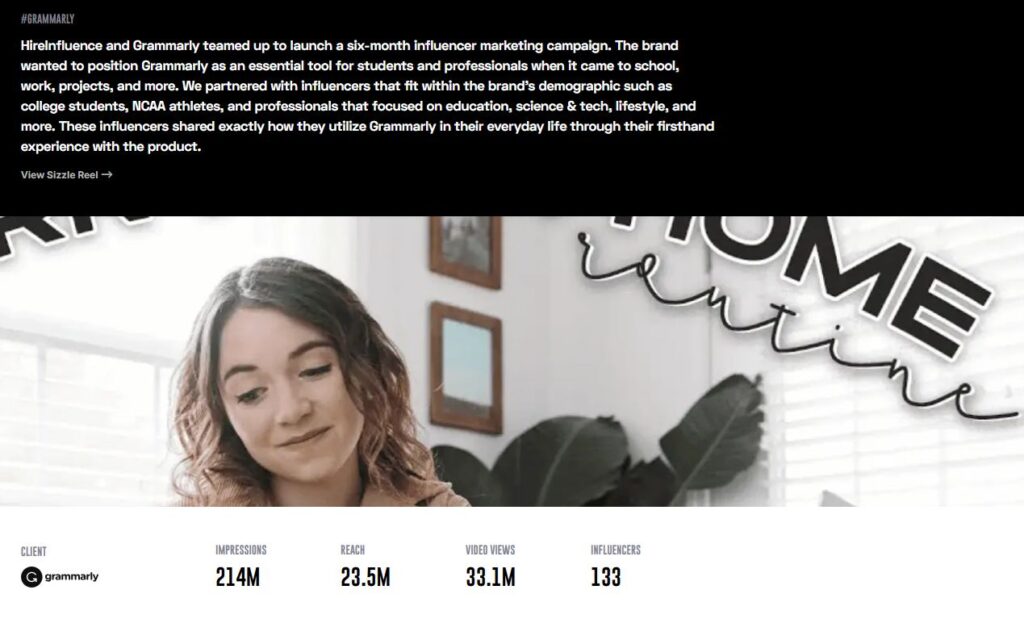
The case for the more demanding format is that the demanding format is what produces programs that perform. The #CoatYourThroat program for Ricola reached 20.5M people across 26M impressions with 18 influencers, sustained a 13.17% engagement rate, and drove 62,500 MikMak retail clicks, documented in the Ricola case study, which is creator content resolving into recorded action rather than inferred attention. The Grammarly creator program coordinated 133 creators to 214M impressions and 33.1M views with $15M in earned media value, a scale at which amplification is an operational system rather than a boost button.
The #OREOShamROCKout activation for Oreo and McDonald’s delivered 1.7M impressions at $0.06 cost per engagement, the #SouthwestSaysAloha program for Southwest Airlines produced 56M impressions and 3M engagements, and the #MyMTVStyle campaign for MTV delivered 16.1M impressions and 216,600 engagements at $0.01 cost per view. Additional programs appear in the work portfolio. None of those outcomes come from boosting a brand’s own post, because the content that carried them belonged to creators, and running creator content as paid media is the thing only Spark Ads does.
The HireInfluence Model for TikTok Amplification
Founded in 2011, HireInfluence is a full-service enterprise influencer marketing agency with 25 or more people across 10 or more states, working from offices in Houston, The Woodlands, Austin, Los Angeles, and New York. The firm runs programs for brands including Coca-Cola, Microsoft, Walmart, Meta, Grammarly, and Southwest Airlines on a six-figure engagement floor, and it has been a TikTok Shop Lite Program partner since July 2024. It was named Marketing Agency of the Year at the 2024 MUSE Creative Awards and Digital Marketing Agency of the Year at the 2026 U.S. Agency Awards. The distinction between boosting and Spark Ads sits inside a fuller treatment in the firm’s guide to creator amplification and its comparison of creator content and studio ads for paid media. Brands can reach the team through the contact page or read more in the about section.
Founder and CEO Jason Pampell spent years managing content rights, licensing, and strategic media partnerships at Forbes and Billboard before founding the firm in 2011, and the distinction at issue here is one that world understood instinctively. A publisher can amplify its own promotional page, and it can carry a correspondent’s byline, and the two are not interchangeable, because the value of the second is that the correspondent’s name and credibility travel with the work. Spark Ads is that principle rendered as ad tech. Boosting extends the brand’s own voice, which is worth doing when the brand’s own post is the asset. Spark Ads extends a creator’s voice without absorbing it, which is worth far more when the creator is the reason anyone is watching. A brand that understands which asset it is amplifying already knows which tool to reach for.