In the fast-evolving world of influencer marketing, choosing between micro and macro influencers can make or break your campaign’s ROI. Did you know that micro influencers now deliver up to 60% higher engagement rates than their macro counterparts, according to recent 2026 benchmarks? This micro vs macro influencers dilemma is more relevant than ever as businesses seek targeted, cost-effective strategies to connect with audiences. In this guide, we’ll break down the key differences, benefits, and scenarios to help you decide which type—or a smart hybrid—fits your goals.
Table of Contents
- Understanding Micro vs Macro Influencers (Follower Counts and Definitions)
- Benefits of Micro-Influencers for Niche Campaigns
- Higher Engagement and Authenticity
- Cost-Effective Targeting
- Benefits of Macro-Influencers for Broad Reach
- Massive Audience Exposure
- Established Credibility and Ease of Management
- Micro vs Macro Influencers: Direct Comparison and When to Choose Each
- Key Differences in ROI and Engagement
- Scenarios for Micro (e.g., Budget-Restricted, Local)
- Scenarios for Macro (e.g., Awareness, Long-Term)
- Real-World Examples: Major Brands Using Micro and Macro Influencers
- FAQs on Micro vs Macro Influencers
By the end, you’ll have actionable insights to maximize your marketing efforts and partner with a top influencer marketing agency for seamless execution.
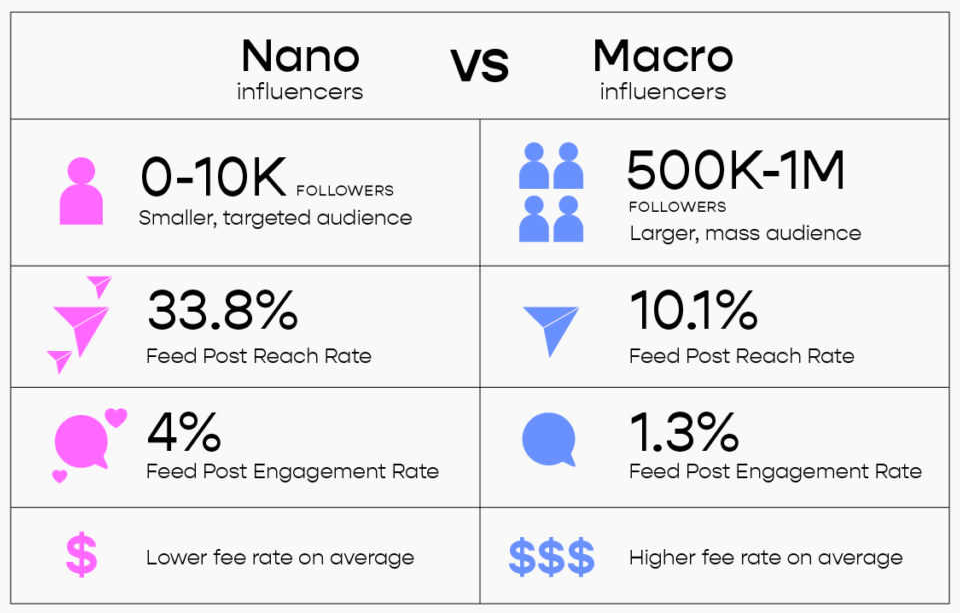
Understanding Micro vs Macro Influencers (Follower Counts and Definitions)
To navigate influencer marketing effectively, it’s essential to understand the tiers based on follower counts. These categories help brands align influencers with campaign objectives, from niche targeting to broad awareness.
Here’s a quick overview of the main influencer types in 2026:
| Influencer Type | Follower Count | Key Characteristics |
|---|---|---|
| Nano Influencer | 1,000–10,000 | Highest engagement (up to 10.3% on TikTok); ultra-niche, authentic connections. |
| Micro-Influencer | 10,000–100,000 | Strong niche expertise; engagement rates of 3-10% on average; budget-friendly for targeted campaigns. |
| Mid-Tier Influencer | 100,000–500,000 | Balanced reach and engagement; recognizable in niches; suitable for scaling awareness. |
| Macro Influencer | 500,000–1 million | Broad reach; engagement around 1-3%; ideal for visibility but higher costs. |
| Mega/VIP Influencer | 1 million+ | Celebrity-level exposure; lowest engagement (0.5-2%); best for massive brand boosts. |
Micro influencers typically focus on specific niches like sustainable fashion or local travel, fostering deeper audience trust. Macro influencers, on the other hand, often produce general or polished content that appeals to wider demographics. While thresholds can vary slightly by platform (e.g., TikTok favors smaller creators with 87.68% being nano/micro), the core idea remains: smaller audiences often mean higher interaction, while larger ones prioritize scale.
As an agency expert, we’ve seen brands achieve better ROI by starting with these definitions to vet partners effectively. Internal link: Influencer Marketing Basics.
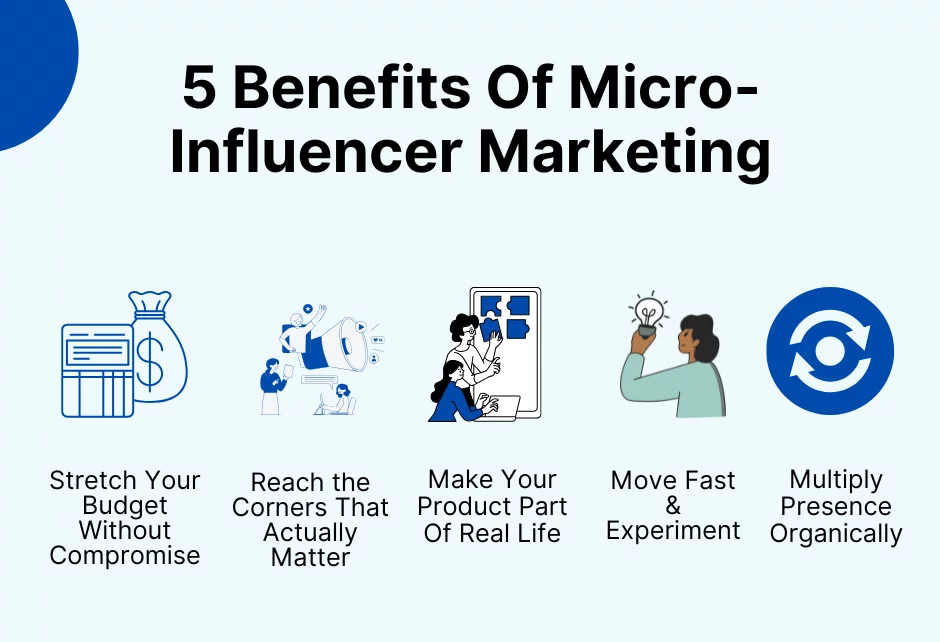
Benefits of Micro-Influencers for Niche Campaigns
Micro influencers shine in 2026 for brands seeking authentic, high-ROI partnerships. Their smaller, dedicated audiences translate to stronger connections and better performance metrics.
Higher Engagement and Authenticity
Micro influencers boast engagement rates of 7% to 20%, far surpassing macro’s 3% to 6%. This stems from genuine relationships—think parasocial bonds where followers feel like friends. For instance, a micro influencer in the skincare niche might respond to every comment, building trust that converts to sales. Studies show micro creators inspire up to 60% more engagement overall. Authenticity is key; their content feels relatable, not overly produced, making brand mentions more impactful.
Cost-Effective Targeting
With rates between $100-$500 per post, micro influencers offer exceptional value—often delivering 5x-8x ROI. They’re perfect for niche targeting, like local services or specialized products, where broad reach wastes budget. Brands can collaborate with multiple micros to cover segments without breaking the bank, achieving CPMs as low as $4-5. Plus, their expertise positions startups as authorities quickly.
Internal link: Niche Influencer Strategies. Reference: SoPost on trust rates.
Benefits of Macro-Influencers for Broad Reach
While micro influencers excel in depth, macro influencers provide the breadth needed for large-scale campaigns in 2026.
Massive Audience Exposure
Macro influencers reach hundreds of thousands with one post, averaging 1-3% engagement but massive views—up to 38,517 per TikTok post. This requires less effort than managing dozens of micros, freeing resources for creative execution. Ideal for brand awareness, they amplify messages across diverse audiences.
Established Credibility and Ease of Management
With experience in partnerships, macros streamline contracts and content approval. Their established presence boosts brand credibility instantly—think industry-wide trust. They handle complex campaigns, like multi-week builds, better due to resources for professional content. ROI typically hits 3x-5x, with easier vetting for fewer partners.
Internal link: Brand Awareness Campaigns. Reference: Forbes on effectiveness.
Micro vs Macro Influencers: Direct Comparison and When to Choose Each
Directly comparing micro vs macro influencers highlights trade-offs in reach, engagement, and cost.
| Aspect | Micro Influencers | Macro Influencers |
|---|---|---|
| Engagement Rate | 3.86% on IG (up to 20%) | 1.21% on IG (3-6%) |
| Cost per Post | $100-$500 | $5,000-$50,000 |
| ROI | 5x-8x | 3x-5x |
| Best For | Niche, local, budget campaigns | Awareness, scale, credibility |
Key Differences in ROI and Engagement
Micros edge out in ROI due to higher conversions from trust—often 20% better. Macros win in sheer exposure but risk lower authenticity.
Scenarios for Micro (e.g., Budget-Restricted, Local)
Choose micro for limited budgets, niche products, local targeting, or segmented strategies. They’re open to long-term partnerships, maintaining engagement without fatigue.
Scenarios for Macro (e.g., Awareness, Long-Term)
Opt for macro in brand awareness drives or extended campaigns building buzz. Their experience suits complex strategies.
Hybrid approaches—combining both—are the 2026 power move for balanced reach and targeting.
Internal link: Hybrid Influencer Campaigns. Reference: Emplicit on strategies.
Real-World Examples: Major Brands Using Micro and Macro Influencers
Major brands leverage both types for success. Here’s an update with 2026 insights:
- Airbnb: Continues using micro influencers for localized UGC, showcasing unique stays. This drives niche travel bookings with high engagement.
- Tinder: Paired macro influencers like Kendahl Landreth for rom-com recreations with micro college creators sharing personal stories, reaching 3.2M with 80% recall.
- Minnesota Twins: Micro locals for youth ticket giveaways, macro for broad awareness—boosting fan engagement.
- ASOS: Insider program turns employees into micro influencers for trends, blending internal authenticity.
- Shopify: Micro entrepreneurs promote ecommerce tools, targeting startups effectively.
New additions: Daniel Wellington scaled with thousands of micro influencers, surging revenue 214%. Glossier uses fan micros for 70% of content, hitting $1.8B valuation. Gymshark grew to $1.3B via micro fitness creators.
For macro: Sony partners with tech macros like TechMeOut for product launches.
Internal link: Case Studies.
FAQs on Micro vs Macro Influencers
What is the difference between micro and macro influencers?
Micros have 10K-100K followers with high engagement; macros 500K-1M with broader reach.
Which is better, micro or macro influencers?
Depends on goals—micro for engagement/ROI, macro for awareness.
How do micro-influencers compare to macro-influencers in terms of engagement?
Micros average 7-20%, macros 3-6%.
What are the 4 types of influencers?
Nano, micro, macro, mega.
How much does influencer marketing cost?
Micro: $100-500/post; macro: $5K-50K.
Internal link: FAQ Hub.
In summary, micro influencers offer authenticity and high ROI for targeted campaigns, while macro influencers excel in scale and credibility. The best strategy? A hybrid approach tailored to your needs. Ready to optimize your 2026 campaign? Contact a top influencer marketing agency like HireInfluence for a free audit. Explore related topics: Nano Influencers Guide, 2026 Trends.