
Los Angeles is the largest creator market in the United States by every meaningful measure. More professional creators live in LA than anywhere else, more studios and production infrastructure support creator content here than in any comparable market, and more enterprise content budget flows through LA than through any other city. That density is the opportunity for enterprise brands. It is also the filtering problem. An LA enterprise marketing team does not need to find a creator marketing agency. It needs to filter among hundreds of options to identify a partner built for the specific economics, platform realities, and attribution standards the creator economy now requires. The macro data on that environment is direct. According to WPP Media’s This Year Next Year 2025 Mid-Year Global Advertising Forecast, creator-generated revenue will reach $184.9 billion globally in 2025, a 20% increase from 2024, and is expected to more than double to $376.6 billion by 2030. In 2025, more than half of content-driven advertising revenue will come from platforms like TikTok, YouTube, Kuaishou, and Instagram Reels. User-generated content is now outpacing professionally produced formats.
Table of Contents
- Why WPP’s Data Reshapes the LA Creator Marketing Agency Buying Decision
- What LA Enterprise Brands Should Expect From a Creator Marketing Agency
- LA Creator Marketing Program Delivery at Scale
- How LA Enterprise Brands Should Evaluate a Creator Marketing Agency
- The LA-Anchored Creator Marketing Agency Model
For LA-based enterprise brands, those WPP numbers establish a specific capability profile the creator marketing agency has to deliver. The scale and growth trajectory of creator advertising mean the agency cannot treat creator partnerships as a niche service within a broader marketing engagement. Creator marketing has become the primary content distribution channel for enterprise brands at many levels, which means the agency delivering that work has to be built as a creator-native operation with the infrastructure to scale with the category. This guide breaks down what LA enterprise brands should expect from a creator marketing agency in 2026, how the creator-native operating model separates partners built for the current environment from those optimized for a different moment, and how to evaluate options at the scale the LA market now demands.
Why WPP’s Data Reshapes the LA Creator Marketing Agency Buying Decision
WPP Media’s forecast data documents a structural shift that changes what a creator marketing agency has to deliver. When creator-generated revenue is outpacing professionally produced content revenue, the traditional agency model (concept, produce, deliver polished brand content) is no longer the primary content production model for most enterprise use cases. The agencies that have scaled with the creator economy are creator-native operations, built around creator partnerships as the primary production model rather than as a specialty service layered onto traditional agency infrastructure.
For LA specifically, the market depth makes this distinction harsh. LA has traditional advertising agencies, production companies, talent agencies, creator marketing specialists, influencer platforms, creator-economy boutiques, and dozens of hybrid models all competing for the same enterprise budget. The brand trying to make an informed buying decision in this market has to filter based on creator-native operating model and infrastructure depth, not on agency size or heritage. A 50-year-old traditional advertising agency can have a creator marketing practice without being built as a creator-native operation. A newer creator-economy boutique can have creator-native operating infrastructure without the enterprise delivery depth LA programs require.
WPP Media’s forecast also documented that retail media is projected to reach $252.1 billion by 2030, representing 18% of all ad revenue by the end of the decade. That data point matters because creator content now has to flow into retail media environments as a standard practice, not as an exception. The creator marketing agency that can structure content rights, production, and distribution to support retail media flow is serving the capability profile the forecast data points to. An agency that still treats creator content as organic-first with paid amplification as an afterthought is operating against the direction of enterprise budget allocation.
What LA Enterprise Brands Should Expect From a Creator Marketing Agency
A credible enterprise-grade creator marketing agency in Los Angeles operates across eight coordinated service functions, delivered as a creator-native system.
Creator marketing strategy and measurement design. The engagement starts with business objectives, KPI frameworks, creator tier mix, platform strategy, attribution methodology, and retail media integration planning. For LA enterprise brands, strategy also has to account for the specific industry calendars (entertainment launches, fashion week, awards season, retail tentpoles) that shape when creator activity has maximum impact. HireInfluence structures creator marketing strategy through its campaign services framework as the opening phase of every engagement.
Creator sourcing across all tiers. LA has more creator depth than any other US market, which means sourcing is about selection and long-term partnership potential, not availability. A credible creator marketing agency runs tier-matched sourcing from nano creators through celebrity tier, with audience authenticity analysis, brand safety vetting, category fit screening, and long-term partnership capability assessment built into the discovery workflow.
Creative direction and multi-format production. Full-service creator marketing agencies work with creators to produce content that performs natively on target platforms and is structured for multi-channel repurposing. LA’s creator-adjacent production infrastructure (studios, lighting crews, post houses, DPs, sound stages) is accessible when the agency has the local relationships and operational depth to coordinate it alongside creator partnerships.
Contracting and rights management. Creator marketing has specific contracting requirements that differ from influencer marketing project structures. Usage rights across organic and paid distribution, retail media rights, exclusivity windows, long-term partnership structures, and commerce integration rights all have to be negotiated at the contract phase. The creator marketing agency that builds multi-channel, multi-year rights into every creator agreement enables the content repurposing flow that enterprise economics now require.
Paid media amplification and retail media integration. Creator content performs best when organic distribution is paired with paid amplification across Meta, TikTok, YouTube, and emerging platforms, and then integrated with retail media networks for brands selling through retail channels. HireInfluence delivers this through its specialties and services capability, including whitelisting, dark posting, cross-platform paid amplification, and retail media coordination.
AI-integrated workflows. AI tools for creator discovery, content optimization, performance analysis, and campaign reporting are now baseline creator marketing agency capabilities, not premium add-ons. The agency should describe how AI integrates with the operational workflow to support the volume and velocity creator marketing at WPP’s projected scale requires.
Commerce-connected attribution infrastructure. UTM frameworks, promo code systems, pixel tracking, conversion event integration, platform commerce integration (TikTok Shop, Instagram Shopping, YouTube Shopping), retail media attribution, and affiliate sales measurement. HireInfluence’s analytics capability is structured to deliver the attribution depth that enterprise creator marketing budgets require for continued investment justification.
Long-term creator partnership management. Creator marketing, unlike one-off influencer campaigns, operates on sustained relationship structures. Ambassador programs, exclusive partnerships, and multi-year content arrangements require operational infrastructure calibrated to relationship management over extended time rather than project-by-project execution.
LA Creator Marketing Program Delivery at Scale
LA enterprise brands evaluating a creator marketing agency should look at programs that demonstrate what enterprise-scale delivery produces across LA’s core verticals.
The Grammarly engagement is a reference benchmark for LA-based technology, SaaS, and digital product brands. The program activated 133 creators across YouTube, TikTok, and Instagram, producing 214 million impressions, 33.1 million views, and $15 million in earned media value. Running 133 creators across three platforms simultaneously is the kind of program scale that validates creator-native operating infrastructure. The work portfolio documents how the agency scales across creator program complexity.
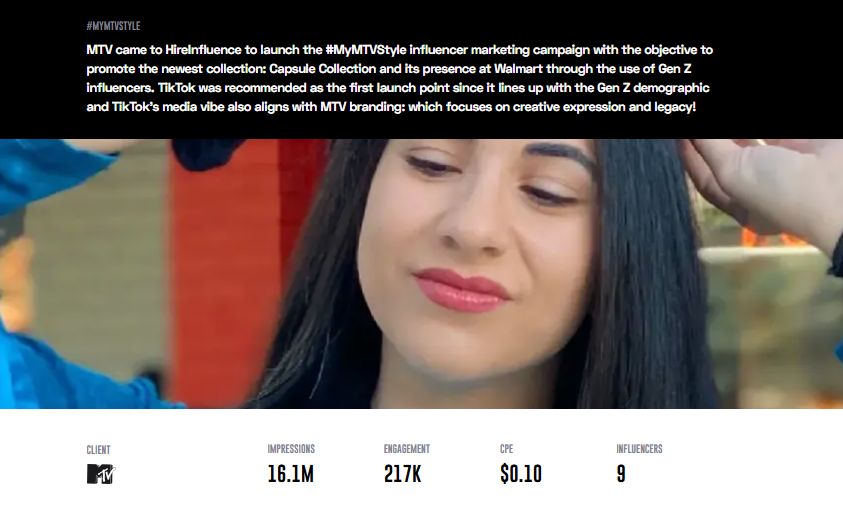
The MTV #MyMTVStyle TikTok campaign illustrates LA-relevant entertainment execution. The program generated 16.1 million impressions at $0.01 CPV and $1.50 CPM with 216,600 engagements. For LA-based entertainment, media, and consumer brands benchmarking creator marketing performance against Hollywood content quality expectations, those efficiency numbers are what enterprise finance teams use to compare creator spend against other paid media channels.
The Ricola #CoatYourThroat program shows how creator marketing integrates with commerce attribution. The campaign drove 26 million impressions, 20.5 million reach, a 13.17% engagement rate across 18 creators spanning micro to celebrity tier, and 62,500 MikMak retail purchase clicks. For LA-based CPG, beauty, and consumer brands where commerce attribution is the bar, the Ricola case study documents how the commerce integration works in practice.
The Southwest Airlines #SouthwestSaysAloha campaign delivered 56 million impressions and 3 million engagements. For LA-based travel, hospitality, and consumer brands, those scale numbers demonstrate what national creator marketing programs produce when the services engagement is disciplined enough to coordinate strategy, creative, and amplification as a single system.
How LA Enterprise Brands Should Evaluate a Creator Marketing Agency
Five evaluation questions separate credible creator-native partners from traditional agency creator practice offerings for LA creator marketing buyers.
First, ask about creator-native operating model. The partner should describe how the agency was built around creator partnerships as the primary production and distribution model, not as a specialty service layered onto traditional agency infrastructure. A traditional agency with a creator marketing practice is not the same as a creator-native operation.
Second, ask about retail media integration capability. WPP Media’s projection of $252 billion in retail media by 2030 makes this a growing baseline requirement. The agency should describe how creator content flows into retail media networks, how rights are structured to enable that flow, and how attribution connects back to retail commerce outcomes.
Third, ask about LA-specific creator relationships in specific detail. In a market this deep, direct relationships determine whether the right creators are available at the right windows for the right campaigns. A partner with genuine LA depth will describe specific creator tiers and categories where those relationships are strongest.
Fourth, ask about long-term creator partnership management. Creator marketing operates on sustained relationships, not project-by-project campaigns. The agency should describe how ambassador programs, exclusive partnerships, and multi-year content arrangements are structured, managed, and measured.
Fifth, ask about enterprise delivery capacity. Staffed program teams, dedicated account leadership, and separate roles for strategy, sourcing, creative, contracts, paid media, analytics, and reporting. The enterprise standard has moved past single-point coordination across contractors.
The LA-Anchored Creator Marketing Agency Model
HireInfluence maintains a Los Angeles office alongside offices in Houston and The Woodlands, TX; Austin, TX; and New York, NY. The agency was founded in 2011 and is recognized as one of the first full-service creator marketing agencies in the United States. Fifteen years of LA operations has built the creator relationships, production infrastructure access, and category depth that distinguish a credible LA creator marketing partner from newer entrants competing in the same market.
Engagements typically start at approximately $100,000, aligned with the enterprise delivery standard. The client roster includes Microsoft, Southwest Airlines, Target, Coca-Cola, Walmart, Meta, McDonald’s, Oreo, Grammarly, Ricola, and MTV. Award recognition across 2024 and 2026 includes the MUSE Creative Awards, Netty Awards, NYX Awards, Global Digital Excellence Awards, U.S. Agency Awards, and Vega Digital Awards. The agency is also an exclusive TikTok Shop Lite Program partner since July 2024, providing direct access to TikTok’s social commerce infrastructure for programs requiring conversion-measurable delivery.
Jason Pampell, Founder and CEO, launched HireInfluence in 2011 after managing content rights and strategic media partnerships for Forbes and Billboard. His 30+ years of leadership experience in sales, marketing, and team building for Fortune 1000 organizations shaped the creator-native service model the agency delivers. His approach to building the company informs how enterprise creator marketing engagements are structured today.
For LA enterprise brands ready to evaluate what a creator-native full-service engagement should look like, the HireInfluence team handles initial conversations directly. Brands benchmarking pricing should reference the cost of influencer marketing guide for context on enterprise engagement costs. Those evaluating TikTok-focused structures should review the TikTok influencer marketing resource, and brands integrating creator content with broader UGC strategy should review the UGC overview.
WPP Media’s forecast data makes the trajectory clear. Creator advertising revenue is scaling rapidly, user-generated content is outpacing professional production, and retail media integration is becoming a baseline creator marketing capability. For LA enterprise brands, the creator marketing agency decision is the decision about which partner is operating natively in the environment the data describes. The brands winning in the current LA market are working with partners built as creator-native operations with enterprise delivery infrastructure, not traditional agencies with creator marketing practices added to their existing capabilities.