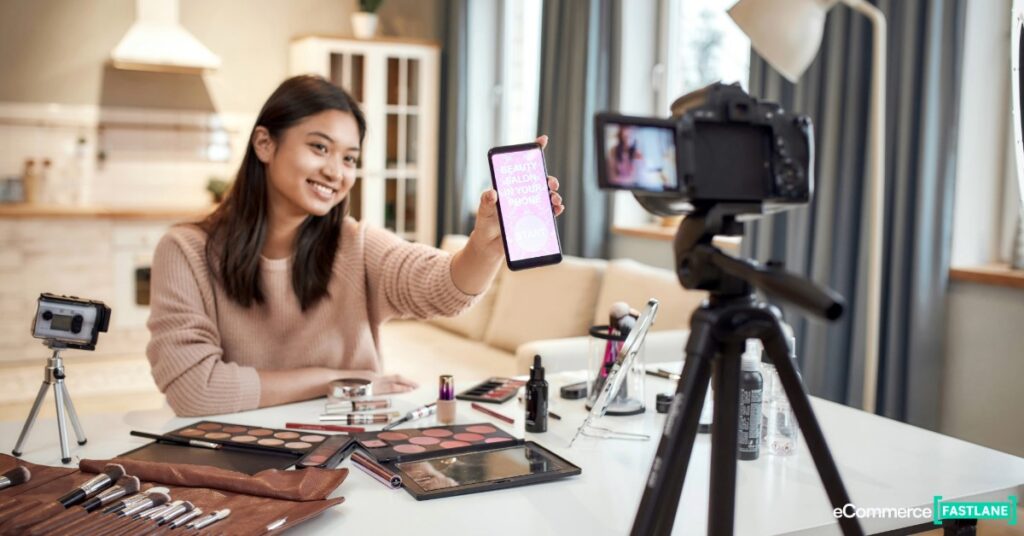
The instinct that a bigger production budget makes a better ad runs deep, and on paid social it is mostly wrong. A ugc advertising agency builds around a finding that still surprises marketing teams: the phone-shot, creator-made video that makes a creative director wince routinely outperforms the polished studio spot it sits next to in the feed. The platform data is direct about it. One major platform’s own case studies show user-generated-style creative delivering up to 38% higher click-through and reducing cost per acquisition by 25% to 50% against traditional produced ads, while another major platform reports UGC-style video converting around 22% better than conventional video. The economics compound the gap: a single studio production can cost thousands to tens of thousands of dollars, while the same budget buys ten to fifteen pieces of creator content, which is enough volume to actually test into a winner. A polished ad gets categorized as an ad in under a second and skipped; creator content buys the extra beats a hook needs to land.
Table of Contents
Why Polish and Performance Diverge in the Feed
Polish and performance are unrelated properties. A highly produced ad can perform terribly, and a rough creator video can perform brilliantly, because the qualities that make content look expensive are not the qualities that make it convert in a social feed. Production value signals budget and effort; feed performance depends on whether content stops a scroll and reads as worth watching. Those are different things, and a brand that equates them, assuming the glossier asset must be the stronger one, is optimizing for a standard the platform does not reward.
The core problem with a polished ad is that it announces itself as one. Audiences categorize obviously produced content as advertising almost instantly, and that recognition triggers the skip reflex before a message ever lands. A phone-shot creator video takes a beat or two longer to categorize, because it looks like the content a person came to the feed to see, and those extra seconds are exactly the window a hook needs to work. Polish, in other words, is not neutral in the feed; it actively speeds up the reflex that kills the ad.
Native content wins because it matches its surroundings rather than interrupting them. A feed is a stream of real people making real posts, and content that shares that texture blends into the stream and gets watched, while content that looks imported from a television playbook stands out in the wrong way. The advantage is structural, not aesthetic: it is rooted in how feed-based platforms are consumed, which is why the same creative that would look cheap in a broadcast slot outperforms in a feed built for exactly that look.
The deeper edge is not any single asset, it is volume. Creative testing is the highest-return activity in paid social, and testing requires many variations of hooks, formats, and openings to find the few that win. A studio budget produces one expensive asset and cannot support that testing; the same budget in creator content produces ten to fifteen pieces, turning production into a testing engine. The brands that win are rarely spending more, they are generating enough creative variety to let the platform find their winners, which a single polished spot structurally cannot do.
UGC as ad creative is a production methodology, not the same thing as influencer marketing, and conflating them is where brands go wrong. Influencer partnerships are built around a creator’s audience and work well for awareness; UGC advertising is built around content designed for direct response, produced by creators for the brand to run as ads to its own targeted audiences. One is a media relationship, the other is a content supply chain. Treating influencer content as a direct-response UGC strategy produces content that was never designed for the placement it ends up in, and the mismatch shows immediately in the numbers.
Most UGC ads are not spontaneous customer posts, and that is fine, because what matters is the native feel rather than the origin. The majority of high-performing UGC-style ads are commissioned from creators who specialize in producing authentic-looking content on demand, filmed on a phone in a real setting rather than in a studio. The defining quality is that the content looks like a real person’s post, not who technically pressed record. A brand does not need to wait for organic customer content to appear; it can produce the native, unpolished texture deliberately and at the volume paid media actually requires.
Creative fatigue is fast on paid social, and it makes production cost per asset a strategic variable. Feed audiences burn through ad creative in days rather than months, so running the same spot for a quarter guarantees a performance decline as the audience stops seeing it. A high refresh rate is only affordable when each asset is cheap to make, which is precisely UGC’s advantage: a steady stream of fresh creator content keeps the rotation full at a fraction of studio cost. A brand relying on a few expensive assets cannot refresh fast enough to stay ahead of fatigue.
None of this works on autopilot, which is the part brands most often miss. UGC outperforms only when it is produced systematically, with structured briefs, vetted creators, and a testing framework that turns production volume into performance insight. Sending products to creators without briefs and running whatever comes back is not a UGC strategy, it is a hope. The performance advantage is real, but it materializes through a repeatable production system, not through the mere act of using creator-made content instead of studio content.
What Enterprise Brands Should Expect From a UGC Advertising Partner
Content built for direct response, not just awareness. A feed placement demands direct-response creative. The agency has to design the campaign so creator content is briefed for conversion from the start, rather than repurposing awareness content into a performance placement.
Volume enough to test into winners. One asset cannot be optimized. The agency has to produce creator content at the volume that supports real creative testing, so the platform has enough variations to find the few that outperform.
A clear line between UGC and influencer content. The two are different supply chains. The agency has to treat UGC advertising as its own production methodology distinct from influencer-style content, so direct-response creative is not confused with audience-driven partnerships.
Creative matched to each platform’s native feel. What reads as native differs by surface. The agency has to shape content to each channel, since a TikTok placement rewards a different texture and pacing than another feed does.
Formats chosen for the feed, not the studio. A broadcast format fails in a scroll. The agency has to select specialized formats built for how people actually consume a feed, rather than forcing a produced structure into a placement that punishes it.
A refresh cadence that beats creative fatigue. Assets burn out in days. The agency has to keep a steady stream of fresh creator content in rotation, so performance does not decay as an audience stops seeing a tired spot.
Measurement that reads performance, not production value. Glossy and effective are different outcomes. The agency has to evaluate creative through campaign analytics on click-through and cost per acquisition, so budget follows what converts rather than what looks expensive.
Usage rights that let content run as ads. Creator content becomes ad creative only with the right permissions. The agency has to secure the rights to run and, where useful, run content from creator handles, so a brand can deploy a winning asset as paid media without a rights problem.
Program Delivery Behind UGC Advertising
Execution behind UGC advertising is where a production system turns creator content into performance, because native content only outperforms when it is briefed, produced, and tested with intent. A program that generated 33.1 million views did so with creator content built to be watched in a feed rather than imported from a produced playbook, which is what direct-response UGC looks like at scale. The Ricola program drove 62,500 MikMak clicks through content that felt native to the platform it ran on rather than staged in a studio. Programs across the agency’s portfolio treat creator content as a testable production system with rights secured for paid use, so a brand gets the native feel that converts alongside the volume that finds a winner.
How to Evaluate a UGC Advertising Agency
First, ask how content is briefed. The agency should brief creator content for direct response from the start, because content built for awareness rarely performs in a conversion placement it was never designed for.
Second, ask how much volume a budget buys. The agency should produce enough creator variations to support real testing, since a single asset cannot be optimized into a winner no matter how good it looks.
Third, ask how creative fatigue is handled. The agency should keep a steady refresh of fresh content in rotation, so performance does not decay as an audience burns through a tired asset.
Fourth, ask how content is measured. The agency should judge creative on click-through and cost per acquisition rather than production value, because glossy and effective are not the same result.
Fifth, ask how the model maps to budget. The agency should tie its production approach to a clear cost structure, so a brand can see that creator volume buys more testable creative than a single studio shoot does.
The HireInfluence Model for UGC Advertising
HireInfluence was founded in 2011 and works from offices in Houston, The Woodlands, Austin, Los Angeles, and New York, with a team of more than 25 people spread across more than 10 states and a six figure engagement floor. Programs for Grammarly, Coca-Cola, McDonald’s, Target, Oreo, and Walmart have run on creator content built for the feed and secured for paid use, produced as a testable system rather than a single expensive spot. The agency was named Marketing Agency of the Year at the 2024 MUSE Creative Awards and Digital Marketing Agency of the Year at the 2026 U.S. Agency Awards, and it has been a TikTok Shop Lite partner since July 2024, which keeps its creator production current with how each platform’s feed actually rewards content.
Jason Pampell, the founder and chief executive, priced content rights, licensing, and media partnerships at Forbes and Billboard before 2011, where content that matched the medium and felt native to it consistently outperformed the polished insertion dropped in from outside. That understanding that fit beats gloss shapes how the agency produces creator content for paid media, building for the feed rather than for a screening room. Brands can reach the team through the contact page or learn more about the firm on the about page.
The research on creative performance points to a single lesson: in a feed, content that looks native and can be tested at volume beats a polished asset that looks like an ad. An agency that produces creator content as a real system, briefed for response, refreshed against fatigue, and cleared for paid use, gives a brand the texture that converts and the volume that finds a winner, which is the difference between an ad that gets skipped and one that gets watched.