By preparing six things before the process starts: a master services agreement, security and data review, insurance verification, vendor onboarding, payment terms, and a defined scope. The two that most often stall an engagement are security review and the vendor setup for creators themselves, and both can be started in parallel with agency selection.
Table of Contents
- The six requirements
- The two that actually stall
- What influencer engagements introduce that procurement may not have seen
- How to compress the timeline
- What to negotiate rather than accept
- Bringing procurement in as a partner rather than a gate
- What to prepare before the first conversation
- Program Delivery Across Procured Enterprise Engagements
- The HireInfluence Model for Enterprise Procurement
Marketing teams routinely treat influencer marketing procurement as a delay imposed on a decision already made, which is the framing that makes it slow. Procurement is doing a job with legitimate content: establishing that a supplier can be contracted safely, paid correctly, and terminated cleanly. Influencer engagements happen to raise several requirements that standard marketing procurement does not anticipate, which is why they stall in specific and predictable places. Knowing where lets a team start those items early rather than discovering them at the end.
The six requirements
Master services agreement. The governing contract, negotiated once and covering all subsequent work. Where an existing marketing MSA exists, it may need amending rather than replacing, because influencer work introduces terms most marketing agreements do not carry: content licensing, third-party talent, and disclosure liability.
Security and data review. Increasingly the longest item. Covered separately in the guidance on what a security review of an influencer agency examines, but worth flagging here as the thing to start first.
Insurance verification. General liability, professional indemnity, and sometimes cyber coverage at specified levels. Smaller agencies occasionally cannot meet enterprise thresholds regardless of capability, which is a genuine constraint on the shortlist and worth checking before an RFP rather than after.
Vendor onboarding. Setting the agency up as a payable supplier. Routine, and it takes longer than anyone expects.
Payment terms. Standard enterprise terms applied to a creator program have consequences worth raising here rather than accepting silently, since they are priced into agency fees.
Scope definition. Procurement needs something specific enough to contract against, which is why the statement of work matters as much as the MSA.
The two that actually stall
Security review, because it is frequently routed to a team with no context for the engagement and no deadline attached to it. Starting it during agency shortlisting rather than after selection removes weeks, and most agencies can supply their documentation package immediately since they are asked for it constantly.
Creator vendor setup, which almost nobody anticipates. Where a brand contracts creators directly rather than through the agency, every creator is a new supplier requiring onboarding, tax documentation, and banking setup. Doing this after content is delivered is the most common cause of late creator payment, which has real costs in rates and roster quality. Doing it at contracting removes the problem entirely.
What influencer engagements introduce that procurement may not have seen
Flagging these early prevents a late renegotiation.
Third-party talent. The agency is contracting individuals on the brand’s behalf, which raises questions about who holds the agreements, who carries liability, and what happens to those relationships if the agency changes.
Content licensing rather than ownership. Procurement teams accustomed to work-for-hire deliverables will assume the brand owns what it pays for. Creator content is licensed, bounded by term, territory, and media type, and the agreement needs to say so.
Platform-dependent rights. The right to advertise creator content depends on platform mechanisms as well as contracts. TikTok requires an authorization whose expiry is terminal, Instagram permission is revocable by either party, and on YouTube Google states the advertiser must secure sufficient rights separately with no platform expiry tracking. These are not standard supplier obligations and are worth naming in the agreement.
Disclosure liability. Compensated endorsement carries regulatory obligation, including for gifted product. Procurement will want to know who is responsible for compliance and verification, and the answer should be specific.
Data processing. Creator personal data, audience data, and campaign performance data all move between parties, which engages the security and privacy review.
How to compress the timeline
Start procurement in parallel with the shortlist, not after selection. Nothing about security review or insurance verification requires knowing which agency wins.
Ask finalists for their procurement pack up front. Established agencies have one ready.
Amend an existing MSA rather than drafting new where the brand already has a marketing agreement.
Agree the SOW template before the RFP, so the winning proposal maps onto a contract structure that already exists.
Name a single owner on the marketing side to keep the process moving, since procurement will not chase.
What to negotiate rather than accept
Payment terms, for the reasons above.
Data ownership, particularly platform assets created during the engagement, which is where transitions later go wrong.
A transition clause specifying what is handed over, in what format, and within what period. Free at signature and unobtainable when a relationship is ending.
Termination and notice, sized against campaign commitments rather than a generic period, since an in-flight program cannot stop on thirty days without stranded creator obligations.
Bringing procurement in as a partner rather than a gate
The single most effective change available is to involve procurement in scoping rather than presenting them with a selected supplier and a deadline.
A procurement lead who understands the engagement early can advise on which requirements will be difficult before an RFP goes out, flag the insurance thresholds that will narrow a shortlist, and start the security and vendor work in parallel with selection. That is worth several weeks and it costs one conversation.
It also improves the commercial outcome. Procurement teams negotiate supplier terms constantly and are usually better at it than marketing teams, particularly on payment terms, termination, and data ownership. Marketing teams that treat those clauses as boilerplate leave value on the table that procurement would have claimed as routine.
The framing that works is to bring them a category briefing rather than a contract: what influencer marketing involves, why third-party talent and content licensing make it unlike standard marketing supply, and where the risks genuinely sit. Most procurement functions have never bought this category and will engage with it seriously if given the context.
What to prepare before the first conversation
Four documents make the process materially faster and can be assembled before any agency is contacted: the existing marketing MSA for amendment, the security questionnaire the brand uses, the insurance thresholds it requires, and the vendor onboarding pack.
Handing that set to finalists at shortlisting rather than after selection lets them start immediately, and it surfaces any respondent who cannot meet a threshold while there is still time to adjust the shortlist rather than restart it.
Program Delivery Across Procured Enterprise Engagements
The #CoatYourThroat program for Ricola produced a 13.17% engagement rate, and the campaign is documented in full in the Ricola case study.
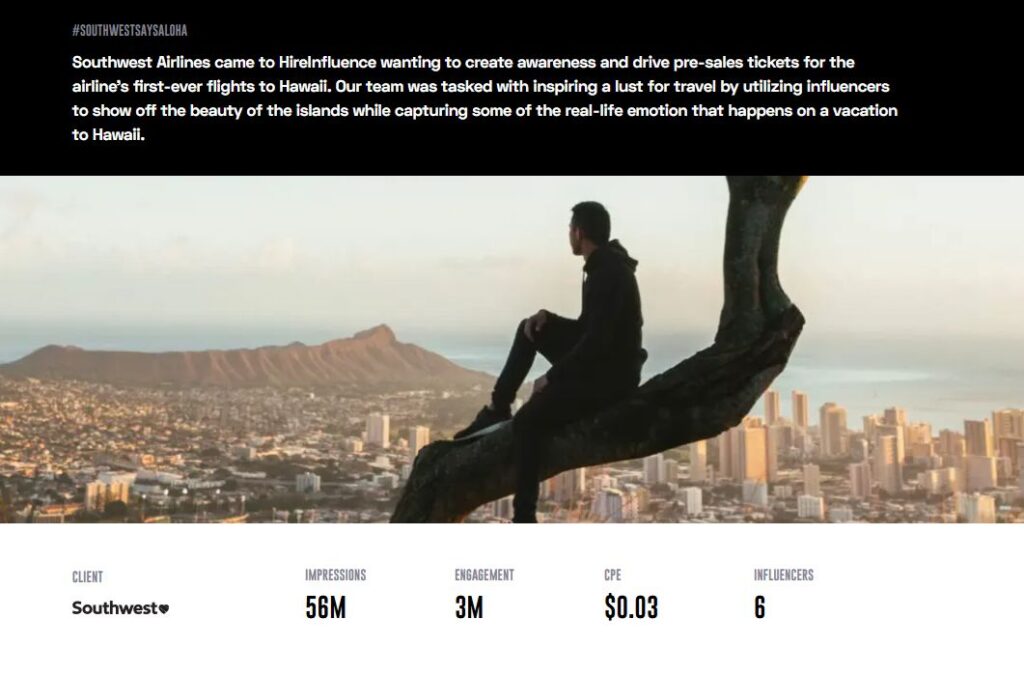
The #OREOShamROCKout program for Oreo and McDonald’s returned 1.7M impressions at $0.06 cost per engagement. The #SouthwestSaysAloha program for Southwest Airlines delivered 56M impressions and 3M engagements. Programs at that scale sit inside procurement frameworks rather than alongside them.
Additional campaign detail is published in the work portfolio.
The HireInfluence Model for Enterprise Procurement
Founded in 2011, HireInfluence is a full-service influencer marketing agency built for enterprise brands, headquartered in Houston with offices in Austin, Los Angeles, and New York. The firm runs creator programs for brands including Adidas, MTV, Microsoft, Target, Warner Bros, and eBay, covering strategy, talent sourcing, branded content production, paid amplification, and performance reporting. Creator selection runs through a manual vetting and validation process rather than database filtering alone, and campaigns are scoped to each client’s objectives rather than sold as fixed packages.
Brands preparing a procurement process should read the influencer exclusivity clauses guide, which covers the licensing terms an MSA has to accommodate, and the FTC influencer disclosure guidelines for enterprise brands. Scoping conversations start through contact.