Fashion is one of the most competitive verticals in influencer marketing, and also one of the most oversimplified. Brands assume that finding stylish creators with large followings is the hard part. It is not. The hard part is identifying creators whose audiences actually purchase in the brand’s category, structuring content that drives conversion rather than just engagement, managing usage rights so campaign assets can be amplified beyond organic reach, and measuring results in a way that connects to revenue rather than impressions alone.
Table of Contents
According to Grand View Research, the global fashion influencer marketing market was valued at $6.82 billion in 2024 and is projected to reach $39.72 billion by 2030, growing at a compound annual growth rate of 33.8%. That trajectory reflects how decisively fashion brands have shifted budget toward creator-driven marketing. It also means competition for effective creator partners is intensifying. The brands that will command the best creator talent and the strongest campaign results are the ones working with agencies that understand fashion at the structural level, not just the aesthetic one.
Why Fashion Influencer Marketing Is Structurally Different
Fashion campaigns carry specific demands that generalist agencies often underestimate. Visual standards are higher. Brand alignment requirements are more granular. Campaign timing is tied to product release cycles, seasonal drops, and cultural moments like fashion weeks that do not flex. Creator selections need to account not just for audience size but for aesthetic positioning: whether the creator’s visual identity reinforces or dilutes the brand’s point of view.
There is also the question of tier strategy. A fashion campaign running celebrity-level influencers alongside micro-creators requires careful coordination so both tiers tell a coherent brand story rather than producing content that looks fragmented across different audience segments. This is a creative and operational challenge most brands cannot manage in-house at scale.
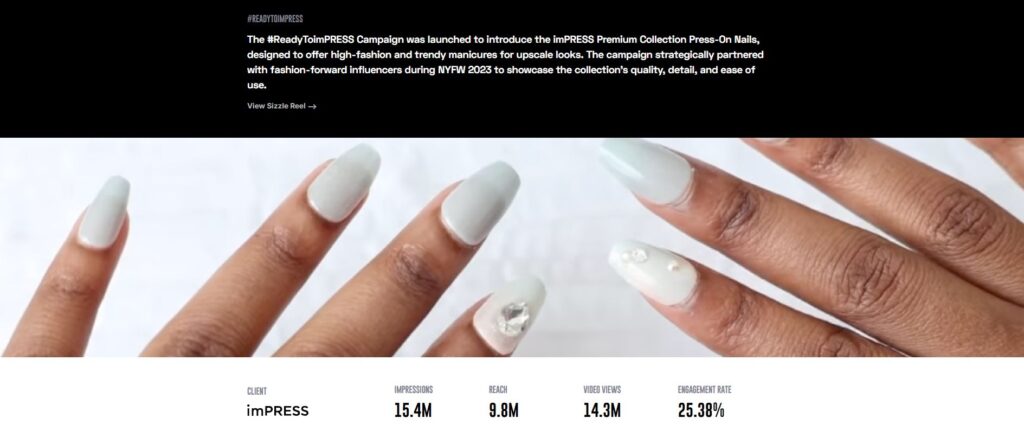
HireInfluence has managed influencer campaigns for fashion-adjacent brands that demand exactly this kind of precision. The imPress Nails campaign during New York Fashion Week is a clear illustration. HireInfluence sourced luxury fashion influencers specifically aligned to the imPress brand aesthetic, deployed them during one of the highest-profile cultural moments in the fashion calendar, and structured content with a direct sales call-to-action driving to the imPress website. This was not a brand awareness exercise. It was a conversion campaign built inside a fashion context.
Tier Strategy for Fashion Campaigns
No single creator tier is the right answer for a fashion brand. The question is how to combine tiers to serve different campaign objectives simultaneously.
Celebrity and macro influencers deliver scale and prestige association. For fashion brands where perception of status or aspiration is part of the value proposition, this tier creates the cultural positioning that drives desire. The cost-per-engagement is higher, but the brand equity effect is difficult to replicate through micro-creator programs alone.
Micro and mid-tier creators deliver engagement density and audience trust. Followers of creators in the 50,000 to 500,000 range often have stronger purchase intent signals than mega-influencer audiences. These creators tend to produce more authentic, editorial-quality content that performs well both organically and when amplified as paid media.
Nano creators, particularly in niche fashion categories such as sustainable fashion, streetwear, or plus-size styling, offer hyper-targeted reach with high engagement rates. For brands entering or expanding within a specific fashion segment, nano-creator programs can establish credibility faster than top-down celebrity activations.
A capable agency manages all three tiers simultaneously, coordinating messaging and timing across different creator profiles while maintaining brand consistency. HireInfluence’s campaign management infrastructure is built for exactly this kind of multi-tier activation.
Platform Strategy in Fashion Influencer Marketing
Fashion campaigns cannot treat all platforms as equivalent. Each has a distinct role in the consumer journey.
Instagram remains the primary platform for fashion brands in terms of visual portfolio, shoppable content, and brand credibility. Feed posts and Reels from fashion creators on Instagram carry the highest perceived quality signal and are the most effective for upper-funnel brand positioning.
TikTok is where fashion discovery happens, particularly for younger consumer segments. Short-form styling content, brand hauls, and reaction-format videos generate viral reach and direct purchase intent for fashion brands with products in accessible price ranges. HireInfluence is an official TikTok Shop Lite Program partner, which gives enterprise fashion clients access to TikTok shopping infrastructure and exclusive platform data unavailable through standard agency arrangements.
YouTube serves longer consideration cycles, particularly for fashion brands where product quality, construction, or styling versatility benefit from extended demonstration. Long-form review and styling content on YouTube has strong shelf life, continuing to generate views and purchase intent well beyond the initial publish date.
A serious influencer marketing strategy for a fashion brand allocates talent and budget across these platforms based on where the target consumer actually makes fashion decisions, not where the brand has historically been most comfortable spending.
Content That Converts, Not Just Content That Looks Good
Fashion is a visually driven category, and it is easy for campaigns to optimize for beautiful content at the expense of content that actually sells. The two objectives are not mutually exclusive, but they require different disciplines to align.
Content designed to convert needs a clear purchase path. That means product visibility within the content, a direct call-to-action, and ideally a trackable link or promo code that connects content views to purchase events. HireInfluence integrates with retail tracking tools like MikMak to build these measurement bridges. The Ricola #CoatYourThroat campaign tracked 62,500 retail purchase clicks through MikMak integration, demonstrating what conversion attribution looks like at scale. The same approach translates directly to fashion campaigns where the goal is sales, not just reach.
Usage Rights and Paid Amplification
Fashion brands that invest in influencer content and then let it live and die in organic feeds are leaving significant value on the table. High-performing creator content, when licensed and deployed as paid media through whitelisting, consistently outperforms brand-produced ad creative. The authenticity of the creator’s presentation transfers to the paid context, and the performance data reflects it.
HireInfluence handles usage rights negotiation and influencer whitelisting as part of its campaign workflow, which means content produced for organic campaigns is structured from the start to support paid deployment. For fashion brands running awareness campaigns that need to convert into commerce outcomes, this integration between organic and paid is where the return compounds.
The Enterprise Standard for Fashion Campaigns
Fashion influencer marketing at the enterprise level requires infrastructure that most boutique agencies cannot support: proprietary analytics for creator evaluation and campaign performance, legal and compliance management including FTC disclosure oversight, multi-platform execution capabilities, and reporting frameworks that connect campaign activity to business outcomes.
HireInfluence operates at that level. Named clients include Microsoft, Southwest Airlines, Target, and Grammarly, alongside fashion-adjacent work including the imPress Nails New York Fashion Week campaign. The agency’s minimum engagement starts at approximately $100,000, reflecting the operational depth required to manage campaigns that perform at enterprise scale rather than test-budget experiments.
Fashion brands serious about influencer marketing as a growth channel need an agency partner that can handle the creative ambition and the operational complexity simultaneously. For enterprise brands building that program, contact HireInfluence to discuss what a campaign built for your category and goals actually looks like.