Enterprise brands adopt tiktok spark ads because the format promotes an existing organic post rather than a purpose-built commercial, and platform research explains why that distinction produces different economics. Nearly 9 in 10 TikTok users say they discover new content they enjoy while using the app, and roughly half say they discover new products through ads posted by a brand. 84% of people report being convinced to buy a product or service after watching a branded video, 67% want a variety of storytelling approaches from the brands they follow, and 52% of internet users say they want brands to be authentic. The performance record tracks those preferences closely. Bridal jewelry retailer James Allen ran the format against standard in-feed placements and recorded a 25% higher click-through rate and a 24% higher conversion rate, with CPM running 66% lower and CPC 67% lower than the brand’s other social advertising channels. Fashion label Monnalisa worked with three creators and reached more than 1.5 million users across 8 million impressions. The pattern across those results is consistent: the format wins because the creative was never designed to look like an ad, which makes the authorization of that creative, rather than the media buy, the real constraint on the program.
Table of Contents
Why Consumer Discovery Behavior Drives TikTok Spark Ads Performance
Most paid social formats ask a brand to interrupt a feed. The native format inverts the transaction. It takes a post that already earned its distribution organically, with real likes, real comments, and a real account identity attached, and buys it additional reach while leaving every engagement signal credited to the original post. Nothing about the viewing experience announces that money changed hands. That is not a cosmetic difference. It changes what the audience believes it is watching, and the discovery data explains why belief matters so much on this particular platform.
Users arrive expecting to find things they did not know existed. When nearly nine in ten report discovering content they enjoy in the ordinary course of scrolling, and about half report discovering products through brand advertising, the platform has effectively trained its audience to treat commercial content as part of the entertainment rather than an intrusion on it. TikTok for Business frames this as brands showing up the way any other member of a community shows up, and the framing is accurate to how the format behaves in practice. The ad does not sit outside the culture of the feed. It is a post from the feed with budget attached.
The authenticity numbers set the boundary conditions on that advantage. When 52 percent of internet users say they want brands to be authentic and 67 percent want varied storytelling rather than a single repeated message, a brand that boosts one polished hero asset for a full quarter is spending against the grain of stated audience preference. The format rewards volume and variety of genuine creator posts, which means the constraint on program scale is not media budget. It is the size of the authorized creative library and the rights that govern it.
That is where the economics get interesting, and where the James Allen result stops being a curiosity. A 25 percent lift in click-through and a 24 percent lift in conversion against non-native placements is meaningful. The 66 percent CPM reduction and 67 percent CPC reduction against the brand’s other social channels is a different order of finding, because it says the format was not just outperforming the alternative on TikTok, it was outperforming the brand’s spend elsewhere. Cost efficiency of that magnitude does not come from better targeting. It comes from creative that the auction rewards because audiences do not scroll past it.
The Monnalisa program shows the other half of the equation. Three creators, a single simple creative device, and the format carried it to more than 1.5 million users and 8 million impressions. What made that possible was not the media plan. It was that three creators had produced content their own audiences already wanted, and the brand had the authorization to put money behind it. Enterprise brands that treat this format as a media tactic will underuse it. Brands that treat it as a rights and creative-supply problem, solved before the campaign launches, get the economics the platform data describes.
What Enterprise Brands Should Expect From a Spark Ads Partner
Program strategy and design. The agency has to decide before creator contracts are signed which posts are candidates for amplification and what each is meant to accomplish, because a post boosted for reach and a post boosted for conversion need different creative and different authorization windows. This planning belongs inside dedicated campaign services rather than in a media plan written after the content exists.
Creator sourcing and verification. The agency has to select creators whose organic posts are worth amplifying in the first place, which is a stricter test than selecting creators worth paying. Amplification multiplies whatever the creative already does. A post that fails to hold attention organically will fail more expensively with budget behind it, so verification has to look at completion behavior and comment quality on a creator’s unpaid work, not just at audience size or the polish of a media kit.
Platform and commerce integration. The agency has to connect authorized creative to the commerce surface where the brand actually transacts, since the format supports shopping objectives and the creative that converts differs from the creative that entertains. Practitioners can situate this alongside the firm’s broader TikTok Spark Ads and creator campaigns.
Creative direction and content production. The agency has to brief for variety rather than for a single hero asset, because audience preference and auction dynamics both punish repetition. A UGC overview explains the production model that supplies a library deep enough to amplify.
Audience and segment-specific execution. The agency has to recognize that an authorized post carries the creator’s identity into the ad slot, which means the creator is doing the audience targeting before the media platform ever does. A creator whose organic audience already resembles the brand’s target segment will deliver efficiency that no amount of demographic targeting can replicate on a mismatched post. Segment planning therefore happens at creator selection, and the media settings refine it rather than establish it.
Cross-platform orchestration. The agency has to negotiate usage terms that anticipate where else the creative will run, because a post authorized only for one platform’s ad system becomes a stranded asset the moment the campaign performs well. The authorization window, the territories, and the permitted objectives all need to be settled at contract, and they need to align with the flight dates of everything else the brand is running. Orchestration failures in this format are almost always rights failures discovered late.
Paid amplification. The agency has to identify which organic posts have earned additional spend and move budget behind them while the signal is still fresh, which requires the media and creator teams to sit in the same operating rhythm. That coordination lives in a specialties and services capability built for rapid reallocation.
Attribution and measurement. The agency has to separate the performance of the creative from the performance of the media, or a brand will keep buying the wrong thing. Distinguishing those two contributions demands an analytics capability that can compare amplified posts against their own organic baselines.
Program Delivery Across Creator and Paid Amplification
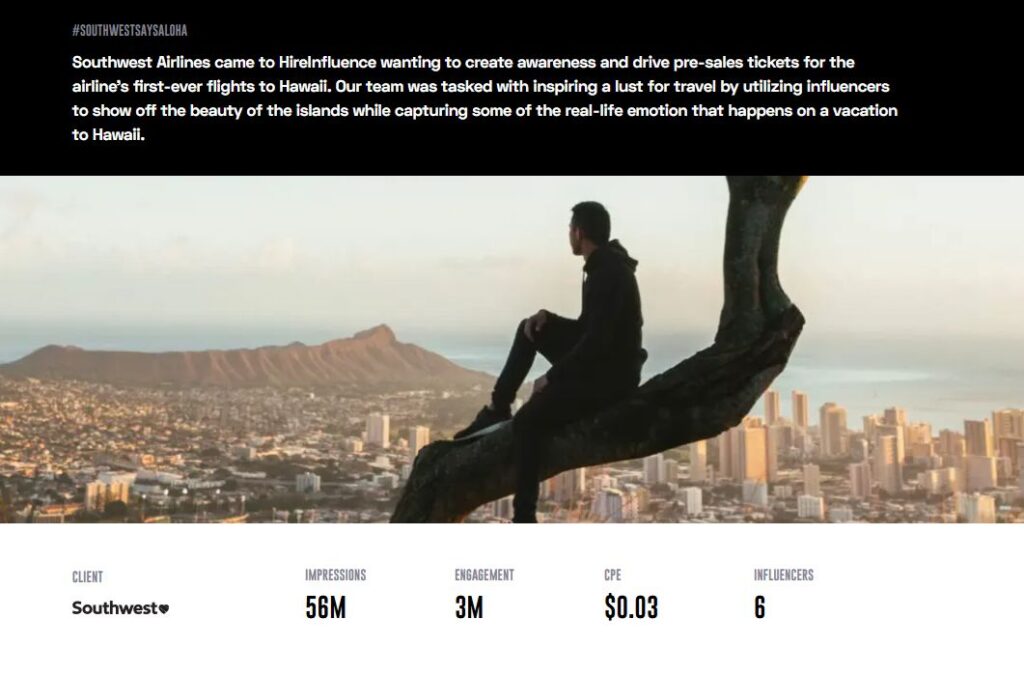
Amplification standards only matter when the underlying creator programs produce content worth amplifying. The Grammarly creator program worked with 133 creators to generate 214M impressions and 33.1M views, producing $15M in earned media value, a result that depends on a creative library deep enough to sustain distribution. The #SouthwestSaysAloha program for Southwest Airlines reached 56M impressions and 3M engagements.
The #MyMTVStyle campaign for MTV produced 16.1M impressions and 216,600 engagements at $0.01 cost per view and a $1.50 CPM on TikTok, a cost structure that reflects exactly the auction advantage native creative earns. The #CoatYourThroat program for Ricola delivered 26M impressions and 20.5M reach with 18 influencers, held a 13.17% engagement rate, and drove 62,500 MikMak retail clicks, documented in the Ricola case study. The #OREOShamROCKout activation for Oreo and McDonald’s produced 1.7M impressions at $0.06 cost per engagement, and further programs appear in the work portfolio. Across these, the cheapest impressions consistently belong to the campaigns where creator creative carried the media, not the other way around.
How to Evaluate a TikTok Spark Ads Agency
First, ask when the agency secures amplification rights. The agency should confirm that authorization is negotiated at the point of creator contracting, with defined duration, territories, and objectives, rather than requested after a post begins to perform.
Second, ask how the agency decides which posts to boost. The agency should describe an organic performance threshold, explain the signals it watches in the first hours after publication, and be able to name posts it declined to amplify and the reason each one failed the standard.
Third, ask how the agency protects the comment section. The agency should treat comments as part of the creative, since the format carries them into the ad, and it should have a staffed process for responding rather than a plan to disable engagement.
Fourth, ask how creative variety is maintained across a flight. The agency should show a production model that supplies a rotating library of authorized posts, because audience preference for varied storytelling and the auction’s appetite for fresh creative both degrade when a single asset carries the budget.
Fifth, ask what the amplification budget should be relative to creator fees and where the variance comes from. The agency should separate creator compensation, usage rights, content volume, and media spend into distinct line items and reason from a published cost of influencer marketing guide rather than a number produced on demand.
The HireInfluence Model for Spark Ads Amplification
Founded in 2011, HireInfluence is a full-service enterprise influencer marketing agency with 25+ people across 10+ states, operating from four offices: Houston and The Woodlands in Texas, Austin, Los Angeles, and New York. Programs for Coca-Cola, Target, McDonald’s, Oreo, Southwest Airlines, and Walmart run on a six-figure engagement floor, which reflects the rights, production, and measurement infrastructure that amplification at enterprise scale requires.
The firm has been a TikTok Shop Lite Program partner since July 2024, a designation that matters directly here, because amplification and commerce increasingly resolve into a single workflow rather than two adjacent ones. HireInfluence was named Marketing Agency of the Year at the 2024 MUSE Creative Awards and Digital Marketing Agency of the Year at the 2026 U.S. Agency Awards.
Before founding the firm in 2011, Jason Pampell spent years managing content rights, licensing, and strategic media partnerships for Forbes and Billboard, where the central question was never simply whether a piece of content was good but who held the right to use it, for how long, in which markets, and to what commercial end. Amplification is that question in a new venue. An authorized post is a licensed asset, and the brands that scale this format are the ones that treated it as a licensing problem before it became a media problem. The HireInfluence team negotiates those terms at contracting, so that a post which performs on a Tuesday can carry budget by Wednesday without a rights conversation that no one started in time. Brands can reach the firm through its contact page or read more about its background in the about section.
The platform research closes the argument from the audience side. When most users come to the app to discover, when half of them discover products through brand advertising, and when a native creative can cut CPM by two-thirds against a brand’s other channels, the constraint on performance is no longer reach. It is the depth of the authorized creative library, and that is a problem solved at the contract table.