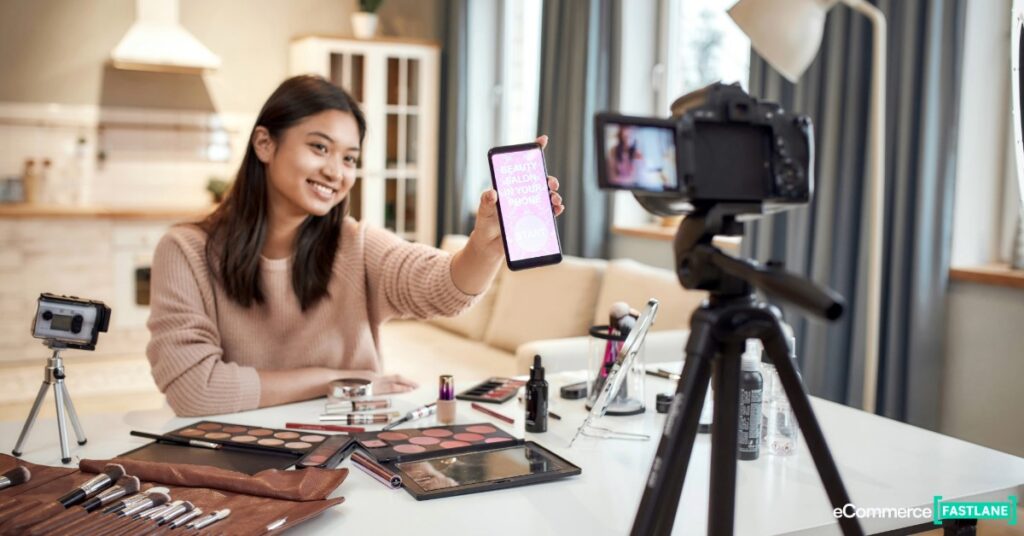
Creator videos are linked to a Google Ads account and then promoted as ads through campaigns, running from the creator’s own channel. The critical point is that linking a video conveys promotion capability, not usage rights. Google states plainly that the advertiser is responsible for securing sufficient rights, which may require a separate agreement with the creator.
Table of Contents
- What changed, and why old guidance is unreliable
- The rights gap is the whole problem
- What creator partnerships boost actually supports
- Discovery, and what it does not tell a brand
- How this differs from TikTok, stated plainly
- What to ask before the scope of work is signed
- What should disqualify an agency, including this one
- Program Delivery Across Creator Video and Paid Distribution
- The HireInfluence Model for YouTube Paid Media
Brands evaluating a youtube paid media agency for creator work are usually looking for the equivalent of TikTok’s Spark Ads, and the equivalent does not exist in the form they expect. YouTube’s model puts the platform mechanism and the rights grant in two different places. On TikTok, the authorisation code is itself a licence with a defined term. On YouTube, the linking action unlocks the ability to promote, gather organic view metrics, and build audience segments, while the right to run the content as advertising has to be established in a contract the platform never sees. Everything difficult about YouTube creator amplification follows from that separation.
What changed, and why old guidance is unreliable
Anyone briefing this work from material written before spring 2026 is working from a superseded product map.
BrandConnect no longer stands alone. It has been consolidated with the Creator Partnerships Hub into a single platform called YouTube Creator Partnerships, announced at NewFronts in March 2026 and integrated into YouTube Studio for creators and Google Ads and Display and Video 360 for advertisers. YouTube’s position is that the functionality creators knew as BrandConnect has not been discontinued, only consolidated under a different name.
Partnership ads are now creator partnerships boost. Same product, current name.
Access has widened considerably. Google Ads documentation states that from June 2026 the Overview, Creator Search, and List Management features are available in all locations where the YouTube Partner Program is active, and that minimum spend requirements and Large Customer Sales or Google Customer Solutions account assignment no longer apply. The product is described as being in open beta.
That last change is the one with commercial consequences. A capability that was previously gated behind spend thresholds and account management tiers is now broadly available, which means it stops being a differentiator held by a handful of large advertisers and becomes table stakes.
The rights gap is the whole problem
Google’s own documentation is unambiguous, and it is worth restating because it is the fact most often glossed over in agency pitches. The advertiser is responsible for securing sufficient rights to use a creator video as an ad, and doing so may require a separate agreement with the creator or other rights holders.
Two mechanics make this easy to miss.
Creator-initiated links are accepted automatically. When a creator adds a brand partner in YouTube Studio during upload, consents to the terms, and discloses the paid promotion, the link is auto-accepted and appears in the advertiser’s Google Ads account with no action required. Videos arriving this way land in a Received tab rather than a Linked tab, and Google notes they may not surface in the standard asset library, so they have to be found by searching the exact video title or pasting the URL.
Nothing about that flow produces a licence. A video can appear in an advertiser’s account, be technically promotable, and still be unlicensed for advertising use. The platform will not stop the campaign. The rights holder might.
For brands running programmes at scale, this converts the creator contract from paperwork into the load-bearing element. Term, territory, media type, and whether paid usage is included at all have to be settled in writing before any budget is committed, because the platform provides no backstop and no expiry warning.
What creator partnerships boost actually supports
The campaign support matrix is specific enough to plan against, and it is not uniform.
Running ads with organic creator videos is supported across Video action, Demand Gen, Video reach, Video view, App, and Performance Max campaigns. Data segments and organic view metrics are likewise available across all of them, with App limited to campaigns for install.
The co-branded partnership ad format is narrower. It is supported on Demand Gen for In-Feed and Shorts, on Video reach and Video view for Shorts, In-Feed, and Shorts on Living Room, and on App for iOS only. It is not supported on Video action or Performance Max. A plan that assumes the co-branded format across every campaign type will not survive contact with the platform.
Two further mechanics are worth building into a scope. The organic viewership of a linked creator video can be used to create data segments for audience optimisation, and those segments can seed lookalike audiences in Demand Gen. And ads run from the creator’s channel, with Google noting that some click targets in these campaigns may direct users to the creator’s channel rather than the brand’s destination, which is a real consideration for a performance-weighted plan.
Discovery, and what it does not tell a brand
YouTube Creator Partnerships surfaces suggested creator videos using signals from the advertiser’s own account, including the Google Ads account name, the business name used in campaigns, the linked YouTube channel, ad creatives, and landing page URLs. On the content side it matches against creators in the YouTube Partner Program, across ten languages including English, Japanese, German, Portuguese, French, Italian, Spanish, Indonesian, Hindi, and Korean, using partnership signals such as sponsorship hashtags and videos marked as paid product placements.
Google is explicit that this does not surface every video sponsored by a brand, only examples. It also notes that applying audience or performance filters excludes creators who have not opted in to share detailed channel insights, which means a filtered search returns a smaller and differently composed pool rather than a ranked version of the same one. A brand told that a shortlist represents the full field should ask which filters produced it.
Measurement is more conventional. Standard Google Ads reporting and Lift measurement are available, and Google recommends head-to-head experiments with a control campaign running regular creative against a test campaign that adds a creator video, holding budget and targeting constant so the creative variable is isolated.
How this differs from TikTok, stated plainly
Brands running both platforms should not assume the models transfer, because the difference is not one of degree.
On TikTok, the Spark Ads authorisation code is itself the grant. It has a duration selected from a documented set, it expires, and expiry is enforced by the platform through error codes that stop delivery. The mechanism is restrictive, but it is legible: a brand can see when its right to run something ends.
On YouTube, linking grants promotion capability and analytics access while the right to advertise the content lives entirely in a contract the platform does not hold, cannot see, and will not enforce. There is no expiry warning because the platform is not tracking the term. A campaign can continue running long after the agreed usage window has closed, and nothing in Google Ads will indicate it.
The practical implication is that YouTube shifts risk from operations to legal. On TikTok the failure is a stopped ad. On YouTube the failure is an ad that keeps running when it should not.
What to ask before the scope of work is signed
Where do paid usage rights sit in the creator agreement, and what is the term? Term, territory, and media type should be explicit and written before content is produced, because the platform provides no backstop.
Who tracks the usage window, given that Google Ads will not? A named owner and a register. This is the control that substitutes for the enforcement TikTok provides automatically.
Which campaign types are in the plan, and does the creative format survive them? The co-branded partnership format is unavailable on Video action and Performance Max. A plan assuming it everywhere will change at build.
How were the shortlisted creators found, and which filters were applied? Filtering on audience or performance data excludes creators who have not opted in to share detailed insights, so a filtered list is a differently composed pool rather than a ranked version of the full one.
What should disqualify an agency, including this one
HireInfluence operates on a six-figure engagement floor, so brands seeking a single boosted creator video are better served elsewhere. The firm represents brands rather than creators. And brands whose creator agreements are executed by a procurement function with no visibility into media flighting should resolve that before engaging anyone, because on YouTube the contract is the only control that exists.
Program Delivery Across Creator Video and Paid Distribution
The #CoatYourThroat programme for Ricola generated 26M impressions, and the campaign is documented in full in the Ricola case study.
The #OREOShamROCKout programme for Oreo and McDonald’s returned 1.7M impressions at $0.06 cost per engagement, and the #SouthwestSaysAloha programme for Southwest Airlines delivered 56M impressions and 3M engagements. Both are examples of the pattern this article describes: distribution scale that is only achievable when the rights position was settled before the media was planned, rather than negotiated while a flight was already live.
Additional campaign detail is published in the work portfolio.
The HireInfluence Model for YouTube Paid Media
Founded in 2011, HireInfluence is a full-service enterprise influencer marketing agency with 25 or more people across 10 or more states, working from offices in Houston, The Woodlands, Austin, Los Angeles, and New York. The firm runs programs for brands including Coca-Cola, Microsoft, Meta, Grammarly, MTV, and Target on a six-figure engagement floor. It was named Marketing Agency of the Year at the 2024 MUSE Creative Awards and Digital Marketing Agency of the Year at the 2026 U.S. Agency Awards, and it has been a TikTok Shop Lite Program partner since July 2024.
Because the rights position does the work the platform will not do, brands should read the guidance on creator content and studio ads in paid media and check the exclusivity terms in each creator contract, since term and territory are precisely the clauses that decide whether a linked video can legally carry a media budget. Scoping conversations start through contact, and the firm’s background is set out on the about page.