An agency that can differentiate in the most creator-saturated category in packaged goods. Energy and functional drinks have more creator partnerships per dollar of category revenue than almost anything else on shelf, which means the question is not whether creator content works but why a given brand’s version of it would be noticed at all.
Table of Contents
- Saturation is the strategic problem
- Caffeine and functional content shape the claims
- Audience age is a live consideration
- Sponsorship culture complicates conflicts
- What actually performs
- What to ask an agency
- Retail execution is where the category converts
- What to measure instead of engagement
- Flavor launches are the operating rhythm
- Program Delivery Across Beverage and Packaged Goods
- The HireInfluence Model for Beverage Categories
Beverage is the category where influencer marketing became a default rather than a decision. Beverage influencer marketing services have to work in a space where the audience has seen the format hundreds of times, where caffeine content and functional claims constrain what may be said, and where audience age composition raises questions most CPG categories never face. This article covers those. It is not legal advice, and functional claim substantiation needs specialist counsel.
Saturation is the strategic problem
Every competitor is doing this, at scale, with overlapping creator rosters.
The formats are exhausted. The taste test, the desk shot, the gym reach, the flavor reveal. An audience that has seen a thousand of them discounts the thousand and first.
Creator overlap is near-total in the fitness, gaming, and lifestyle segments the category defaults to.
Cost per creator has risen accordingly, because demand is concentrated on a narrow population.
What differentiates is going where the category is not: creators whose audience overlaps the buyer without being category-native, occasions the category does not own, and formats that are not a product shot. An agency proposing the standard fitness and gaming roster is proposing what every competitor already bought.
Caffeine and functional content shape the claims
Caffeine content is a fact rather than a benefit, and content implying performance outcomes from it moves into claim territory.
Functional ingredient claims covering focus, energy, recovery, immunity, or mood sit under health claim substantiation standards. The FTC’s health products guidance sets the bar at competent and reliable scientific evidence, which for benefit claims generally means randomized controlled human trials, and notes that testimonials reporting more dramatic results than users can generally expect are likely deceptive. Detailed treatment of that standard sits in the health and wellness guidance rather than here.
A creator describing how a drink makes them feel is making a testimonial claim, and it is the most natural thing for them to say.
Consumption volume shown matters. Content depicting several cans in a session is depicting a consumption pattern the brand should have a position on.
The control is the regulated-category discipline: exact permitted phrasing for any functional claim, prohibited territory named by concept, and an instruction that personal experience be framed as personal.
Audience age is a live consideration
The category’s most sensitive issue and the one most often left unaddressed.
Creator audiences skew young in gaming, sport, and lifestyle, which are the segments the category buys most heavily.
Age composition is knowable. Platform audience data gives it, and it should be a selection criterion rather than an afterthought.
Brands should have a written position on the audience composition they will and will not buy against, established before briefing rather than defended afterward.
Content should not depict consumption by anyone who appears underage, and the brief should say so explicitly rather than assuming it is understood.
This is a reputational and regulatory exposure in equal measure, and an agency that has not raised audience composition unprompted has not thought about the category seriously.
Sponsorship culture complicates conflicts
Energy brands are among the heaviest sponsors in gaming, motorsport, and action sport, which creates a conflict landscape unusual in CPG.
Creators frequently hold their own sponsorships, sometimes with competing beverage brands, sometimes with teams or events sponsored by one.
Athlete and team relationships may restrict what a creator can be seen drinking.
Event content is governed by the rights holder, and clean-venue rules constrain what may appear.
Vetting has to include the creator’s existing sponsorship portfolio, which is a check most CPG categories skip.
What actually performs
Occasion content rather than product content, covering the study session, the shift, the drive, and the early start. The drink is present rather than featured.
Flavor launches are the category’s natural content moment and should be treated as an LTO with a standing roster rather than a fresh campaign each time.
Community and subculture content where the brand has a genuine relationship, which is the one place saturation works in a brand’s favor.
Sampling at events produces content from people who were there, with disclosure applying to the sample as in-kind compensation.
What to ask an agency
How does this roster avoid the creators every competitor already uses?
What is the position on audience age composition, and how is it measured?
Who supplies the permitted phrasing for functional claims?
How is creator sponsorship conflict checked?
What occasion is the content built around, if not the product?
Retail execution is where the category converts
Beverage is a distribution business before it is a marketing one, and creator programs that ignore that produce awareness the shelf cannot capture.
Cold availability is the purchase, and a brand not in the cooler at the point of thirst loses regardless of what the audience saw that morning.
Convenience and immediate-consumption channels behave differently from grocery, with different shoppers, different missions, and different content relevance.
Multipack and take-home purchase is a planned decision made in a different retail environment from single-serve, and it responds to different content.
Geo-targeted amplification against the account footprint is what connects the content to a bottle somebody can actually buy, and it is the step most often skipped in favor of national reach.
What to measure instead of engagement
Engagement is abundant and uninformative in a saturated category, and four measures tell a brand more.
Retail velocity in the accounts where amplification ran, read against periods without activity.
Brand recall against a holdout, which is what an awareness objective actually requires and what a controlled study delivers.
Trial conversion from sampling, where sampling is part of the program and redemption is trackable.
Share of creator voice in the category, which is measurable and is the honest answer to whether a brand is present in a space every competitor occupies.
None of these appears on a standard influencer report and all of them are obtainable.
Flavor launches are the operating rhythm
Beverage brands innovate on flavor constantly, and the launch cadence should drive the program structure rather than being handled as a series of campaigns.
Six to twelve launches a year is normal at scale, and rebuilding the process each time is the largest avoidable cost in the category.
A standing roster with long authorizations turns each launch into a brief rather than a project.
Launch content ages fast, since a limited flavor withdrawn leaves content promoting something unavailable.
Core range suffers from launch focus, which is where the volume actually sits, and a program consumed entirely by innovation leaves the base unsupported.
Program Delivery Across Beverage and Packaged Goods
The #CoatYourThroat program for Ricola drove 62,500 MikMak retail clicks, and the campaign is documented in full in the Ricola case study, a program in a category where the product benefit had to be described within what could be supported.
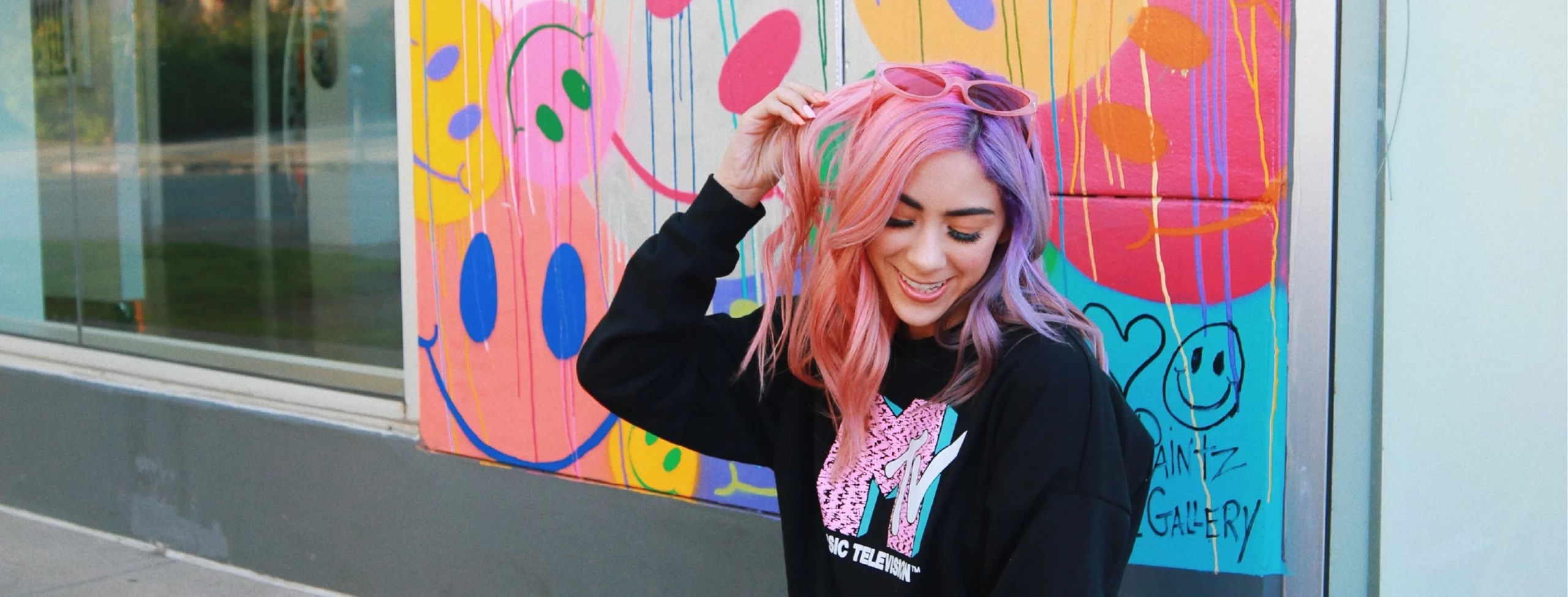
The #OREOShamROCKout program for Oreo and McDonald’s returned 1.7M impressions at $0.06 cost per engagement. For MTV, the #MyMTVStyle program returned 16.1M impressions and 216,600 engagements at $0.01 CPV and $1.50 CPM.
Additional campaign detail is published in the work portfolio.
The HireInfluence Model for Beverage Categories
Founded in 2011, HireInfluence is a full-service influencer marketing agency built for enterprise brands, headquartered in Houston with offices in Austin, Los Angeles, and New York. The firm runs creator programs for brands including Adidas, Honda, NFL, Southwest Airlines, Warner Bros, and eBay, covering strategy, talent sourcing, branded content production, paid amplification, and performance reporting. Creator selection runs through a manual vetting and validation process rather than database filtering alone, and campaigns are scoped to each client’s objectives rather than sold as fixed packages.
Beverage brands should read the influencer content approval process and the FTC influencer disclosure guidelines for enterprise brands. Neither is legal advice. Scoping conversations start through contact.