Marketing teams designing an influencer content approval process usually frame the question as how much creative control to hand over, and a survey of 204 marketing leaders reports that the handover already happened. Sixty-two percent of CMOs now leave interpretation to creators and supply only general brand guidelines, and almost 40% give creators full creative control outright. Ninety-seven percent plan to expand creator budgets, 65% run teams working with more than 50 creators, and lifestyle creators are ranked most important by 60%. Creator partnerships now run through seven or more departments, including social, media, PR, shopper marketing, and brand. The policy argument about creative autonomy is settled. What survived the settlement is a review workflow that seven departments still have standing to interrupt.
Table of Contents
Why the Workflow Outlived the Decision It Contradicts
There is a gap in that data that most brands have not noticed they are standing in. A large majority has formally decided not to direct creator work, and a substantial minority has decided not to direct it at all. Meanwhile the same organizations have spread creator partnerships across seven or more departments, each of which arrived with its own review interest, its own risk tolerance, and its own standing to send notes. The stated policy is non-interference. The operating reality is a queue. Nobody decided to build that queue; it accumulated, one department at a time, while the strategy documents were being written in the opposite direction.
This is why the common framing of the problem is wrong. Brands describe the tension as trusting creators versus protecting the brand, which implies a dial that can be set. The data says the dial has already been turned. The residual problem is not a philosophy of control but an unexamined workflow that continues to exercise a control the organization has formally renounced, through people who were never told the renouncing had occurred. A creator receiving four rounds of notes from three departments is not experiencing a brand that decided to direct their work. They are experiencing a brand that decided not to and forgot to tell its reviewers.
The consequence is specific and it is not primarily about creator morale. Review pressure does not produce worse content by forcing bad choices. It produces safer content by teaching the creator what will pass. A creator who has been through two campaigns with a given brand has learned which choices generate notes and which do not, and the rational response is to stop making the ones that generate notes. That adaptation happens quietly, before submission, and it never appears in a revision log. By the third campaign the brand is receiving pre-sanitized work and concluding, reasonably, that this creator has gotten easier to work with. Compliance and quality are unrelated properties.
What makes this expensive rather than merely ironic is what the brand was buying. The reason creators are ranked as the most trusted source of product recommendations, and the reason consumer trust in them rose 21 percent year over year, is that audiences believe a specific person is saying a specific thing in their own words. That belief is the entire asset. It is not enhanced by the content being better; it is destroyed by the content being ratified. An audience cannot inspect a review workflow, but it can detect the residue of one, and the detection does not require sophistication. Sanitized creator content reads as an ad, and reading as an ad is precisely the property the brand paid a premium to avoid.
The resolution is not less approval. It is approval with a defined jurisdiction. There are things a brand must be able to stop: an unsubstantiated claim, a missing disclosure, a competitor adjacency, a factual error about the product. Those are compliance objects and they are enumerable in advance. There are things a brand should have no standing to stop: pacing, tone, structure, humor, the order of the argument, whether the creator opens with the product or arrives at it. Those are the creator’s craft, and they are the thing that was purchased. The workable process names both lists before a campaign starts and gives every reviewer authority over the first and none over the second. That is a governance design, not a cultural aspiration, and it is what seven departments require in order to coexist with a policy of non-interference.
What Enterprise Brands Should Expect From a Content Approval Partner
Program strategy and design. The agency has to write the approval jurisdiction into the program before creators are briefed, enumerating what can be rejected and what cannot, because a review process defined after content arrives will be defined by whoever objects most loudly. That document belongs inside dedicated campaign services alongside the brief, since the two describe the same bargain from opposite sides.
Creator sourcing and verification. The agency has to source creators whose existing work already sits inside the brand’s compliance boundary, because that is what makes light review possible. A creator selected for reach and then constrained into acceptability produces the sanitized output the program was designed to avoid, and no approval workflow can repair a casting decision.
Platform and commerce integration. The agency has to know each surface’s disclosure and labeling mechanics well enough to treat them as fixed requirements rather than as review topics, since those obligations are not negotiable and should never consume a revision round. Settling them at brief time removes the single most common reason content bounces.
Creative direction and content production. The agency has to direct before production rather than correct after it, because the entire cost of the approval problem is incurred by moving judgment downstream of the work. Direction supplied at brief time shapes content at no relational cost; the identical note supplied after filming is a rejection. The UGC overview covers how supply gets structured when volume makes late correction impossible.
Audience and segment-specific execution. The agency has to defend segment-appropriate creative against reviewers who are not in the segment, which is one of the more common failure modes at enterprise scale. Content built for an audience the reviewing stakeholder does not belong to will read as wrong to that stakeholder, and being wrong to them is frequently the point.
Cross-platform orchestration. The agency has to prevent a single approval standard from being applied across surfaces with different native registers, since content that clears review by looking consistent across platforms is content that has been made to look like advertising on all of them. Reading across adjacent channels helps, and the TikTok influencer marketing resource is useful on how one surface’s register diverges.
Paid amplification. The agency has to flag that amplification raises the review stakes and to hold the line anyway, because content promoted with media budget attracts scrutiny that organic content escapes. The temptation is to sanitize before boosting, which reliably destroys the performance that justified boosting it. That sequencing runs through the specialties and services capability.
Attribution and measurement. The agency has to measure the approval process itself, tracking revision rounds, time to publish, and which department generated which notes, because an unmeasured workflow cannot be fixed and will be defended by everyone in it. Instrumenting the process is an analytics capability question rather than an operations one.
Program Delivery Across Content Approval at Scale
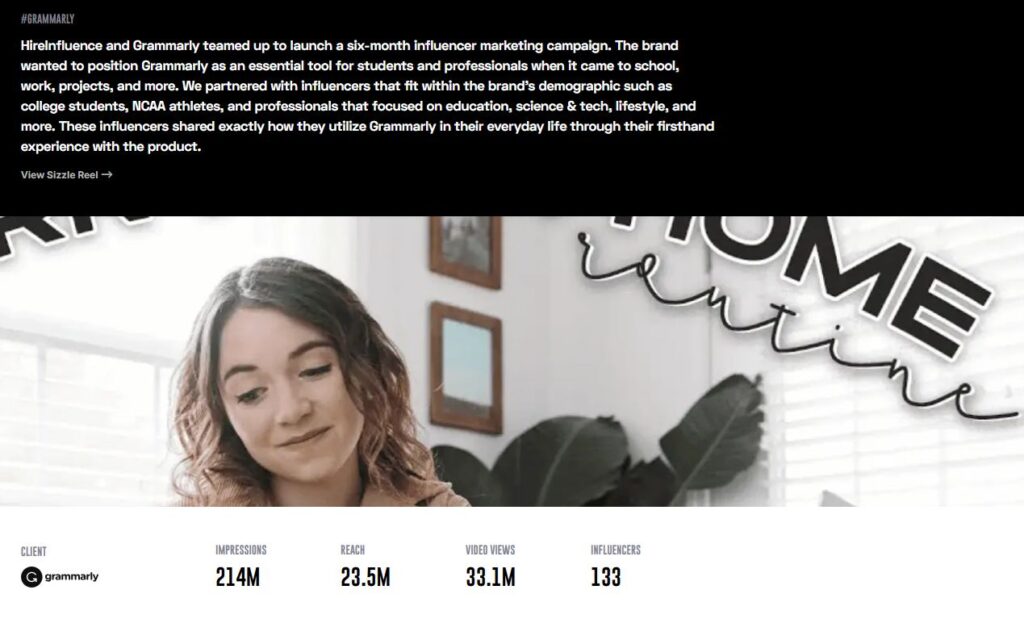
The MTV #MyMTVStyle activation is the useful reference, having produced 16.1M impressions and 216,600 engagements at $0.01 CPV and a $1.50 CPM on TikTok, efficiency that comes from content reading as native rather than as ratified. The Grammarly creator program ran 133 creators to 214M impressions and 33.1M views, a volume at which line-by-line review is arithmetically impossible and jurisdiction has to substitute for inspection.
The Oreo and McDonald’s #OREOShamROCKout campaign returned 1.7M impressions at a $0.06 cost per engagement. Southwest Airlines #SouthwestSaysAloha delivered 56M impressions and 3M engagements. The Ricola #CoatYourThroat program ran 18 influencers from micro to celebrity tier to 26M impressions, 20.5M reach, and a 13.17% engagement rate, closing with 62,500 MikMak retail clicks, which is what content people trusted enough to act on looks like at the end of the path. The Ricola case study and the work portfolio document how those programs were governed.
How to Evaluate a Content Approval Agency
First, ask for the list of things a reviewer may reject. The agency should be able to produce an enumerated list rather than a principle, and if the list is not written down before the campaign, it does not exist.
Second, ask who holds approval authority and how many people that is. The agency should be able to name a number, and a number above two across seven departments describes a queue rather than a process.
Third, ask what the revision cap is. The agency should treat unlimited revisions as a commercial term the brand is not paying for, since it converts a fixed-fee engagement into open-ended labor and teaches the creator to submit safe work.
Fourth, ask how quickly review happens. The agency should commit to a window measured in hours rather than days, because slow review is functionally identical to heavy review in its effect on what creators choose to make.
Fifth, ask what the approval overhead costs. The agency should account for review cycles as real expense in fee and in timeline rather than treating them as free; the cost of influencer marketing guide frames what that overhead displaces.
The HireInfluence Model for Influencer Content Approval
HireInfluence has operated since 2011 as a full-service enterprise influencer marketing agency, with 25 or more people across 10 or more states and offices in Houston and The Woodlands, Austin, Los Angeles, and New York. Engagements start at six figures, which reflects the compliance and governance infrastructure required to review at volume without reviewing line by line. The firm won Marketing Agency of the Year at the 2024 MUSE Creative Awards and Digital Marketing Agency of the Year at the 2026 U.S. Agency Awards, and has held TikTok Shop Lite Program partner status since July 2024. Programs for Grammarly, MTV, Coca-Cola, Meta, Walmart, and Southwest Airlines have run at scales where jurisdiction had to be defined in advance because inspection was not available. The contact page and the about section set out how that work is structured.
Before founding the firm in 2011, Jason Pampell spent years managing content rights, licensing, and strategic media partnerships for Forbes and Billboard. Both titles ran on an understanding a publisher cannot buy its way around: a byline’s worth came from a reader believing a specific person wrote it, and the editing that made copy safest was the same editing that made the byline worthless. A brand paying for a creator’s voice and then reviewing it into house style has bought the byline and printed the press release.
The survey settles what the coverage obscures. When 62 percent of marketing leaders have already stopped directing creator work and almost four in ten have handed over control entirely, the argument the industry keeps having is over, and the thing still overriding creators is not a policy but a queue nobody audited. When a brand has decided the creator’s judgment is the asset, an approval process that overrules it is not caution. It is the brand buying something and then destroying it on receipt.