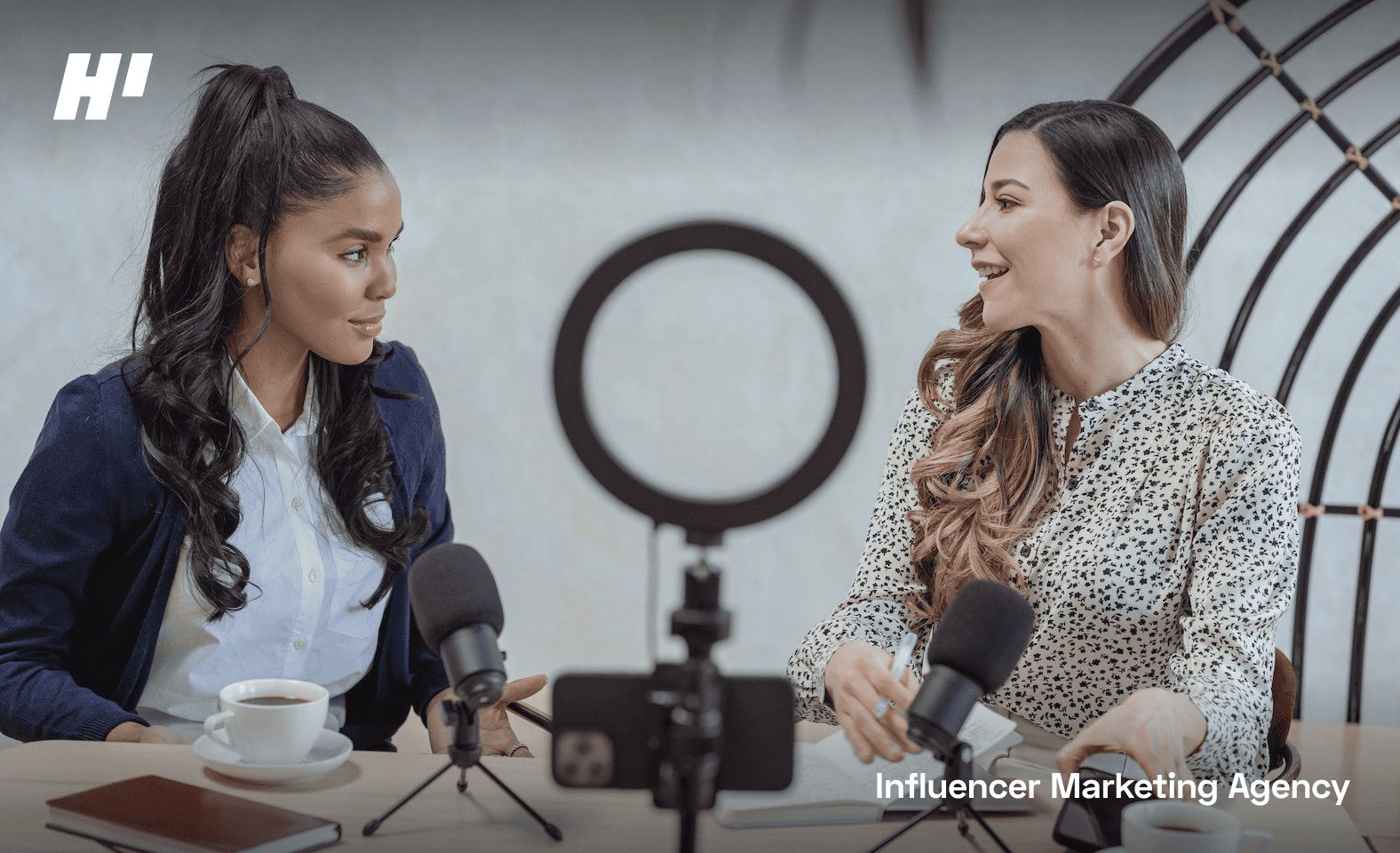
Brand awareness is not a soft metric. It is the foundation of every commercial outcome a marketing team is measured on. According to HubSpot’s 2026 State of Marketing Report, based on data from more than 1,500 global marketers, brand awareness is the top marketing goal for 35% of enterprise teams. The same report found that in 2026, consumer brands plan to increase investments in influencer marketing services specifically, citing short-form video as the highest-ROI media format, with 48.6% of marketers ranking it in their top three performers. These two findings point in the same direction: the most effective way to build brand awareness at scale right now is through creator-led content on social platforms.
Table of Contents
The logic is straightforward. Advertising reaches audiences. Creators reach communities. The difference matters because communities trust the voice at the center of them in ways that they do not trust advertising messages. A creator who has spent years building credibility with a specific audience can introduce a brand to that audience with a level of trust transfer that no paid media placement can replicate. For enterprise brands trying to grow awareness among audiences that do not already know them, that trust mechanism is the single most efficient path to meaningful recognition.
The brands that build durable market positions in competitive categories are consistently the ones investing in creator-led awareness at scale. The question is not whether to do it. It is whether your agency can build and execute the kind of program that actually moves brand metrics.
Why Awareness Campaigns Require a Different Architecture
Brand awareness campaigns are often treated as the simpler end of the influencer marketing spectrum: find some creators, get some impressions, report on reach. That framing misses what makes awareness campaigns actually work.
Awareness is not a moment. It is a frequency effect. Research consistently shows that it takes multiple exposures to a brand message before that message registers and sticks. A single creator post, even from a large account, generates a spike of visibility that fades quickly. A coordinated program that creates multiple touchpoints across different platforms and creator voices builds the kind of sustained presence that translates into genuine brand recognition.
This means that effective brand awareness campaigns require strategic sequencing: a mix of broad-reach creators who maximize new audience exposure, paired with mid-tier and niche creators whose audiences overlap with the target demographic and engage at higher rates. User-generated content from creator campaigns also circulates long after a campaign officially ends, giving brand awareness programs a compounding shelf life that paid advertising does not have. A well-produced creator post can surface in search results, get reshared across communities, and continue generating brand exposure months after it was published. It means multi-platform deployment, because different audiences spend time on different platforms and the same message needs to reach them where they are. And it means content that is genuinely native to each platform rather than repurposed from one format to another, because platform-native content consistently outperforms cross-posted creative.
Paid amplification through whitelisting and dark posting extends the reach of the best-performing organic creator content far beyond its initial audience. For brand awareness objectives, this step is critical: it takes high-performing content that is already resonating organically and puts paid budget behind it to reach audiences that the creator’s organic following does not cover. This is how enterprise brands achieve the scale that makes awareness compounding rather than episodic.
The Grammarly Model: Awareness at Scale
HireInfluence’s Grammarly campaign illustrates what brand awareness execution looks like when it is built for scale from the start. The campaign deployed 133 top-tier creators across YouTube, TikTok, and Instagram, generating 214 million impressions, 33.1 million views, and $15 million in earned media value.
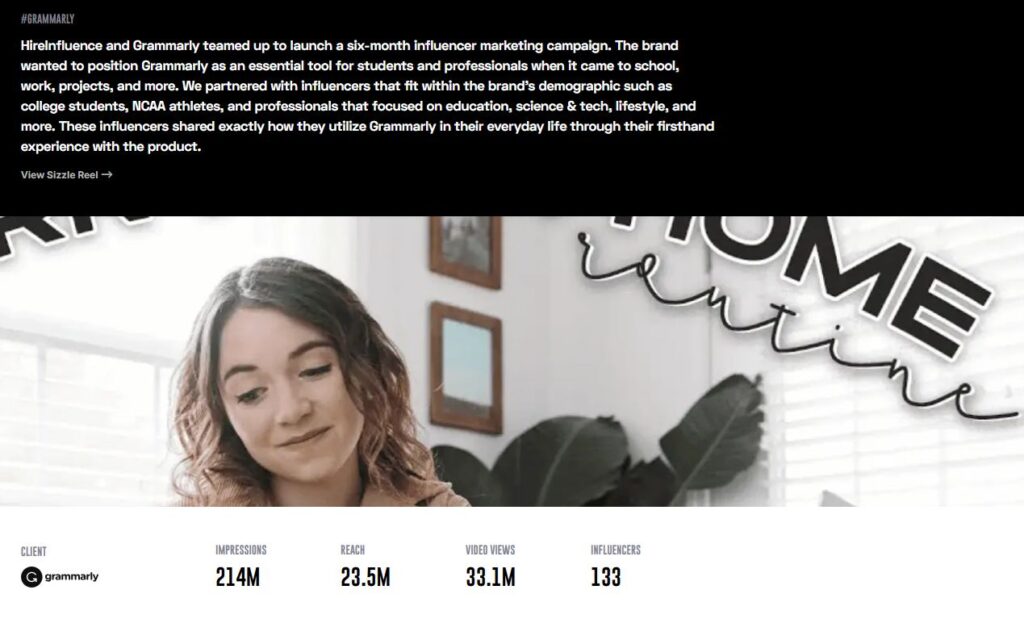
Three things made that campaign work as an awareness program. First, the creator mix was structured to maximize new audience reach: 133 creators across multiple tiers meant that the same campaign was generating exposure across hundreds of distinct audience communities simultaneously, rather than concentrating all the reach in a handful of large accounts. Second, multi-platform deployment meant the campaign reached the same target audience in different contexts and formats across the consideration period, building the frequency effect that drives real brand recognition. Third, the content was designed to integrate Grammarly naturally into the professional and creative workflows that each creator’s audience cared about, which meant the brand message arrived in a context that felt relevant rather than intrusive.
The result was a brand awareness campaign that generated the kind of scale that typically requires paid media investment far exceeding what a creator program costs to produce.
What HireInfluence Measures in Awareness Campaigns
One of the persistent criticisms of brand awareness campaigns is that they are hard to connect to business outcomes. This is a measurement problem, not an inherent problem with awareness itself. Well-run awareness programs can be measured against metrics that connect meaningfully to revenue: new audience reach among target demographics, brand search volume lift, earned media value generated, share of voice in relevant category conversations, and downstream impact on consideration and purchase intent.
HireInfluence’s proprietary analytics are built to connect creator activity to these business-facing metrics rather than stopping at impressions and engagement rates. The Ricola #CoatYourThroat campaign demonstrates what that looks like in practice: 26 million impressions, a 13.17% engagement rate across 18 creators spanning micro to celebrity tier, and 62,500 tracked retail purchase clicks through MikMak retail link integration. Awareness campaigns that are built with measurement infrastructure from the start generate the data that justifies continued investment.
FTC compliance management is also non-negotiable in brand awareness programs that operate at scale. When 133 creators are simultaneously publishing sponsored content, maintaining consistent disclosure practices across every post protects the brand and preserves the authenticity that makes awareness campaigns effective in the first place.
Why HireInfluence for Brand Awareness
HireInfluence has been building enterprise brand awareness campaigns since 2011, with a client roster that includes Microsoft, Oreo, McDonald’s, Grammarly, MTV, Meta, and Target. The campaign track record across those clients reflects a consistent approach: coordinated multi-platform, multi-tier creator programs designed to build sustained presence rather than one-off spikes.
Brand awareness at enterprise scale is not a single campaign. It is an ongoing program that compounds over time as more audiences are reached, more content enters circulation, and the brand’s share of voice in relevant conversations grows. Understanding what that kind of program costs and how to structure it for maximum efficiency requires a partner who has built and measured programs at this scale across multiple categories and markets.
HireInfluence’s minimum engagement starts at approximately $100,000. For enterprise brands with serious awareness objectives and the budget to build programs that actually move brand metrics, that is the starting point for a creator-led awareness investment that compounds rather than evaporates.
The brands winning their categories in 2026 are the ones whose names come to mind first when buyers start thinking about a purchase. Building that kind of recognition requires sustained, coordinated presence across the platforms and communities where those buyers spend their time. Creator-led awareness is how the most effective enterprise marketing teams are doing it.