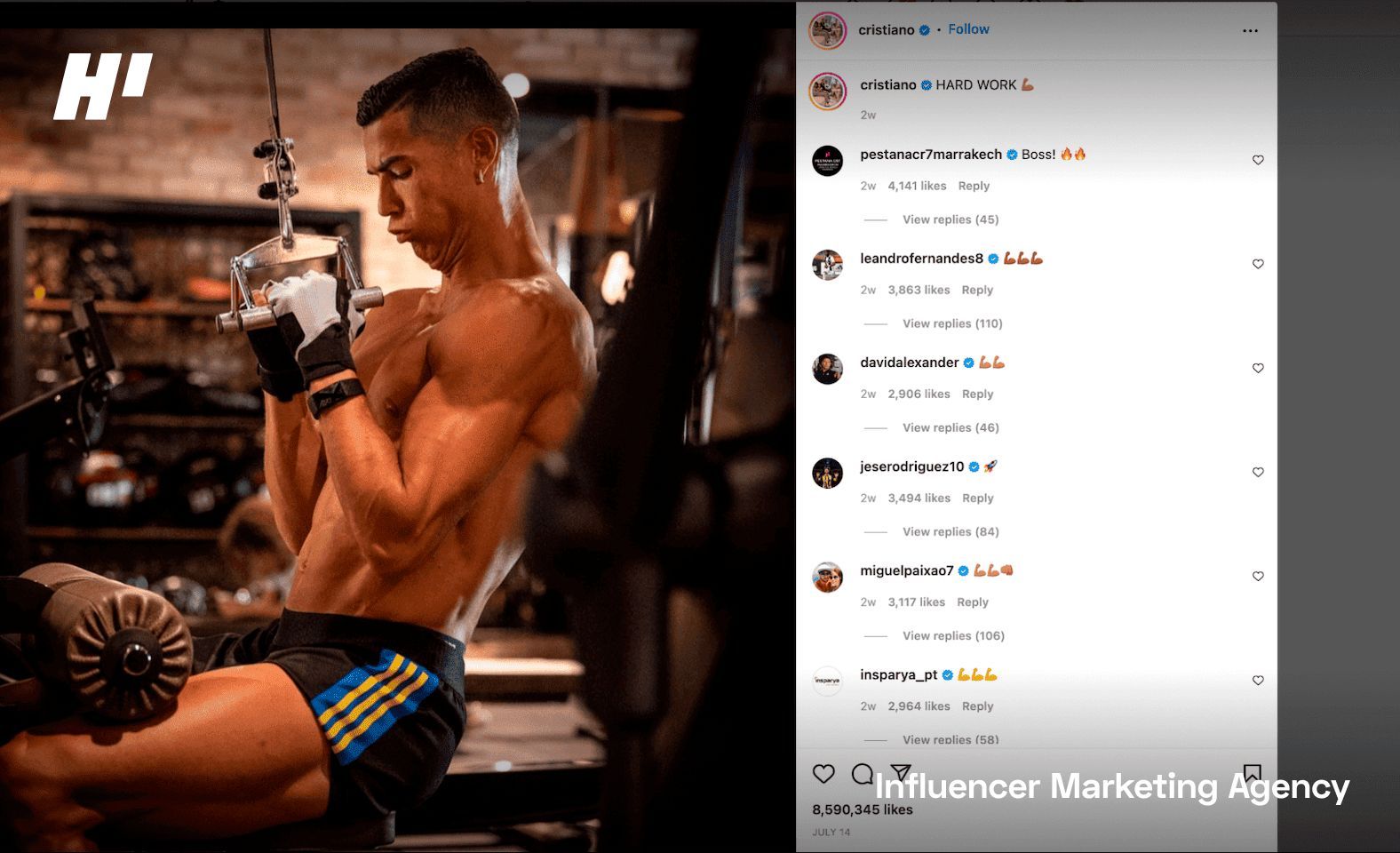
A product launch is not a moment to build awareness gradually. It is a window, usually 30 to 60 days, where consumer attention is available, the brand has news to share, and the category is watching. Miss that window and you are spending months trying to recapture momentum that should have been earned upfront. Influencer marketing is one of the few channels that can compress the awareness and consideration cycle fast enough to actually matter during a launch.
Table of Contents
The data backs this up. According to impact.com’s Cyber Week 2025 research, tracking performance across more than 1,000 North American brands, creator-driven revenue surged 51% year-over-year while commission costs increased only 1%. Influencers’ share of total transactions rose from 5% to 9% in a single year. That kind of efficiency, reach without proportionate cost increases, is exactly what a product launch budget needs. It is also why 74% of brands are moving creator programs to the center of their marketing strategy in 2026, not as a supplementary channel, but as a core driver of commercial outcomes.
For brands bringing a new product to market, the question is not whether to use an influencer marketing service. It is whether your agency partner knows how to structure a launch campaign that converts attention into sales.
Why Launch Campaigns Require a Different Strategy
Running an influencer campaign for an established product is fundamentally different from running one for something new. An established product has reviews, search volume, and consumer familiarity doing some of the persuasion work. A new product has none of that. The creator content has to carry the full weight of introducing the product, establishing credibility, explaining why it matters, and motivating a first purchase, often in 60 seconds or less.
That context shapes every decision in a launch campaign. Creator selection matters more, because the wrong creator sends the wrong audience to a product page that is not yet self-explanatory. Content briefs matter more, because vague briefs produce generic content that fails to educate or excite. Sequencing matters more, because a single wave of content on launch day creates a spike that fades immediately, while a phased approach builds sustained interest across the consideration window.
Timing also intersects with platform mechanics in ways that agencies without deep launch experience tend to underestimate. TikTok’s algorithm rewards early engagement velocity, so a creator post that gets strong traction in the first few hours can compound reach significantly. YouTube’s longer-form content is better suited for mid-funnel education, where a viewer who already knows the product name wants to understand it before buying. Instagram drives aspiration and lifestyle alignment. Each platform plays a different role in a launch, and a competent agency maps that role to the specific campaign objectives from the start.
The Three Phases of a High-Performing Launch Campaign
The brands that get the most out of influencer marketing for product launches treat it as a phased program, not a single activation.
Pre-launch: Build anticipation before the product is available. Seeding select creators with early access, product samples, or behind-the-scenes visibility generates authentic pre-launch content that primes the audience before the purchase window opens. This phase also gives the brand early signal on what resonates: which product angles land, which creators are driving the most curiosity, and what objections appear in comment sections that the launch messaging needs to address.
Launch: Saturate the awareness window with coordinated multi-platform content. The launch phase is where volume and coordination matter most. A staggered release of content across TikTok, Instagram, and YouTube creates sustained presence rather than a single-day spike. Paid media amplification through whitelisting and dark posting extends the reach of the best-performing creator content far beyond its organic audience, targeting users who match the buyer profile but have not yet encountered the product.
Post-launch: Convert awareness into sustained sales with UGC and ongoing creator content. The post-launch phase is where brands often underinvest. Creator content produced during the launch window does not stop working the day the campaign ends. Repurposed UGC feeds paid social ads, product detail pages, email sequences, and retail partner assets for months after launch. Agencies that build content rights and repurposing into the launch brief from the beginning give their clients a compounding asset, not a one-time activation.
What Enterprise Launch Campaigns Require
For large brands, a product launch is a cross-functional operation. Marketing, legal, regulatory, PR, and retail teams all have dependencies on the influencer program. The agency managing creator relationships needs to operate inside that complexity without creating bottlenecks.
FTC compliance management is non-negotiable. Every piece of sponsored content must clearly disclose the paid relationship, and that disclosure needs to be consistent across hundreds of creator posts simultaneously. A compliance failure during a high-visibility launch creates reputational risk at precisely the moment a brand is trying to build consumer trust.
Legal review of creator contracts at launch scale is also operationally intensive. Content usage rights, exclusivity windows, approval processes, and payment terms need to be structured in advance, because negotiating these details individually with 50 creators during a live launch is a guaranteed way to miss windows and frustrate creators. Experienced agencies have standard frameworks for all of this that move fast without cutting corners.
Performance measurement at the launch stage needs to be real-time, not retrospective. A brand spending $500,000 on a launch campaign needs to know within days whether the content is driving traffic, generating saves and shares, and converting browsers into buyers. That requires pre-built tracking infrastructure: unique UTMs for every creator post, promo codes linked to individual creators, and a reporting cadence that surfaces optimization signals before the launch window closes.
Why HireInfluence for Product Launches
HireInfluence has been executing full-service influencer campaigns since 2011, with a client roster that includes Microsoft, Oreo, McDonald’s, Grammarly, Meta, and MTV. The campaign results across that portfolio reflect the kind of outcomes enterprise brands need from a launch partner.
The Grammarly campaign deployed 133 top-tier creators across YouTube, TikTok, and Instagram, generating 214 million impressions, 33.1 million views, and $15 million in earned media value. That scale of coordinated multi-platform execution, across creator tiers and content formats simultaneously, is the same infrastructure that makes a product launch campaign work.
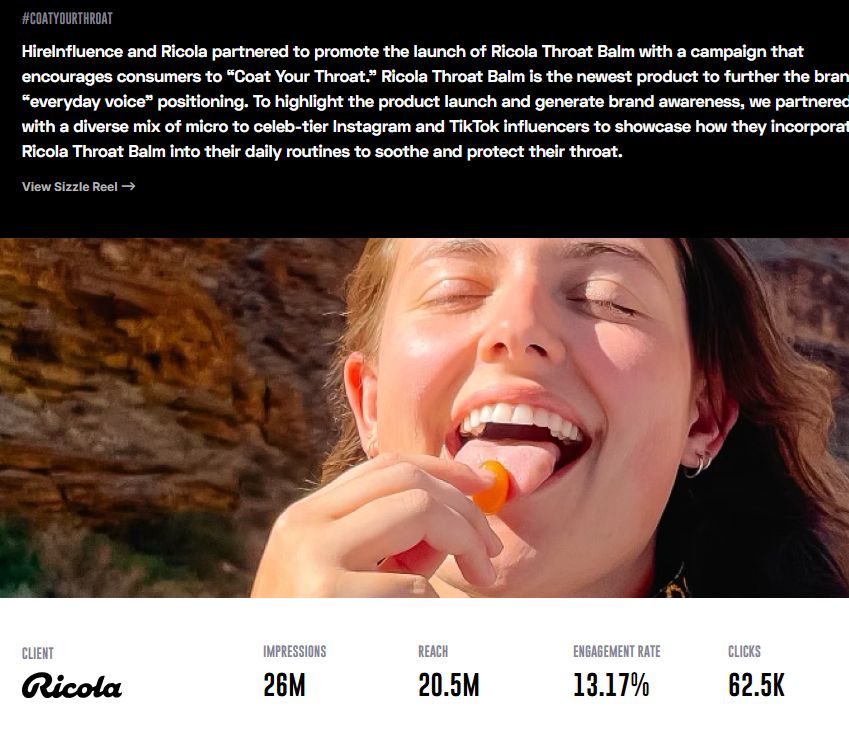
The Ricola #CoatYourThroat campaign demonstrates what performance measurement looks like in practice: 26 million impressions, a 13.17% engagement rate, and 62,500 tracked retail purchase clicks through MikMak retail link integration. The campaign connected creator content directly to in-store purchase behavior, not just digital engagement. For brands launching into retail distribution, that connection between creator activity and shelf-level sales is exactly the kind of attribution a launch needs to justify continued investment.
HireInfluence also holds official TikTok Shop Lite Program partner status, with exclusive TikTok data and ad access. For consumer product launches where TikTok Shop is part of the distribution strategy, that relationship provides reach and targeting capabilities that standard agency partnerships do not have.
Understanding the full cost of influencer marketing at launch scale, including creator fees, paid amplification, content rights, and measurement infrastructure, requires a partner who has run programs at this level. HireInfluence’s minimum engagement is approximately $100,000, which reflects the operational investment required to execute a launch campaign that actually moves a product.
A new product only gets one launch. The agency you choose determines whether that window becomes sustained market presence or an expensive awareness exercise with no lasting impact.