Decide which owned surfaces will carry creator content before contracting, because integration fails on rights rather than on planning. A creator paid to publish a post has granted that post existing on their channel. Putting it on a product page, in email, or into paid media is a separate grant with a separate price. Most guidance treats this as a calendar exercise: map creator activity against content pillars, sequence it…
They do different jobs and the difference is ownership. A content marketing agency produces assets the brand owns outright for channels the brand controls. An influencer agency licenses assets made by people it does not employ, published on channels it does not control. Most brands need both, and the overlap is repurposing. Brands comparing a best content marketing agency shortlist against an influencer shortlist usually frame it as a budget…
There is no standard definition, which is the problem. Sourcing, briefing, scheduling, and reporting are almost always included. Contracting, rights negotiation, disclosure verification, platform authorisation, and paid amplification vary enormously between agencies quoting the same phrase, and those are the expensive ones. Two agencies can both offer influencer campaign management and be describing scopes that differ by half the work. The phrase has no governing definition and no industry convention…
Creator videos are linked to a Google Ads account and then promoted as ads through campaigns, running from the creator’s own channel. The critical point is that linking a video conveys promotion capability, not usage rights. Google states plainly that the advertiser is responsible for securing sufficient rights, which may require a separate agreement with the creator. Brands evaluating a youtube paid media agency for creator work are usually looking…
Brands and creators who can’t add a paid partnership label on Instagram are facing a different problem from a tag that got rejected: here the option itself is missing. The creator opens the advanced settings expecting to find the branded content control and it is not there. This is almost always an eligibility condition rather than a bug, and the causes are specific and fixable, an account that is not…
Brands and creators who see a branded content tag rejected on Instagram usually experience it the same way: the paid partnership label was applied, and then it vanished or the brand’s name never attached. That is not a glitch, and it is not random. Instagram’s branded content tag is a two-sided handshake, so a tag is “rejected” for one of a small set of concrete reasons, the brand declined the…
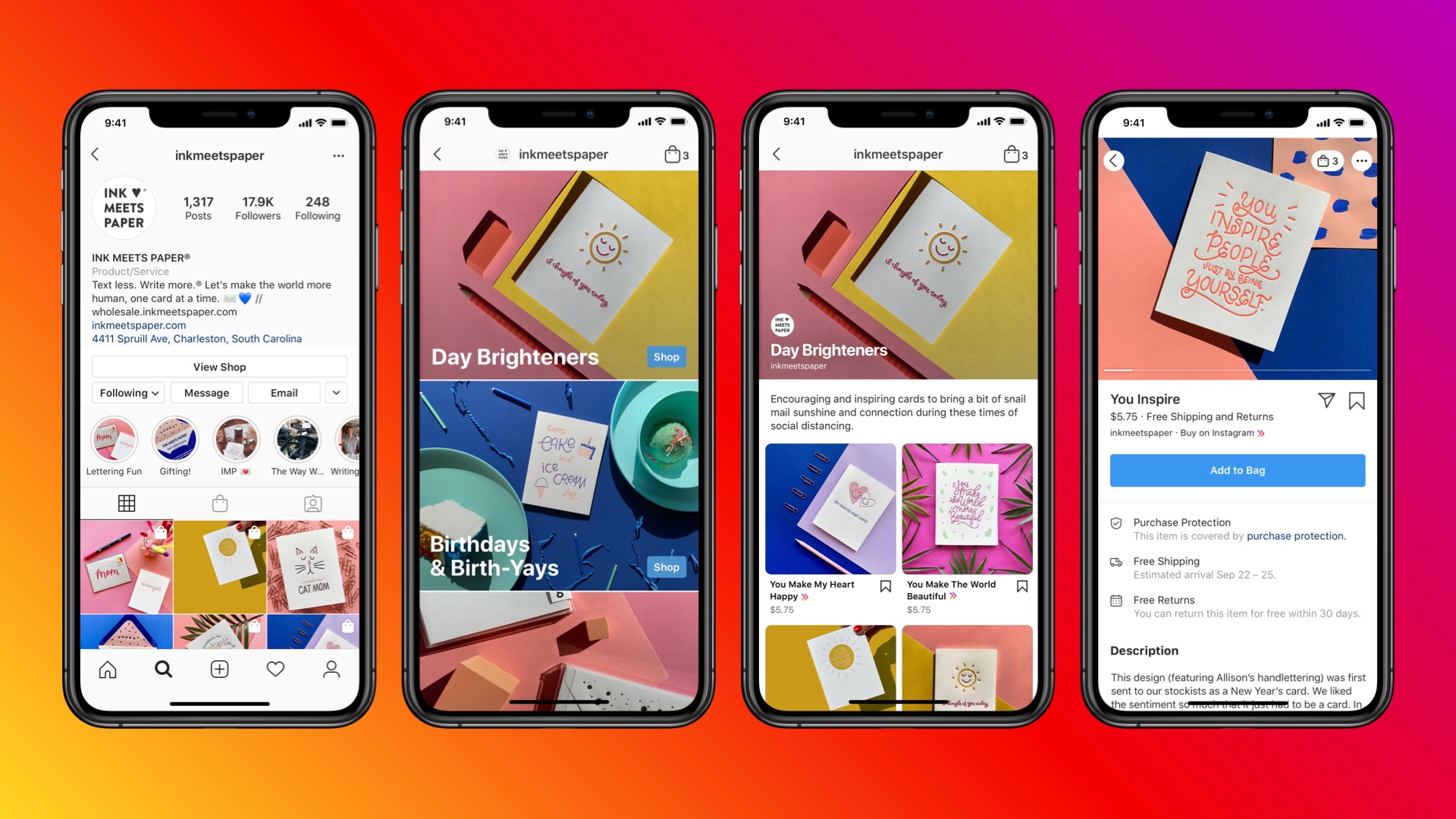
Brands searching for Instagram branded content tools are usually looking for the setup steps, and the more valuable thing to understand first is what the tools are as a set: Meta’s built-in suite for creator-brand collaborations, comprising the branded content tags and paid partnership label, partnership ads, and the partnership approval workflows that connect them. They are not a single button. They are a system that takes a creator-brand relationship…
Brands hearing about Instagram trial reels in a creator context are usually wondering what they are and whether they matter for a brand program, and the answer is that they are a testing feature with a genuine strategic use. A trial reel is a Reel a creator publishes initially only to people who do not follow them, so its performance can be judged against a cold audience before it is…
Brands researching a Meta brand lift study want to know what it measures and whether their campaign qualifies, and the short version is that it is a controlled experiment inside Meta Ads Manager that measures the incremental effect of ads on brand perception across Facebook and Instagram. It works by splitting the target audience into an exposed group and a held-out control group, surveying both, and attributing the difference in…
Brands searching what paid partnership means on TikTok often assume it is a marketing term, and on TikTok it is a specific, enforced disclosure with real consequences. Paid partnership is TikTok’s official label for content a creator was compensated to make, in cash or in kind, which includes free product, and the creator applies it through TikTok’s content disclosure setting before publishing. The label tags the brand and tells viewers…
Brands encountering TikTok One for the first time often meet it as the place their old TikTok Creator Marketplace login now points, and that redirect is the clearest way to understand what it is. TikTok One is TikTok’s unified hub for marketers, announced in 2024 as a single login that consolidates the tools brands used to reach through separate doors: creator discovery, creative production, campaign briefing, and performance reporting, all…
Brands running into TikTok Symphony usually meet it as one of the AI tools bundled inside TikTok One, and the plain description is that Symphony is TikTok’s suite of AI-powered creative tools for producing, adapting, and scaling advertising content on the platform. It sits inside the unified marketer hub alongside creator discovery and reporting, and it exists to help brands generate and iterate creative faster than a traditional production cycle…
Brands and creators looking up the branded content toggle on TikTok want to know what the switch does, and the mechanical answer is short: it is the in-app setting a creator turns on to disclose that a post is a paid partnership, which labels the content for the audience and makes the partnership official to the platform. The setting is small and the consequences of skipping it are not, because…
Brands and creators searching how to add a brand partner on a TikTok post are usually trying to do one specific thing: formally tag the paying brand as a partner on a piece of content, so the partnership is disclosed and, where relevant, so the post can be used in the brand’s paid workflows. On TikTok this is done through the same Ad settings and branded-content controls that handle disclosure,…
Brands researching Instagram Creator Marketplace should know two things before they build a plan around it: what it does today, and that Meta has announced it is changing. As it stands, Instagram Creator Marketplace is Meta’s built-in platform for connecting brands with creators for paid partnerships and branded content, launched in 2022, where brands discover creators through search and AI recommendations and reach them through a dedicated partnership inbox. What…
Brands researching TikTok Branded Mission often expect another ad unit, and it is closer to a crowdsourcing engine with paid amplification attached. Branded Mission sources videos from the creator community and turns the top-performing ones into ads: a brand publishes a brief, eligible creators submit videos, the brand selects the best, and those videos run as guaranteed ad impressions in the For You feed while the selected creators get paid….
Brands evaluating TikTok Promote usually meet it as the simplest way to advertise on the platform, and the simplicity is both the feature and the boundary. Promote is an in-app tool that turns an existing video or LIVE into an ad in a few taps, without opening TikTok Ads Manager. A brand picks a post, chooses a goal, sets a budget and duration, pays, and the promotion runs. That is…
Brands looking into a branded effect on TikTok usually picture a logo filter, and the format is both more capable and more demanding than that picture suggests. A branded effect is a custom augmented-reality asset, a filter, lens, sticker, or interactive overlay, that a brand commissions so users can apply it to their own videos, putting the brand into the content people are already making rather than interrupting it. Brands…
Brands searching for what TikTok Spark Ads cost want a number, and the most useful thing to say first is that the platform does not publish one and neither should anyone else. Spark Ads is a format, not a price. What a brand actually pays is the sum of three things: media bought through TikTok’s live auction, the fee paid to the creator whose content runs, and the cost of…
Brands weighing TikTok Spark Ads vs boosting usually frame it as a budget question, and the framing hides the only distinction that matters. Boosting, which TikTok delivers through its in-app Promote tool, amplifies a post the brand already owns. Spark Ads runs an organic post as a formal ad inside TikTok Ads Manager, and it can run a post that belongs to someone else. One tool extends the brand’s own…
Enterprise brands evaluating an instagram paid media agency are responding to a structural shift in where purchases now start. NielsenIQ’s 2026 global report, The Commerce Revolution: Where East Meets West, finds that social commerce in the United States is growing 62.9% and now outpaces traditional online retail growth, while nearly one third of consumers in Western markets purchase products they first discovered on social platforms. An instagram paid media agency…
Most enterprise brands treat live commerce as a broadcast problem, which is why a live shopping agency spends the first month of a new program arguing about inventory rather than production. The assumption is that a livestream is a television segment with a checkout button bolted on, and that the work is making the segment compelling enough to convert. The platform data points the other direction. Brands and creators hosted…
The instinct that a bigger production budget makes a better ad runs deep, and on paid social it is mostly wrong. A ugc advertising agency builds around a finding that still surprises marketing teams: the phone-shot, creator-made video that makes a creative director wince routinely outperforms the polished studio spot it sits next to in the feed. The platform data is direct about it. One major platform’s own case studies…
Brands often assume the way to keep influencer marketing fresh is to keep changing the creators, cycling through new faces every campaign for new audiences. A brand ambassador marketing agency starts from the opposite premise: that a small, committed core of aligned creators, activated over time, builds something a rotating cast never can. The data on long-term partnerships is striking. One 2025 analysis of ambassador programs found that a decade-long…
Standing up a creator affiliate marketing agency program for a subscription brand is usually framed as paying creators a commission for every sign-up they drive, when the economics of subscriptions argue for a very different design. Recent subscription research spanning more than 20,000 direct-to-consumer brands found that subscribers place nearly 3x more orders than one-time shoppers, that those brands now power well over 100 million active subscriptions, and that the…