
Product seeding had a breakout year in 2025. According to Aspire’s analysis of its platform data, seeding accounted for 31% of all campaigns run through the platform in 2025, up from 20% the year before. Many of those programs were not small gifting experiments. Brands running seeding campaigns gifted over $20,000 in product to more than 100 creators in a single activation. That level of investment signals growing confidence in product seeding as a reliable, scalable strategy for generating authentic content, building creator relationships, and creating a pipeline for future paid partnerships.
Table of Contents
For enterprise brands, the appeal is clear. When a creator genuinely loves a product and posts about it without a contractual obligation to do so, the content reads differently to their audience. It feels less like advertising and more like a recommendation. According to industry research, 92% of marketers report that seeding has increased brand awareness, and 76% say it has at least somewhat driven sales. The earned trust of organic creator advocacy is something that paid content, however well executed, cannot fully replicate.
But enterprise-scale seeding is not just sending free products to a list of influencers and hoping for the best. The brands extracting the highest returns from seeding programs in 2026 treat it as a systematic strategy: intentional creator selection, personalized outreach and packaging, performance tracking, and a clear pipeline for converting the best organic advocates into paid partnership, affiliate, or ambassador relationships. That systematic approach requires the infrastructure and expertise of an experienced influencer agency.
HireInfluence runs enterprise product seeding programs as part of its full-service influencer offering. Founded in 2011 and named Digital Marketing Agency of the Year at the U.S. Agency Awards in 2025, HireInfluence has the creator network depth, operational infrastructure, and measurement capability to run seeding programs that deliver more than organic buzz.
What Separates Strategic Seeding from Spray-and-Pray
The original version of product seeding was transactional: send products, hope for posts. That approach still exists, but the brands seeing real returns from seeding in 2026 have moved well past it.
Strategic seeding starts with creator selection that goes beyond follower counts. The best seeding candidates are not the creators with the largest audiences, but the ones with the highest alignment to the brand’s category and the most authentic engagement within the specific niche the brand needs to penetrate. A skincare brand does not want to seed a broad lifestyle creator. It wants to seed the dermatologist-adjacent creator whose audience trusts their product recommendations in the skincare space specifically. HireInfluence’s creator vetting process evaluates category alignment, audience composition, engagement authenticity, brand safety history, and the creator’s existing relationship to the product category before any product ships.
Personalization matters at the execution level too. Generic packages generate generic responses. Seeding packages that feel considered, with a handwritten note, a personalized product selection tied to the creator’s content, and clear communication about why this specific creator was chosen, generate significantly higher post rates and more enthusiastic content. HireInfluence handles the full operational layer: creator selection, personalized outreach, product shipping coordination, and follow-up relationship management.
The UGC Value Layer
One of the most powerful applications of product seeding in 2026 is the UGC library it produces. Creator-generated content from seeding programs, even when produced organically without a paid brief, can be licensed for use in paid advertising, social media, email, and website creative. Research consistently shows that creator-generated content outperforms studio-produced advertising creative on platforms like Meta and TikTok, often dramatically so. A seeded product post that cost $40 in product value can generate ad creative that outperforms a $5,000 agency-produced asset.
For enterprise brands with high content volume needs, seeding programs become a cost-effective content production strategy alongside their relationship-building and awareness objectives. HireInfluence’s UGC production and White Glove UGC services build structured systems for capturing, licensing, and deploying creator content from seeding programs at enterprise scale.
Building the Creator Pipeline
The highest long-term value of a well-executed seeding program is not the immediate posts it generates. It is the creator pipeline it builds. Creators who genuinely love a product and post about it organically are better candidates for paid partnerships, affiliate programs, and ambassador relationships than cold outreach targets. They already know the product, they have authentic things to say about it, and their audience has already seen organic advocacy that primes them for more formal collaborations.
HireInfluence builds seeding programs with this pipeline architecture in mind. The creator selection process identifies candidates with the profile and audience alignment to become long-term paid partners. The relationship management process tracks which seeded creators post, what content they produce, and what performance that content generates. And the pipeline handoff connects the strongest-performing seeded creators to HireInfluence’s paid campaign management infrastructure for activation in formal programs.
Measurement for Enterprise Seeding Programs
HireInfluence’s analytics team builds measurement frameworks for seeding programs that go beyond counting posts. Post rate tracking, reach and engagement analysis, content quality assessment, UGC licensing value, earned media value, and pipeline conversion rate from seeded creator to paid partner are all tracked systematically. For brands connecting seeding to downstream revenue, tracked click and purchase attribution via affiliate links or unique codes provides a direct revenue measurement.
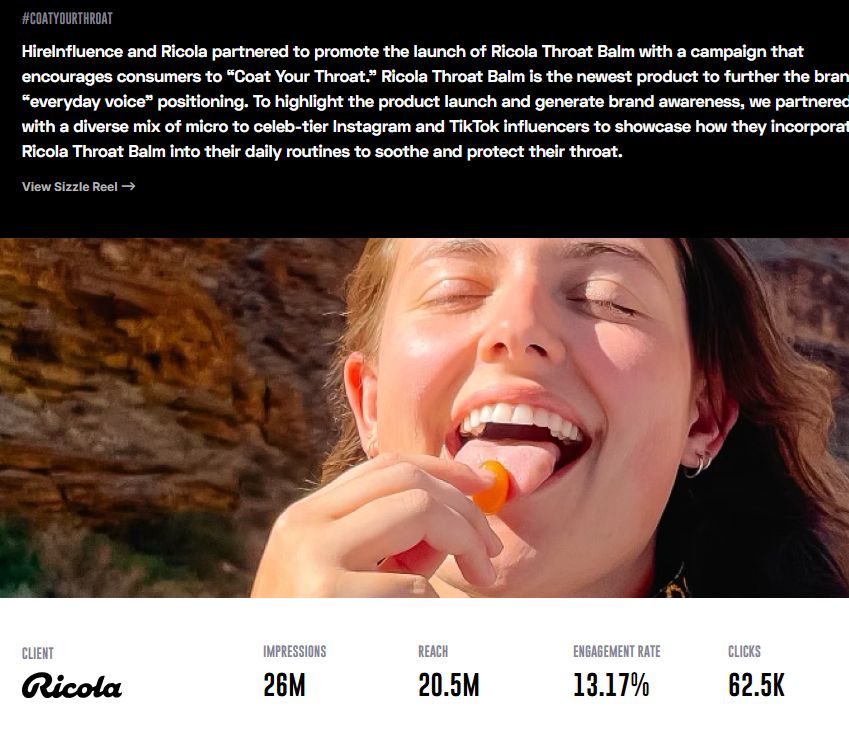
The Ricola #CoatYourThroat campaign demonstrates HireInfluence’s full-funnel measurement capability at scale: 26 million impressions, 20.5 million reach, 13.17% engagement, and 62,500 tracked retail clicks via MikMak integration. The same measurement infrastructure applies to seeding programs where purchase attribution is a campaign objective. See the full client portfolio for context.
How Seeding Fits the Full Enterprise Program
Product seeding works best when it is integrated into a broader influencer program architecture rather than run as a standalone tactic. HireInfluence’s multi-platform execution infrastructure ensures seeding programs connect to paid amplification, ambassador development, and UGC repurposing in a way that compounds the initial investment over time.
Enterprise influencer programs including seeding components start at approximately $100,000 per engagement, which reflects the creator network infrastructure, operational execution, and measurement systems that make seeding programs perform at enterprise scale.
The Seeding Partner Enterprise Brands Need
Product seeding done right is one of the highest-ROI tactics in the influencer playbook. Done poorly, it is wasted product and missed opportunity. The difference is systematic creator selection, intentional relationship management, structured content capture, and a clear pipeline into paid collaboration.
HireInfluence builds all of it. The creator selection process is built around category alignment and audience quality, not just follower counts. The relationship management process tracks which creators post, what content performs, and which advocates are best positioned for paid partnership. And the measurement infrastructure captures post rates, earned media value, UGC licensing value, and attributed revenue in a unified view that enterprise marketing teams can act on. If you are ready to run a seeding program that generates authentic creator advocacy, high-converting UGC, and a long-term creator pipeline, contact HireInfluence to start the conversation.