Paying a creator to publish grants one thing: that post existing on their channel. Advertising use is a separate grant with a separate price, and on YouTube the platform conveys no advertising rights at all. This is almost always a sequencing failure at contracting rather than a dispute.
Table of Contents
- Why publishing rights and advertising rights are different
- What each platform requires on top of the contract
- Fixing the current campaign
- Preventing it next time
- The question that reveals whether this will happen again
- Program Delivery Where Rights Were Settled First
- The HireInfluence Model for Rights-Led Programs
The discovery usually arrives from a media team that has been handed a set of creator assets and cannot run them. Nobody did anything wrong in an obvious way: the creators delivered, the content performed, the invoices were paid. What did not happen is that somebody specified, before contracting, that these assets would carry media. Brands who cannot use influencer content in ads are experiencing the most common and most expensive gap in the category, and the fix for the current campaign is different from the fix for the next one.
Why publishing rights and advertising rights are different
A creator agreement grants specific permissions bounded by three variables: term, territory, and media type. A standard organic engagement grants the narrowest version of all three, because that is what was being bought.
Advertising use is a different media type. It puts the creator’s face, voice, and endorsement behind paid distribution to audiences they did not choose, at a scale they did not agree to, which is why it is priced separately and why creators treat it as a distinct negotiation rather than a technicality.
The reason this catches brands out is that the content is sitting in a shared folder looking exactly like an asset the brand owns. Nothing about the file indicates its license.
What each platform requires on top of the contract
The contract is necessary and on two of three platforms it is not sufficient.
TikTok requires a Spark Ads authorization from the creator, with a duration selected from 7, 30, 60, or 365 days. Expiry is terminal: an expired code cannot be reactivated and a new one must be generated, which requires a reachable and willing creator. Extension is possible only before expiry and only through the creator’s own account settings.
Instagram requires the creator to tag the brand and the brand to approve, at content level for a single post or account level for organic content where the brand is tagged. Either party can withdraw at any time.
YouTube requires nothing from the platform and everything from the contract. Google states the advertiser is responsible for securing sufficient rights to use a creator video as an ad, and that this may require a separate agreement with the creator. Linking conveys promotion capability, not permission. Nothing tracks a usage term or warns of expiry.
So a brand can hold a valid advertising license and still be unable to run the content because the platform mechanism was never triggered, and can hold a live platform authorization while having no contractual right to advertise at all. Both failures happen.
Fixing the current campaign
Go back to the creators individually. This works more often than expected, particularly where content performed well and the relationship is good. Expect to pay, and expect the price to reflect that both parties now know how the asset performed.
Prioritize. Not every asset is worth licensing retrospectively. Identify the few that would carry meaningful spend and negotiate for those rather than the whole set.
Check whether a narrower grant solves it. A brand may not need all-media perpetual rights to run the thing it actually wants to run. A bounded paid-social license for a defined flight is far cheaper and frequently sufficient.
Trigger the platform mechanism at the same time. Securing the contractual right without the TikTok authorization or the Instagram approval leaves the campaign exactly where it started.
Accept that some assets are lost. Where a creator has moved on, will not engage, or prices it beyond value, the correct decision is to stop spending time on it.
Preventing it next time
The fix is a sequence, and it is short.
Specify the surfaces before contracting. Which owned and paid surfaces will carry creator content: paid social, the brand’s site, email, retail. This is a list, written before anyone talks to a creator.
Convert the list into a rights schedule. Media type, territory, and a term matched to how long each surface needs the asset. Reviewed by counsel once and reused, so every negotiation is a variation on an approved position.
Price paid usage explicitly. Separated from the content fee rather than bundled, so both parties know what is being bought.
Trigger platform mechanisms during production, not at media handover. Authorization durations should be set against flight length with margin.
Keep a register. Creator, platform, permission type, grant date, term, expiry. On YouTube this is the only control that exists, since the platform issues no warning.
The question that reveals whether this will happen again
One question tests the whole system: can someone name every creator whose usage rights expire in the next sixty days?
If nobody can, the program has no register, and the situation this article describes will recur regardless of how the current campaign is resolved.
Program Delivery Where Rights Were Settled First
The #CoatYourThroat program for Ricola drove 62,500 MikMak retail clicks, and the campaign is documented in full in the Ricola case study. A retail-click outcome depends on content reaching audiences through paid distribution, which depends on the license existing before the media was planned.
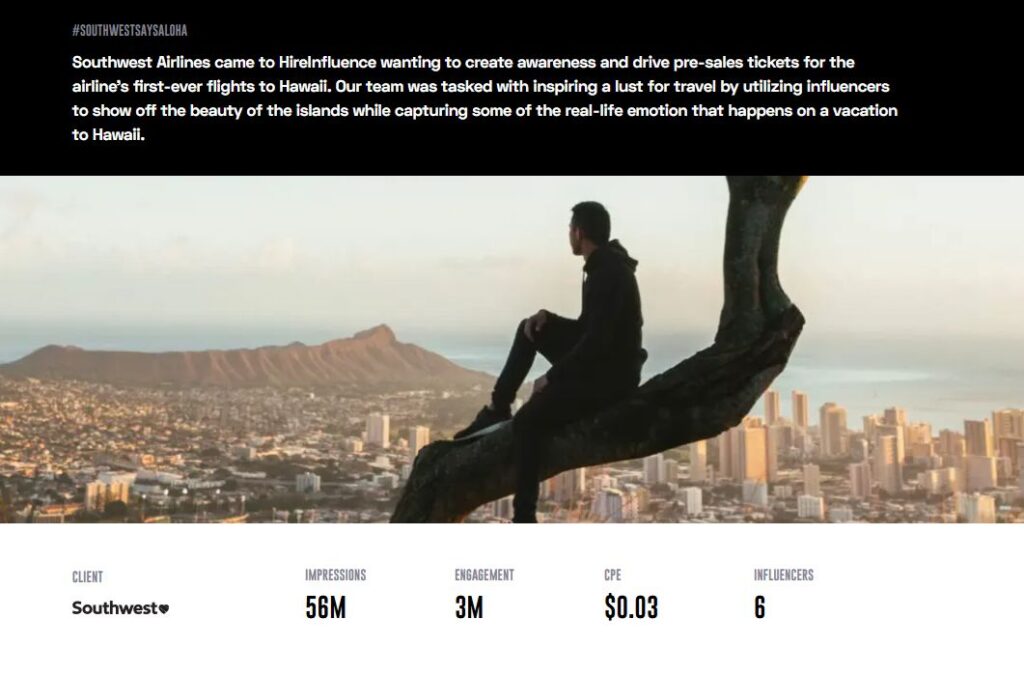
The #SouthwestSaysAloha program for Southwest Airlines delivered 56M impressions and 3M engagements.
For MTV, the #MyMTVStyle program returned 16.1M impressions and 216,600 engagements at $0.01 CPV and $1.50 CPM, efficiency figures that are only achievable when amplification was available from the start rather than negotiated mid-flight.
Additional campaign detail is published in the work portfolio.
The HireInfluence Model for Rights-Led Programs
Founded in 2011, HireInfluence is a full-service influencer marketing agency built for enterprise brands, headquartered in Houston with offices in Austin, Los Angeles, and New York. The firm runs creator programs for brands including Coca-Cola, McDonald’s, Microsoft, NFL, Warner Bros, and eBay, covering strategy, talent sourcing, branded content production, paid amplification, and performance reporting. Creator selection runs through a manual vetting and validation process rather than database filtering alone, and campaigns are scoped to each client’s objectives rather than sold as fixed packages.
Brands rebuilding their rights process should read the influencer exclusivity clauses guide and creator content and studio ads in paid media. Scoping conversations start through contact.