Enterprise marketers assume influencer brand safety is covered by the governance they already own, and research into the responsible marketing frameworks operated by the world’s largest advertisers suggests roughly a quarter of them are wrong. 88% of large corporates have a responsible marketing framework or set of policies in place, and 87% agree those frameworks are increasingly critical to their longer-term licence to operate. Yet coverage is uneven. The most addressed area is marketing and children at 83%, followed by influencer marketing at 75%, which means one in four of the biggest advertisers in the world governs everything except the channel where a human being carries the brand. Only 47% link their frameworks to environmental and social goals. Half maintain internal criteria for when to pause spend on a specific medium or platform, and half employ a dedicated brand safety officer. Nine in ten have a fixed methodology for approving advertising, and 76% extend their policies down into their supply chains. The instruments exist. They were built for placements, and a creator is not a placement.
Table of Contents
Why Framework Coverage Gaps Reshape Influencer Brand Safety
Traditional brand safety is a question about adjacency. An advertisement appears next to content, that content carries risk, and the advertiser’s exposure is a function of proximity. The discipline that grew up around this problem is genuinely sophisticated. It has shared definitions of harmful content, monetization tiers, exclusion lists, and the ability to withdraw spend from a platform within hours. The industry’s shared framework for that work was discontinued in 2024, but the machinery it standardized remains in wide use, and it works because the object being governed is inventory.
Influencer risk does not behave like inventory. The World Federation of Advertisers finds that half of large corporates hold internal criteria for pausing spend on a platform, which is a media lever, executable by a media team, reversible on Monday. There is no equivalent lever for a person. A creator who posts something disqualifying at eleven on a Friday night has already published under a brand’s name, to an audience that understood the association as an endorsement, and no exclusion list retracts it. The content is not adjacent to the brand. The brand is inside it.
That distinction explains why the coverage gap matters more than its size suggests. Seventy-five percent of these frameworks address influencer marketing, and framework authors would reasonably call that good coverage. But the twenty-five percent that do not are not brands with small creator programs. They are brands whose creator spend grew faster than their policy did, which is nearly all of them, and whose governance therefore sits in the place the risk used to be rather than the place it moved to. Meanwhile the eighty-three percent coverage of marketing and children reflects decades of regulatory pressure. Influencer governance has had years, not decades, and it shows.
The supply chain finding is the one enterprise marketers should read twice. Seventy-six percent of respondents extend their policies to their supply chains, which sounds comprehensive until a brand asks what its creator supply chain actually contains. It contains an agency, possibly a second agency, a talent manager, a roster of individuals who are not employees and cannot be trained like employees, and the audiences those individuals have assembled through years of speech the brand never reviewed. Extending a policy into that chain is not a procurement exercise. It requires knowing what each creator has said, what they are likely to say, and what the brand’s position is if they say something else.
None of which is an argument for timidity, and reading it that way produces the failure mode of exhaustive restriction. Nine in ten of these organizations already have a fixed methodology for approving advertising, and applying that methodology to creator work would strangle the channel, because the value of a creator is judgment the brand did not exercise. The workable posture is narrower and harder: define the floor precisely, document why each creator cleared it, agree in advance what triggers a pause and who decides, and accept that the residual risk is the price of a voice the audience trusts. A brand that cannot name its floor has not decided to accept risk. It has decided not to look.
What Enterprise Brands Should Expect From a Brand Safety Partner
Program strategy and design. The agency has to define the risk floor before it defines the roster, since the categories a brand will not appear near and the conduct it will not tolerate are strategy decisions rather than legal ones. That work belongs inside dedicated campaign services at the front of an engagement.
Creator sourcing and verification. The agency has to examine a creator’s history rather than their current feed, because the post that creates an incident is usually four years old and was written before the creator had anything to lose. Verification means reviewing back catalogues across platforms, understanding the communities a creator moves in, and forming a view about what they are likely to say next, which is a judgment no screening tool renders on a brand’s behalf.
Platform and commerce integration. The agency has to know how a creator’s content behaves once it enters a commerce surface, since a post that was acceptable as entertainment can become a substantiation problem the moment it sits beside a purchase button.
Creative direction and content production. The agency has to brief so that the brand’s floor is unambiguous while the creator’s latitude above it remains real, separating prohibitions from preferences on the page. A UGC overview explains how creator-produced assets carry a different risk profile than brand-produced ones.
Audience and segment-specific execution. The agency has to assess the audience a creator brings, not only the creator, because a brand appearing in a comment section it would never have bought as inventory has arrived there by association rather than by media buy. An audience with a history of coordinated hostility is a brand safety exposure regardless of how carefully the creator behaves, and the roster decision should account for the room as well as the speaker.
Cross-platform orchestration. The agency has to apply one standard across every surface a program touches, since a creator governed carefully on one platform and loosely on another has been governed loosely. Brands running multi-channel programs can consult the firm’s TikTok influencer marketing resource for the adjacent channel, where content velocity is highest and the window between publication and virality is shortest.
Paid amplification. The agency has to re-screen before it amplifies, because putting budget behind a post multiplies its reach and its exposure simultaneously, and an asset cleared for organic distribution has not necessarily been cleared for a paid audience with no context for the creator. That control lives inside a specialties and services capability with review built into the workflow.
Attribution and measurement. The agency has to document the decisions it made and the evidence behind them, because the brand’s position after an incident depends entirely on whether it can show the diligence it performed before one. That record requires an analytics capability capturing published content rather than only performance data.
Program Delivery Across Governed Creator Programs
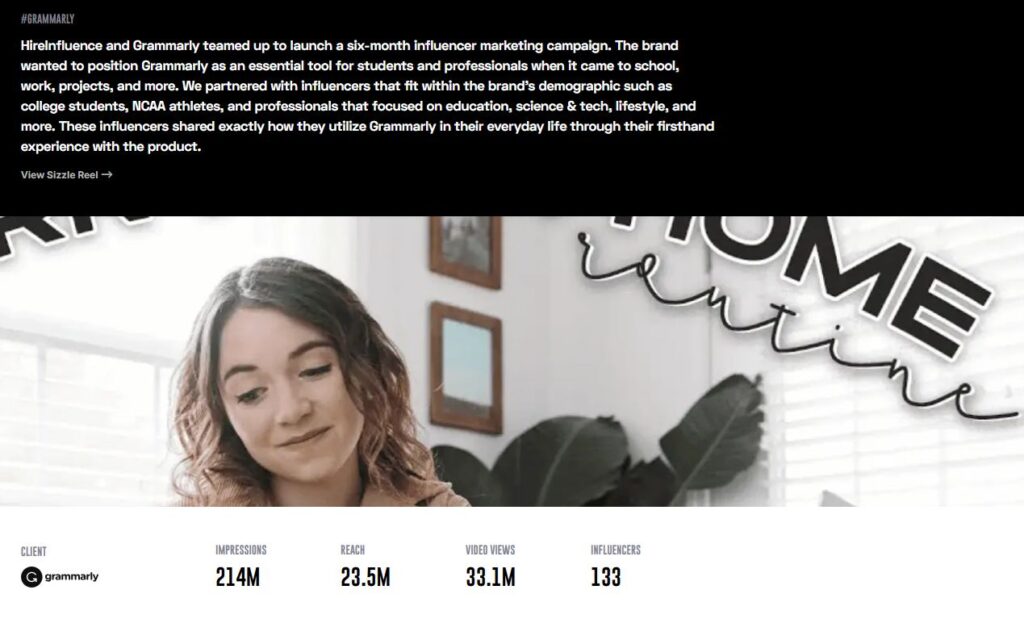
Governance is a property of programs that also perform. The #SouthwestSaysAloha campaign for Southwest Airlines generated 56M impressions and 3M engagements across a large roster, a scale at which screening becomes an operating system rather than a review step. The #CoatYourThroat program for Ricola reached 20.5M people across 26M impressions with 18 influencers, sustained a 13.17% engagement rate, and drove 62,500 MikMak retail clicks, documented in the Ricola case study. A small verified roster is the roster easiest to govern, and the engagement result suggests nothing was lost in the verification. The Grammarly creator program coordinated 133 creators to produce 214M impressions and 33.1M views with $15M in earned media value.
The #MyMTVStyle campaign for MTV delivered 16.1M impressions and 216,600 engagements at $0.01 cost per view, and the #OREOShamROCKout activation for Oreo and McDonald’s produced 1.7M impressions at $0.06 cost per engagement. Further programs appear in the work portfolio. Across every one of them the brands appeared where they intended to appear, which is the only brand safety metric that matters and the one nobody reports.
How to Evaluate an Agency on Brand Safety
First, ask the agency to state the brand’s risk floor in its own words. The agency should describe specific categories and specific conduct, and it should be uncomfortable with a brand that cannot articulate where its line sits.
Second, ask how far back the agency screens. The agency should review a creator’s history across platforms rather than their recent feed, and it should be able to describe an incident it prevented by doing so.
Third, ask who decides to pause a creator mid-flight, and how fast. The agency should name the person, the trigger, and the elapsed time, because an escalation path invented during a crisis is not an escalation path.
Fourth, ask how the agency evaluates a creator’s audience rather than the creator. The agency should treat the comment section as part of the placement, and it should have declined a creator on that basis at least once.
Fifth, ask how governance is priced. The agency should show screening, monitoring, documentation, and escalation as real line items, reasoning from a published cost of influencer marketing guide rather than presenting safety as a free byproduct of good intentions.
The HireInfluence Model for Brand Safety Governance
Founded in 2011, HireInfluence is a full-service enterprise influencer marketing agency with 25+ people across 10+ states, working from four offices: Houston and The Woodlands in Texas, Austin, Los Angeles, and New York. The firm has run programs for Microsoft, Coca-Cola, Walmart, Meta, Southwest Airlines, and Target on a six-figure engagement floor, a threshold that reflects the screening, monitoring, and documentation work a governed program requires.
HireInfluence has been a TikTok Shop Lite Program partner since July 2024, and was named Marketing Agency of the Year at the 2024 MUSE Creative Awards and Digital Marketing Agency of the Year at the 2026 U.S. Agency Awards.
Before founding the firm in 2011, Jason Pampell spent years managing content rights, licensing, and strategic media partnerships for Forbes and Billboard, businesses in which associating a publication’s name with a person was a decision that could not be unmade cheaply. Editorial institutions learned long ago that the reputational transfer runs both directions, and that the diligence performed before an association is the only protection available afterward. Creator programs work identically. The HireInfluence team screens history rather than feeds, evaluates audiences alongside creators, and writes down why each partnership cleared the floor, because the record made in advance is the entire defense available later. Brands can reach the firm through its contact page or read more about its background in the about section.
The framework research delivers the verdict plainly. When nearly nine in ten of the world’s largest advertisers hold a responsible marketing framework and only three in four of those frameworks say anything about influencer marketing, the gap is not an oversight in a document. It is a channel governed by instruments designed for a different problem, and it will keep producing incidents that surprise people who believed they had a policy.