Brands searching branded content vs content marketing are usually trying to sort two terms that get used interchangeably and are not the same thing. The cleanest way to separate them is by three questions: who makes the content, whose voice it carries, and whose channel it lives on. Branded content is made by a creator or partner, carries their voice, lives on their channel, and is disclosed as a partnership. Content marketing is made by the brand, carries the brand’s voice, lives on the brand’s own channels, and is owned outright. They share a goal, building awareness and trust, and they differ on nearly everything else, and knowing which one a given effort is keeps a brand from confusing borrowed credibility with owned media.
Table of Contents
The Core Distinction
The difference comes down to ownership and voice. Content marketing is the brand creating and owning content, a blog post, a video, a guide, a resource, publishing it on channels the brand controls, to attract and retain an audience over time. The brand is the author and the owner, and the content is an asset the brand holds. Branded content inverts this. A creator or partner makes the content, it carries their voice and borrows their audience’s trust, it lives on the creator’s channel, and the brand relationship is disclosed rather than owned. The brand is a disclosed sponsor, not the author. So the same underlying goal, earning attention and trust, is pursued through opposite structures: content marketing builds an owned asset in the brand’s own voice, while branded content rents a trusted voice for a disclosed placement.
That structural difference produces different strengths. Content marketing compounds, because the brand keeps the asset and it can attract an audience for years after publication, and it carries the brand’s own authority. Branded content borrows, because it reaches the creator’s established audience with the credibility of a trusted person, which the brand cannot manufacture on its own channels. Neither is better in the abstract. They do different jobs, and a mature program usually runs both: owned content marketing to build a durable asset base, and branded content to borrow reach and credibility the brand does not itself possess.
Where the Two Meet, and Where They Do Not
The two overlap in intent and diverge in execution, and keeping the divergence clear prevents a common confusion. Both aim at awareness and trust rather than a hard immediate conversion, which is why they get grouped together. But content marketing is a brand publishing in its own name, subject to no partnership disclosure, measured as owned media. Branded content is a disclosed creator partnership, subject to the paid partnership label and the legal disclosure rules that attach to endorsements, measured through the partnership’s shared data. A brand that treats branded content as merely another form of its content marketing misses the disclosure obligations that branded content carries and the creator dynamics that make it work. A brand that treats content marketing as if it needed partnership disclosure misunderstands its own owned media. The goal is shared; the rules, the ownership, and the voice are not.
Program Delivery Across Creator Partnerships
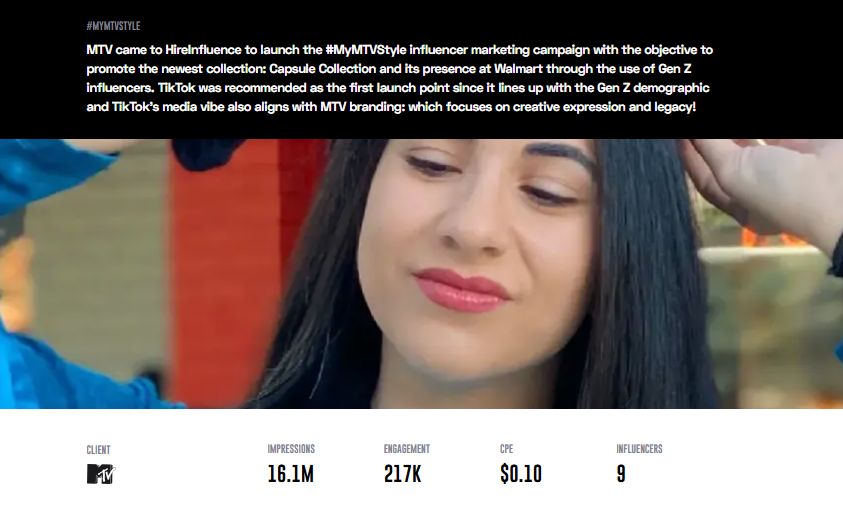
Branded content is the creator-partnership half of that pairing, and the roster shows what it produces. The Grammarly creator program coordinated 133 creators to 214M impressions, 33.1M views, and $15M in earned media value, borrowing creator voices at a scale owned content cannot replicate. The #CoatYourThroat program for Ricola reached 20.5M people across 26M impressions with 18 influencers, sustained a 13.17% engagement rate, and drove 62,500 MikMak retail clicks, documented in the Ricola case study. The #OREOShamROCKout activation for Oreo and McDonald’s delivered 1.7M impressions at $0.06 cost per engagement, the #SouthwestSaysAloha program for Southwest Airlines produced 56M impressions and 3M engagements, and the #MyMTVStyle campaign for MTV delivered 16.1M impressions and 216,600 engagements at $0.01 cost per view.
Additional programs appear in the work portfolio. Each borrowed the credibility of trusted creators, which is precisely the thing branded content does and owned content marketing cannot.
The HireInfluence Model for Creator-Led Content
Founded in 2011, HireInfluence is a full-service enterprise influencer marketing agency with 25 or more people across 10 or more states, working from offices in Houston, The Woodlands, Austin, Los Angeles, and New York. The firm runs programs for brands including Coca-Cola, Microsoft, Walmart, Meta, Grammarly, and Southwest Airlines on a six-figure engagement floor, specializing in the branded content half of the pairing, the disclosed creator partnerships that borrow reach and credibility a brand’s owned channels cannot supply. It was named Marketing Agency of the Year at the 2024 MUSE Creative Awards and Digital Marketing Agency of the Year at the 2026 U.S. Agency Awards, and it has been a TikTok Shop Lite Program partner since July 2024. How creator content compares to a brand’s produced content is covered in the firm’s comparison of creator content and studio ads for paid media. Brands can reach the team through the contact page.
Founder and CEO Jason Pampell spent years managing content rights, licensing, and strategic media partnerships at Forbes and Billboard before founding the firm in 2011, and the distinction between branded content and content marketing is one that world drew as a matter of course. A publication produced its own articles under its own masthead, and it also ran sponsored features made in partnership with advertisers, and the two were never confused because one was the publication’s owned voice and the other was a disclosed commercial collaboration borrowing the publication’s platform. Content marketing is the owned voice. Branded content is the disclosed collaboration. A brand should run both for their different strengths, keep the disclosure and ownership rules of each straight, and understand that the value of branded content is precisely the borrowed credibility that owned content marketing, by definition, cannot provide.