Brands hearing about Instagram trial reels in a creator context are usually wondering what they are and whether they matter for a brand program, and the answer is that they are a testing feature with a genuine strategic use. A trial reel is a Reel a creator publishes initially only to people who do not follow them, so its performance can be judged against a cold audience before it is shown to the creator’s own followers. For a brand running creator partnerships, that is a low-risk way to validate a concept against strangers before it is committed to the follower base a partnership is partly paying for. The feature is creator-side, and the brand value is in what it de-risks.
Table of Contents
What a Trial Reel Is
The mechanic is a staged release. Rather than publishing a Reel to followers immediately, a creator can publish it as a trial, which shows it first to non-followers, the broad discovery audience, while holding it back from the creator’s own followers. The creator then watches how that cold audience responds, and if the Reel performs, they can share it out to their followers as well. The logic is that a creator’s followers are a friendly audience who will tend to engage with most things the creator posts, so testing against non-followers first gives a cleaner read on whether a piece of content can actually travel on its own merits rather than on the goodwill of an existing audience. It is a way to separate content that genuinely works from content that only works because the people seeing it already like the creator.
Because Instagram’s features in this area change frequently, a brand should confirm the current behavior of trial reels at the point of use rather than assume the mechanic is fixed, since exactly which audience sees a trial, and how the promotion to followers works, are the kinds of details Instagram adjusts.
Why the Feature Matters to a Brand
For a brand, the value of a trial reel is validation before commitment. A creator partnership is, in part, an arrangement to put branded content in front of the creator’s followers, an audience the brand is paying to reach through a trusted voice. A trial reel lets that content be tested against a cold, non-follower audience first, which tells the brand and the creator whether the concept lands on its own before it occupies a slot in front of the follower base. That is a useful risk reduction. A concept that performs well with strangers is more likely to be genuinely strong creative, and a concept that falls flat with a cold audience can be reworked before it is spent on the followers who matter most to the partnership.
The strategic reading is that trial reels fit a testing mindset within a creator program. A brand that treats creator content as something to validate and iterate, rather than to publish and hope, can use the feature to test concepts cheaply, and a brand should hold the feature’s specific mechanics loosely because Instagram will change them, while holding onto the durable point, which is that the ability to test creative against a cold audience before committing it is a real advantage for a program that wants to know what works.
Program Delivery Across Tested Creator Programs
Testing before committing is a discipline of programs that perform, which the roster shows. The #MyMTVStyle campaign for MTV delivered 16.1M impressions and 216,600 engagements at $0.01 cost per view, the kind of efficient result that comes from creative that was right before it scaled. The #CoatYourThroat program for Ricola reached 20.5M people across 26M impressions with 18 influencers, sustained a 13.17% engagement rate, and drove 62,500 MikMak retail clicks, documented in the Ricola case study. The #OREOShamROCKout activation for Oreo and McDonald’s delivered 1.7M impressions at $0.06 cost per engagement, the Grammarly creator program produced 214M impressions and $15M in earned media value across 133 creators, and the #SouthwestSaysAloha program for Southwest Airlines produced 56M impressions and 3M engagements.
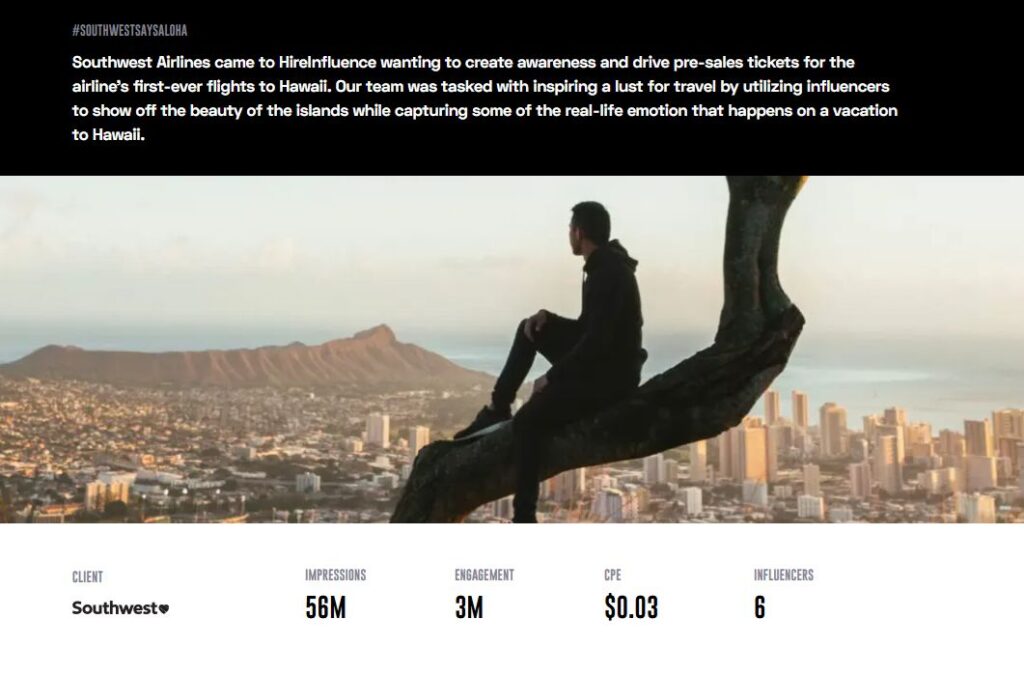
Additional programs appear in the work portfolio. Features like trial reels support the testing instinct behind results like these, and the judgment about what to test and how to read the result is what makes the testing worthwhile.
The HireInfluence Model for Creative Testing
Founded in 2011, HireInfluence is a full-service enterprise influencer marketing agency with 25 or more people across 10 or more states, working from offices in Houston, The Woodlands, Austin, Los Angeles, and New York. The firm runs programs for brands including Coca-Cola, Microsoft, Walmart, Meta, Grammarly, and Southwest Airlines on a six-figure engagement floor, using platform testing features to validate creator concepts before they are committed at scale. It was named Marketing Agency of the Year at the 2024 MUSE Creative Awards and Digital Marketing Agency of the Year at the 2026 U.S. Agency Awards, and it has been a TikTok Shop Lite Program partner since July 2024. How creative testing fits a broader creator program is covered in the firm’s guide to running a TikTok influencer campaign for the adjacent platform. Brands can reach the team through the contact page.
Founder and CEO Jason Pampell spent years managing content rights, licensing, and strategic media partnerships at Forbes and Billboard before founding the firm in 2011, and the trial reel is a testing instrument that world would have understood immediately. A publication tested headlines, ran material past sample readers, and gauged response before committing a story to the front page, because the front page was scarce and putting the wrong thing there was expensive. A trial reel is that same test applied to a creator’s most valuable inventory, their followers’ feed: it shows the content to strangers first, learns whether it can travel on its own, and only then commits it to the audience that matters most. A brand should use the feature to test creator concepts before committing them, confirm its current mechanics at the point of use because Instagram changes them, and treat the underlying discipline, validate against a cold audience before spending the warm one, as the durable advantage it represents.