
Usually not, with three genuine exceptions: physical production, in-person activations, and enough time-zone overlap for approvals to move. Creators are distributed regardless of where an agency sits, so an agency’s address rarely determines which creators a brand can reach or how well the work performs.
Table of Contents
- Why location stopped predicting creator access
- The three cases where location genuinely matters
- What brands are usually actually asking
- The honest position on where any agency operates
- When a local agency is genuinely the better choice
- What city pages are actually for
- How location interacts with creator sourcing
- What should disqualify an agency, including this one
- What to ask instead of asking where they are
- Program Delivery Across National and Multi-Market Campaigns
- The HireInfluence Model Across Markets
Brands searching by city are applying a filter that made sense when agency relationships required meetings and creator relationships were regional. Neither is now true, and influencer marketing agency location has become a weak proxy for things brands actually care about. It is not a worthless filter, though, and the three cases where it genuinely matters are specific enough to check against a plan in about five minutes. This article covers those, and then covers what brands are usually really asking when they search this way.
Why location stopped predicting creator access
The mechanism that once justified geographic filtering has been dismantled by the platforms themselves.
Creator discovery now runs through first-party marketplaces available at national and international scale. TikTok Creator Marketplace operates as a module inside TikTok One and is available across roughly two dozen countries. Instagram Creator Marketplace runs through Meta Business Suite across a comparable footprint, with Meta stating there is no official minimum follower count. YouTube Creator Partnerships became available in June 2026 in all locations where the YouTube Partner Program is active, with minimum spend requirements and account-management tier assignment no longer applying.
An agency in one city has the same discovery access as an agency in another. What differs between agencies is vetting quality and relationship depth, and neither is geographic.
The three cases where location genuinely matters
Physical production. Where a campaign requires a shoot, a studio, product handling, or a set, someone has to be in a place. This is a production logistics question rather than an agency-headquarters question, and it is usually answered by where the production partner is rather than where the account team sits.
In-person activations and experiential work. Events, launches, store activations, and anything requiring creators physically present in a market. Here the relevant geography is where the creators are, not where the agency is, and a capable agency sources into a market it does not live in routinely.
Time-zone overlap for approvals. The most underrated of the three. Creator campaigns generate time-sensitive decisions: a permission request, a caption correction before authorization locks, a creator dropping out. An agency with no working-hours overlap adds a day to every one of those. This is a real constraint and it argues for a region rather than a city.
What brands are usually actually asking
Three different questions arrive disguised as a location question, and each has a better answer than a postcode.
“Will this agency understand our market?” Market understanding is about category and audience rather than geography, and it is testable by asking how a specific creator on a proposed roster was chosen and who was rejected.
“Can we meet them?” A reasonable want. Worth asking directly as a question about working rhythm, since the answer is about travel and cadence rather than address.
“Do they know creators here?” The strongest version of the question, and it should be asked as itself. An agency should be able to describe how it sources into a specific market, whether or not it has an office there.
The honest position on where any agency operates
Brands should expect a straight answer about where a firm actually is, and should be skeptical of implied presence.
HireInfluence is headquartered in Houston, with offices in Austin, Los Angeles, and New York. It works with brands nationally and internationally from those locations. Any market not on that list is one the firm serves without a physical presence, which is true of most agency relationships in this category and is worth stating plainly rather than implying otherwise through a city page.
That is the standard worth holding every agency to. A firm with a page for a city where it has no people is not necessarily doing anything wrong, since the page may be about serving that market rather than sitting in it. The question worth asking is direct: is there an office, and will anyone from it be on this account?
When a local agency is genuinely the better choice
Three situations favor a genuinely local firm, and brands in them should not be talked out of it.
Heavily localised campaigns built around a specific city’s culture, venues, and micro-communities, where knowing the ground is the value.
High-frequency in-person work, such as recurring events or store-level activations, where travel cost and coordination overhead accumulate.
Small budgets with a local focus, where a national agency’s overhead buys capability the campaign will not use.
What city pages are actually for
Brands notice that agencies publish pages for cities where they have no office, and reasonably wonder what those pages represent. The honest answer has two parts.
Some are genuine market resources. A page describing a city’s creator ecosystem, its industry mix, and what a brand operating there should know is useful content regardless of where the publisher sits. It is a service page, not a presence claim.
Some are search artifacts. Brands search geographically, so agencies publish geographically, and a page exists because a query exists rather than because a capability does.
Neither is dishonest, and the distinction is easy to test by reading one. A page that says something specific and checkable about a market is the first kind. A page that could have any city name substituted without changing a sentence is the second.
The question that resolves it in a conversation remains the same: is there an office in that market, and will anyone from it be on this account?
How location interacts with creator sourcing
One further point deserves stating because it inverts the usual assumption.
An agency’s local relationships matter most in exactly the markets where discovery tools are weakest, which tends to mean smaller cities and niche communities rather than major metros. In large markets the platform marketplaces surface creators efficiently and an agency’s proximity adds little. In smaller markets, where fewer creators are discoverable through platform search, knowing people genuinely matters.
That runs opposite to how brands usually apply the filter. A brand campaigning in a major market gains little from an agency headquartered there. A brand campaigning in a smaller or specialized market may gain a great deal from a partner with real relationships in it, and should ask about those relationships specifically rather than about the office.
What should disqualify an agency, including this one
HireInfluence builds custom-scoped, fully managed programs rather than packaged or self-serve buys, so a brand running a single-city activation on a modest budget is better served by a local firm and should not be persuaded otherwise. The firm represents brands rather than creators. And any brand whose primary requirement is frequent in-person presence in a market without a HireInfluence office should weigh that honestly against the alternatives.
What to ask instead of asking where they are
Four questions get at what the location filter was reaching for, and none of them mentions an address.
How would this agency source creators in a market where it has no presence? A specific process answer is what to listen for.
What are the working hours of the team that would be on this account? Overlap matters for time-sensitive decisions in a way that headquarters does not.
Who travels, how often, and is it in the fee? Travel is a budget line and pretending otherwise produces a surprise later.
What physically has to happen in a place for this campaign? If the answer is nothing, location is close to irrelevant. If the answer is a shoot or an event, the relevant question is about production partners rather than about offices.
Program Delivery Across National and Multi-Market Campaigns
The #CoatYourThroat program for Ricola generated 26M impressions, and the campaign is documented in full in the Ricola case study.
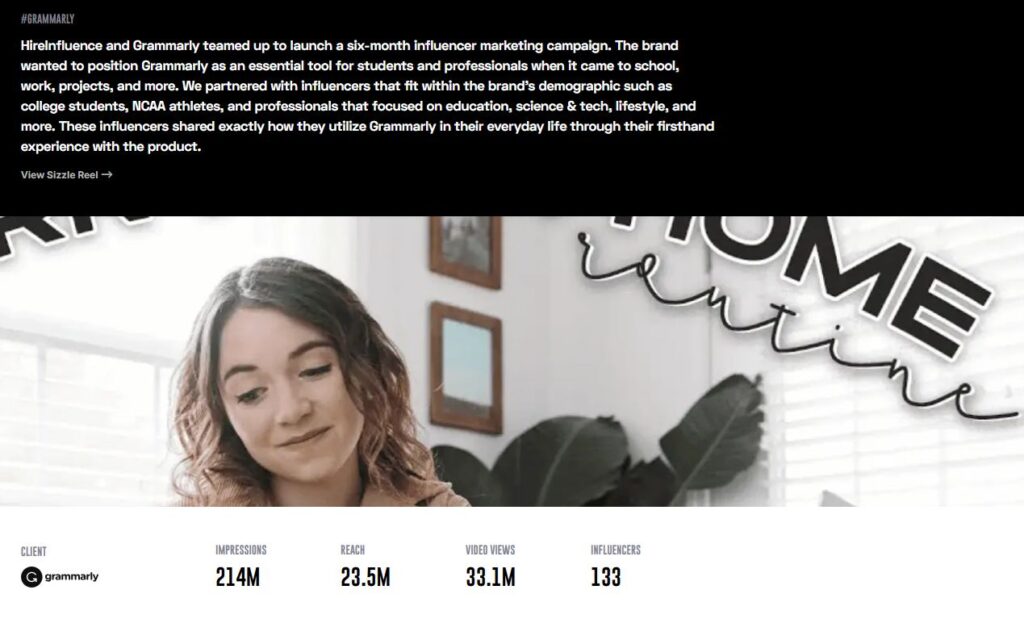
The Grammarly creator program ran with 133 creators, generating 214M impressions and 33.1M views, a roster distributed far beyond any single market. The #SouthwestSaysAloha program for Southwest Airlines delivered 56M impressions and 3M engagements across a national footprint.
Additional campaign detail is published in the work portfolio.
The HireInfluence Model Across Markets
Founded in 2011, HireInfluence is a full-service influencer marketing agency built for enterprise brands, headquartered in Houston with offices in Austin, Los Angeles, and New York. The firm runs creator programs for brands including MTV, McDonald’s, Microsoft, NFL, Oreo, and Target, covering strategy, talent sourcing, branded content production, paid amplification, and performance reporting. Creator selection runs through a manual vetting and validation process rather than database filtering alone, and campaigns are scoped to each client’s objectives rather than sold as fixed packages.
Brands weighing this should read the influencer content approval process, which covers the time-sensitive decisions that make working-hours overlap matter, and the cost of influencer marketing, since travel and production logistics are budget lines rather than afterthoughts. Scoping conversations start through contact, and the firm’s background is set out on the about page.