Establish the contractual position first, because it determines everything, and check the paid impact immediately, because deletion breaks more than the post. Any amplification running from that asset stops, and on TikTok the authorization is tied to the specific video and cannot be moved to a replacement.
Table of Contents
A creator deleted paid post situation is more disruptive than it appears, because brands think of the post as the deliverable when it is frequently also the infrastructure. A campaign running paid media through creator content is running it through that specific asset, and removing the asset removes the vehicle. The immediate priority is therefore operational rather than contractual, and the contractual conversation goes better once the campaign has stopped bleeding.
First hour: contain the paid impact
Check what was running from that asset. Paid amplification built on a deleted post stops delivering, and depending on setup may fail rather than pause, which affects pacing on everything else in the campaign.
Reallocate the budget deliberately rather than letting it redistribute automatically across whatever remains.
On TikTok specifically: Spark Ads authorization is tied to a specific video and creator identity. It cannot be reassigned to a replacement post, so a reposted version of the same content requires a new authorization code. Note also that a video code cannot be deleted until every ad using it has been deleted, which can complicate cleanup.
On Instagram: removing the post removes the branded content tag and with it the brand’s access to post insights.
On YouTube: a deleted video removes the linked asset and any organic viewership data segments built from it.
Then: establish why
The reason determines which of four situations this is, and they call for different responses.
Accidental or platform-driven. Content removed by the platform for a policy issue, or deleted in error. Usually resolvable and often the creator is more alarmed than the brand.
Creator changed their mind. They were uncomfortable with how it performed, with audience reaction, or with the brand association. A relationship conversation rather than a contractual one.
Deliberate breach. The creator removed content they were contracted to keep live for a defined period. This is where the agreement matters.
Editing rather than deletion. Frequently overlooked and more dangerous. A creator who edits a caption may have removed the disclosure, which converts a compliance-clean post into a compliance problem. On TikTok the disclosure label cannot be changed once added, but caption text and other elements can differ, so verify the disclosure survived.
What the contract determines
A minimum live period. Standard in well-drafted creator agreements and absent from many. Where it exists, early deletion is a defined breach with defined remedies. Where it does not, the creator may have been entirely within their rights.
Payment and clawback terms. Whether a fee is refundable or partially refundable on non-delivery.
Repost obligations. Whether the creator must restore the content, and who bears the cost.
Whether already-produced assets remain licensed. The most commercially significant item and the one most often unaddressed. A brand may still hold rights to use the content in paid media even where the organic post is gone, and establishing that determines whether the campaign can continue in a different form.
The realistic options
Ask for a repost. Frequently works, particularly where deletion was accidental or performance-driven. A reposted asset needs a new authorization on TikTok and a fresh tag approval on Instagram.
Continue with the licensed asset in paid only. Where rights permit, the content can keep running as advertising without the organic post existing. This is often the fastest recovery and is regularly missed.
Reallocate to the rest of the roster. Where authorization already exists elsewhere, this is the lowest-friction option.
Invoke the agreement. Where a live-period provision exists and was breached, following the stated notice terms.
Accept it. Where no provision exists, the content underperformed anyway, and the relationship is worth more than the asset.
What to add to the template
A minimum live period, stated in days, with a defined remedy.
A notification requirement before deletion or material edit, which costs the creator nothing and gives the brand a chance to unwind paid spend in an orderly way.
Explicit survival of usage rights, so a deleted organic post does not remove the brand’s ability to use content it paid for.
A prohibition on editing disclosures, since a caption edit can create a compliance exposure the brand will carry.
A requirement to preserve the asset for the licensed period, distinct from keeping the post live. A creator who deletes a post but retains the file allows the brand to continue using licensed content in paid media, which is often the only part of the campaign worth saving.
The check worth running across the whole roster afterward
A single deletion is worth treating as a prompt to audit the rest, because the exposure is rarely isolated.
Confirm that every asset currently carrying paid spend still exists and still displays its disclosure. Confirm which agreements contain a minimum live period and which do not. And confirm, for the assets without one, whether the brand would still hold usage rights if the organic post disappeared tomorrow.
That audit takes an afternoon and converts a single incident into a known position across the program.
Program Delivery Across Managed Campaigns
The #CoatYourThroat program for Ricola generated 26M impressions, and the campaign is documented in full in the Ricola case study.
The #OREOShamROCKout program for Oreo and McDonald’s returned 1.7M impressions at $0.06 cost per engagement. The Grammarly creator program ran with 133 creators, generating 214M impressions and 33.1M views, a roster at which single-asset dependency is diluted by design.
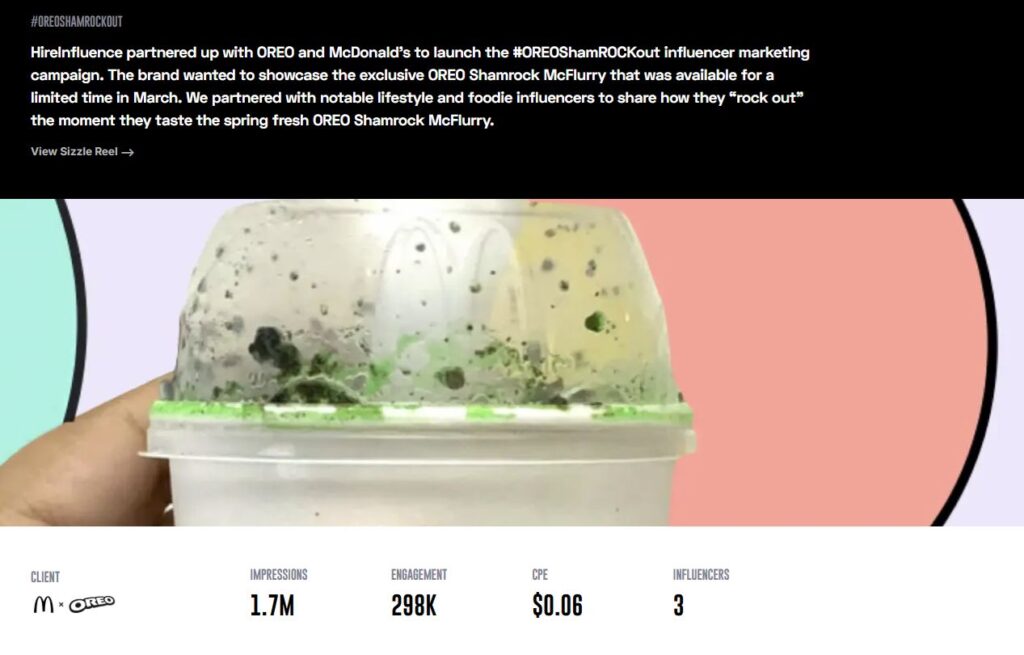
Additional campaign detail is published in the work portfolio.
The HireInfluence Model for Asset Continuity
Founded in 2011, HireInfluence is a full-service influencer marketing agency built for enterprise brands, headquartered in Houston with offices in Austin, Los Angeles, and New York. The firm runs creator programs for brands including Coca-Cola, Honda, MTV, Microsoft, Southwest Airlines, and Target, covering strategy, talent sourcing, branded content production, paid amplification, and performance reporting. Creator selection runs through a manual vetting and validation process rather than database filtering alone, and campaigns are scoped to each client’s objectives rather than sold as fixed packages.
Brands revising their agreements should read the influencer exclusivity clauses guide and the influencer content approval process. Scoping conversations start through contact.