A general agency can run Instagram well, provided it can describe the permission mechanics without prompting. Instagram is the only major platform where the brand’s own inaction blocks its campaign, where eligibility is standing-based rather than follower-based, and where whole categories face additional approval.
Table of Contents
- The two-way permission model, and why it catches brands out
- Content-level and account-level permission are different assets
- Eligibility is about standing, not size
- The category restrictions that are not optional
- What is changing, and how to test whether an agency knows
- What to ask before appointing anyone to Instagram work
- Where Instagram capability is genuinely scarce
- What should disqualify an agency, including this one
- Program Delivery Across Instagram and Cross-Platform Work
- The HireInfluence Model for Instagram Programs
The question of whether to appoint the best Instagram influencer agency available or fold Instagram into a broader engagement is usually argued on creative fluency, which is the wrong axis and is covered separately in the guidance on running one agency across several platforms. Creative competence on Instagram is common. What is not common is fluency in the platform’s permission architecture, which differs from every other platform in a specific way: permission runs in two directions and either side can withdraw it. An agency that has not internalised that will produce good creative and lose flights to mechanics. This article sets out what an agency actually has to handle on Instagram, in the order it becomes relevant.
The two-way permission model, and why it catches brands out
On Instagram the creator toggles the paid partnership label and tags the brand. The first tag sends a request to the brand. Until the brand approves, the label displays without the brand name. If the brand denies it, the label is removed from the content entirely. If a brand later removes itself, the creator is notified and the brand stops seeing insights.
Read that sequence again from the brand’s side, because it contains something unusual. An unactioned request is not a neutral state. A brand that simply does not respond has published, through inaction, a labelled post with no brand attached. On every other major platform the brand’s failure to act delays a campaign. On Instagram it degrades content that is already live.
This is why the operational question for an Instagram programme is not who sources creators but who watches the request queue and how fast. That is a staffing question with a service-level answer, and any agency proposal for Instagram work should contain one.
Content-level and account-level permission are different assets
The distinction decides whether a programme can scale, and it is routinely collapsed into a single line on a scope of work.
Content-level permission attaches to a single post. The creator publishes, tags the brand, and enables promotion for that specific piece. Appropriate for a defined set of agreed posts, and practically expires with the campaign.
Account-level permission covers organic content where the brand is tagged and allows promotion without a fresh approval per asset. Instagram describes it as the path that scales, and for an always-on programme it is the only workable arrangement.
The difference is not administrative. Account-level permission is a negotiated position inside a creator agreement, secured by whoever contracted the creator. It cannot be requested retrospectively without reopening terms, and a programme that discovers it needs account-level access after content has published is renegotiating from a weak position.
Eligibility is about standing, not size
A great deal of published advice asserts a follower threshold for Instagram branded content tools. It is not accurate and it causes brands to screen creators on the wrong variable.
Meta states there is no official minimum follower count for Instagram Creator Marketplace. The causes Instagram documents for the paid partnership label being unavailable are a personal rather than professional account, a private account, loss of eligibility from policy strikes or repeated violations, and the brand partner lacking a professional account.
Every one of those is an account status rather than an audience size. The practical consequence is that vetting for Instagram has to include an account-status check, not just an audience-quality check, and that a creator can become ineligible mid-programme through something entirely unrelated to the brand.
The category restrictions that are not optional
The widely repeated claim that the paid partnership label does not suppress reach is broadly correct and needs qualifying. Meta has not confirmed any algorithmic reduction tied to the label, and the position holds for mainstream consumer categories. It does not hold universally.
Documented restrictions exist for health, finance, and political branded content, which can face limited reach or additional approval. Political and government entities are largely ineligible for the tool, with a narrow exception inside the United States for partners authorised to run ads about social issues, elections, and politics with a connected Facebook Page.
Brands in those categories should confirm eligibility before a plan is built rather than after, and should treat an agency that describes the reach position without the qualification as working from a summary rather than the documentation.
What is changing, and how to test whether an agency knows
Meta announced on June 23, 2026 that Creator Marketplace and the Partnership Ads Hub will merge into a new Meta Creator Marketing Hub later in the year. As of the most recent check the Help Center still documents Creator Marketplace as active, so the accurate description is active with an announced transition rather than completed.
This is a useful diagnostic in a pitch. An agency that describes the current state precisely, including the fact that the transition has been announced but not completed, is reading primary documentation. An agency that describes it as done, or has not heard of it, is working from secondary material. Neither error is fatal on its own, but Instagram is a platform where secondhand knowledge produces exactly the mechanical failures described above.
What to ask before appointing anyone to Instagram work
What is the response time on incoming tag requests, and who owns it? A service level, not a philosophy.
When is account-level permission negotiated? During creator contracting, or the programme will not scale.
How is creator account status verified, and how often? Eligibility is standing-based and can change mid-flight.
Does the plan touch health, finance, or political content? If yes, and the agency has not raised the restrictions, it has not checked.
Who reads the shared insights? Both parties receive post performance through Instagram Insights once a tag is live, which replaces screenshot reporting. That data should reach optimisation on a defined cadence.
Where Instagram capability is genuinely scarce
Three capabilities are harder to find than agencies imply, and all three are testable.
Running Trial Reels as part of a creator programme. Instagram’s trial mechanic publishes a Reel initially to non-followers, which makes it a testing surface rather than a publishing one. It changes frequently enough that an agency should describe its current behaviour rather than a remembered version, and should say plainly when it last checked.
Designing a brand-lift study rather than reporting one. A Meta brand-lift study is a controlled experiment splitting the audience into exposed and holdout groups at account level, measuring ad recall as the primary metric alongside awareness, message association, favourability, and purchase intent. Meta recommends one or two questions per study and calculates lift as people reached multiplied by the brand lift percentage. The result is an estimate rather than a count, and an agency presenting it as a measured number has misunderstood the instrument.
Handling permission loss without a crisis. Creator eligibility can lapse mid-programme through account status changes unrelated to the brand. The capability is not preventing that, which is impossible, but having bench depth and a defined substitution path.
What should disqualify an agency, including this one
HireInfluence builds custom-scoped, fully managed programs rather than packaged or self-serve buys, so a brand running a small organic-only Instagram programme with a stable creator set is better served working directly through Creator Marketplace. The firm represents brands rather than creators. And a brand that cannot commit to a response time on tag requests will see the failure described in this article regardless of who is engaged, because that queue sits on the brand’s side.
Program Delivery Across Instagram and Cross-Platform Work
The #CoatYourThroat programme for Ricola produced a 13.17% engagement rate, and the campaign is documented in full in the Ricola case study. That figure is one campaign’s result rather than a platform benchmark.
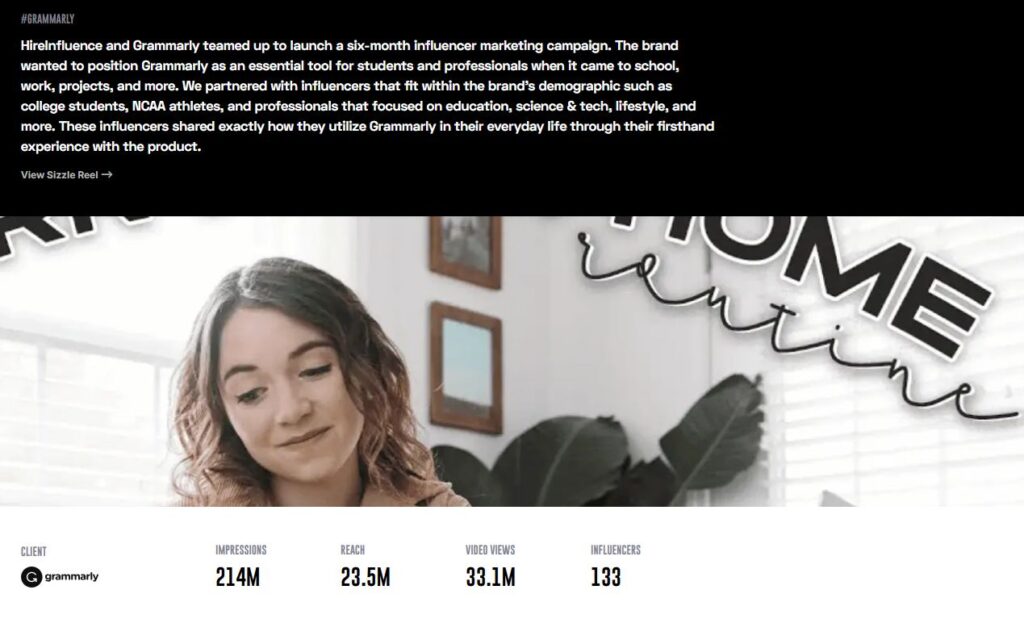
The #OREOShamROCKout programme for Oreo and McDonald’s returned 1.7M impressions at $0.06 cost per engagement. The Grammarly creator programme ran with 133 creators, generating 214M impressions and 33.1M views, a roster size at which permission status has to be tracked systematically rather than remembered.
Additional campaign detail is published in the work portfolio.
The HireInfluence Model for Instagram Programs
Founded in 2011, HireInfluence is a full-service influencer marketing agency built for enterprise brands, headquartered in Houston with offices in Austin, Los Angeles, and New York. The firm runs creator programs for brands including Adidas, MTV, Southwest Airlines, Target, Warner Bros, and eBay, covering strategy, talent sourcing, branded content production, paid amplification, and performance reporting. Creator selection runs through a manual vetting and validation process rather than database filtering alone, and campaigns are scoped to each client’s objectives rather than sold as fixed packages.
Brands scoping Instagram work should read the influencer content approval process, which covers the request-queue problem in operational detail, and how to measure influencer brand lift, since perception measurement on Meta surfaces is a controlled study rather than a reporting view. Scoping conversations start through contact, and the firm’s background is set out on the about page.