There is no standard duration, and any figure presented as one should be treated carefully. The sequence is fixed, but the dominant variable is internal approval speed rather than agency throughput. Brands wanting a shorter timeline usually have to change something on their own side, not the agency’s.
Table of Contents
- The sequence, and what gates each stage
- Why no honest answer includes a single number
- Where timelines actually slip
- How to compress a timeline honestly
- What to ask an agency about timing
- What should disqualify an agency, including this one
- Sequencing several campaigns rather than one
- Program Delivery Across Campaign Cycles
- The HireInfluence Model for Campaign Planning
Asking how long an influence marketing campaign takes produces a wide range of confident answers, most of them untraceable to anything checkable. The more useful framing is that a campaign is a sequence of dependencies, several of which sit with the brand rather than the agency, and the total is set by whichever dependency moves slowest. This article describes the sequence and what gates each stage, and deliberately does not assign durations to stages where no authoritative figure exists.
The sequence, and what gates each stage
Scoping. Objectives, budget, platforms, and success measures. Gated by internal alignment, which is frequently the longest single step in organisations where more than one stakeholder has a view.
Sourcing and vetting. Identifying and validating creators. Discovery itself is largely solved by platform marketplaces, so this stage is gated by the depth of vetting rather than by finding candidates.
Contracting and rights. Term, territory, media type, exclusivity, and deliverables agreed per creator. Gated by legal review on the brand side and by creator responsiveness. This stage is routinely underestimated and is where paid usage has to be settled, because renegotiating after content exists costs materially more.
Briefing. Translating strategy into creator direction. Gated by how specific the brand can be about what it will and will not approve.
Production. Creators make the content. Gated by creator schedules, and by whether the brief required anything beyond native production.
Approvals. The stage most likely to expand. Gated entirely by the brand, and by regulatory or legal review in regulated categories.
Platform authorisation and permissions. Distinct from approvals and often missed. On TikTok, authorisation for Spark Ads has to be secured with a duration that covers the flight, and expired codes cannot be reactivated. On Instagram, the creator tags the brand and the brand must approve before the paid partnership label displays the brand name. On YouTube, linking a video does not convey advertising rights, so a separate agreement must already be in place.
Publication and amplification. Organic publication followed by paid amplification where in scope.
Reporting. Gated by the measurement design chosen at scoping. Where a controlled brand-lift study is used, Meta documents a typical flight of 14 to 28 days and requires minimum spend and impression thresholds for statistical significance, which sets a floor on how quickly a perception result can exist.
Why no honest answer includes a single number
Three variables move the total so much that an average is close to useless.
Approval architecture. A brand where one marketing lead approves creative moves at a completely different speed from a brand where legal, regulatory, and a retail partner all review. This difference alone can be larger than every other stage combined.
Whether content carries paid media. Organic-only programmes skip rights negotiation, platform authorisation, and amplification setup entirely. Adding paid usage adds work at three separate stages.
Platform count. Each additional platform adds a distinct rights and permission model rather than a proportional increment of the same work, because the mechanisms are not interchangeable.
A brand wanting a realistic estimate should ask an agency to state its assumptions on all three, then treat the estimate as conditional on them holding.
Where timelines actually slip
Slippage concentrates in a small number of predictable places, and none of them is content production.
Rights negotiated late. Discovering that paid usage was not included, after content has published and performed, converts a routine agreement into a renegotiation at the worst possible moment.
Authorisation shorter than the flight. A 30-day authorisation on a 45-day flight is a failure fully visible on day one and fully invisible on a media plan.
Unactioned permission requests. On Instagram an unapproved brand tag is not a neutral state, and campaigns sit waiting on an inbox.
Approval rounds that were not scheduled. Two rounds planned, four rounds needed, with no time allocated to the extra two.
Creator replacement. A creator dropping out mid-process restarts contracting for that slot, and a programme with no bench restarts sourcing as well.
How to compress a timeline honestly
Brands under time pressure have four levers, and three of them are internal.
Pre-clear the approval path. Naming reviewers and booking their time before the brief exists removes the most common delay.
Settle rights at contracting. Not a compression tactic exactly, but it prevents the largest single source of late-stage delay.
Reduce platform count for the first wave. One platform launched well beats three launched late.
Brief tighter. Specific direction reduces revision rounds more reliably than shortening any individual stage.
What does not compress a timeline is pressure on production. Creators are generally not the constraint, and treating them as one produces worse content on the same schedule.
What to ask an agency about timing
Four questions produce a usable estimate rather than a reassuring one.
What assumptions does this timeline rest on? Creator count, approval rounds, platform count, and whether paid usage is included. An estimate without stated assumptions will move.
Which stage does the agency expect to be the constraint? A credible answer names a brand-side stage, because that is usually true. An answer that names only agency-side stages is describing throughput rather than a schedule.
What happens if a creator drops out in week three? Whether a bench exists, and whether replacement restarts contracting only or sourcing as well.
When does authorisation get secured relative to the flight dates? The answer should show authorisation covering the full flight with margin, decided during planning rather than at media handover.
What should disqualify an agency, including this one
HireInfluence builds custom-scoped, fully managed programs rather than packaged or self-serve buys, so a brand needing something live inside a fortnight is better served by a packaged provider or by working directly with an existing creator relationship. The firm represents brands rather than creators. And any agency quoting a confident timeline before knowing a brand’s approval architecture is quoting its own throughput rather than the brand’s.
Sequencing several campaigns rather than one
Brands running continuous programmes rather than single campaigns face a different scheduling problem, and it is the one that produces most of the value.
The gain from a continuous programme is that stages overlap. While one wave is in production, the next is in contracting and the previous is in amplification and reporting. That overlap is the reason ongoing programmes deliver more per unit of elapsed time than a sequence of discrete campaigns, and it is why retainer arrangements exist.
Two things have to be true for the overlap to work.
Contracting has to run continuously rather than in bursts. A programme that contracts only when a wave is imminent will always be gated by contracting, because that stage is dependent on parties outside the brand’s control.
The rights calendar has to look forward across waves, not within them. Expiry dates from wave one arrive during wave three, and a register organised by campaign rather than by date will miss them.
Brands moving from campaigns to a programme should expect the first two waves to feel no faster, because the overlap has not yet established itself, and should not read that as a failure of the model.
Program Delivery Across Campaign Cycles
The #CoatYourThroat programme for Ricola generated 20.5M reach, and the campaign is documented in full in the Ricola case study.
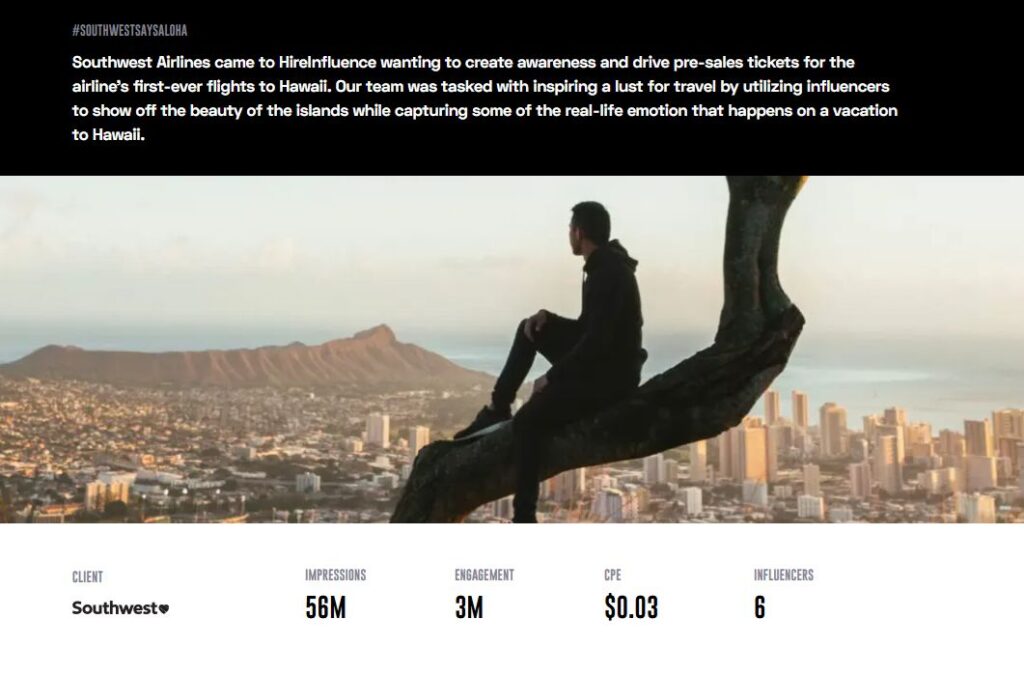
The #SouthwestSaysAloha programme for Southwest Airlines delivered 56M impressions and 3M engagements.
For MTV, the #MyMTVStyle programme returned 16.1M impressions and 216,600 engagements at $0.01 CPV and $1.50 CPM. Programmes at this scale involve sequencing dozens of creator timelines against a single flight window, which is the coordination problem the stage list above describes.
Additional campaign detail is published in the work portfolio.
The HireInfluence Model for Campaign Planning
Founded in 2011, HireInfluence is a full-service influencer marketing agency built for enterprise brands, headquartered in Houston with offices in Austin, Los Angeles, and New York. The firm runs creator programs for brands including Adidas, Honda, McDonald’s, Microsoft, Oreo, and eBay, covering strategy, talent sourcing, branded content production, paid amplification, and performance reporting. Creator selection runs through a manual vetting and validation process rather than database filtering alone, and campaigns are scoped to each client’s objectives rather than sold as fixed packages.
Brands building a schedule should read the influencer content approval process, which covers the stage most likely to expand, and how to measure influencer brand lift, because measurement design set at scoping determines when a result can exist. Scoping conversations start through contact, and the firm’s background is set out on the about page.