
Brands still ask whether they should repurpose creator content, and a June 2026 survey of 100 paid media leaders and marketing executives across the United States and United Kingdom indicates the question has already been settled by everyone else. 100% of respondents repurpose creator content across other channels. Not most. All of them. The destinations rank predictably: paid social and digital advertising at 65%, websites and landing pages at 56%, retail and commerce placements at 47%. Creator content now accounts for 44% of brands’ paid media creative assets on average, and 92% of paid media leaders use it in some capacity. What the same research identifies as the obstacles is where the real article begins. The barriers to growth are measuring creator-driven paid performance separately from other creative at 58%, securing usage rights at 54%, and integrating creator tools with paid media systems at 52%. Repurposing is universal. Repurposing legally, at scale, and with the ability to prove it worked, is not.
Table of Contents
Why Usage Rights Constrain Cross-Channel Creator Content
There is no longer a strategic argument to win. When every surveyed marketer repurposes creator content and it constitutes nearly half of paid media creative, the practice is not a tactic anyone needs persuading of. What remains is a set of operational failures that the industry has been slow to name, because naming them requires admitting that the failure happened at the contract table months before it appeared in the ad account.
The rights barrier is the one to understand first. Fifty-four percent of these marketing leaders identify securing usage rights as a top constraint on growth, which is a remarkable finding about a problem entirely within the brand’s control. Usage rights are not a market condition. They are a clause. A brand that cannot deploy its best-performing creator asset in a retail media placement is not blocked by an external force. It is blocked by an agreement its own team signed, drafted for a single organic post because that was the deliverable anyone was thinking about on the day.
The economics of that oversight are asymmetric in a specific and expensive way. Rights negotiated before content exists are cheap, because neither party knows whether the asset will work. Rights negotiated after an asset performs are expensive, because both parties now know exactly what it is worth and only one of them needs it. The brand that waits has converted a routine contract term into a negotiation conducted from the weaker position, at the precise moment when speed matters most, because the window in which a performing asset should be scaled is measured in days.
The measurement barrier compounds it. Fifty-eight percent name the inability to measure creator-driven paid performance separately from other creative as their leading obstacle, which means a majority of enterprise programs cannot answer the question their own repurposing strategy depends on. If a brand cannot isolate what a creator asset did inside a paid campaign, it cannot know which assets to renew rights on, which creators to retain, or whether the forty-four percent of its creative that came from creators is carrying the account or riding it. The rights problem and the measurement problem are the same problem viewed from two ends: neither can be solved after the fact, and both are solved by decisions made before production.
The destination hierarchy shows what is at stake. Sixty-five percent route creator content into paid social and digital advertising, fifty-six percent onto websites and landing pages, forty-seven percent into retail and commerce placements. Each of those surfaces carries a different rights requirement. Paid amplification from a creator’s handle needs authorization the creator grants. Embedding an asset on a product page needs a copyright license the platform never conferred. Retail media placement frequently needs likeness releases and music clearances that the original organic post carried no obligation to obtain. A single asset moving across three surfaces triggers three distinct legal questions, and a contract written for one post answers none of them.
What Enterprise Brands Should Expect From a Repurposing Partner
Program strategy and design. The agency has to map destinations before production, because the surfaces an asset will eventually reach determine the rights that must be secured, the formats that must be shot, and the price the creator should reasonably charge. That mapping belongs inside dedicated campaign services rather than in a scramble after a post performs.
Creator sourcing and verification. The agency has to confirm that a creator will grant the rights the program requires before that creator reaches a shortlist, since a perfect creative fit who will not license for paid media is an unusable partner for a program whose whole design assumes redeployment. Rights willingness belongs in the first conversation rather than the last, and a creator who declines is not difficult, only clear.
Platform and commerce integration. The agency has to know which platform tools grant which permissions, and where each one stops. Ad authorization from a creator’s handle is not a copyright license. A disclosure label is not a music clearance. Each mechanism solves precisely one problem and leaves the others untouched. The most expensive misunderstanding in the category is a team that believes the platform’s permission tool has settled a copyright question it never addressed, and discovers otherwise once an asset is already running across three surfaces.
Creative direction and content production. The agency has to brief for modularity so a single shoot yields assets that survive reformatting, specifying clean product shots, spoken product names, and safe zones for platform overlays. A UGC overview explains the production model that makes multi-surface deployment practical.
Audience and segment-specific execution. The agency has to accept that an asset which persuades on one surface may fail on another, because the viewer’s posture differs. Someone encountering a creator video in a feed is being interrupted. Someone encountering the same video on a product page has already decided to consider buying. The identical asset performs two different jobs, and a repurposing plan that ignores the distinction is redistributing rather than deploying. The edit that opens with a hook belongs in the feed. The edit that opens with the product belongs on the page, and they are not the same file.
Cross-platform orchestration. The agency has to sequence deployment so an asset earns its way onto progressively more expensive surfaces rather than arriving everywhere at once. Brands running short-form programs can consult the firm’s TikTok influencer marketing resource for the adjacent channel, where authorization mechanics are distinct and the license granted rarely extends beyond the platform.
Paid amplification. The agency has to move budget behind proven assets within days, which is only possible where rights were settled in advance. That responsiveness lives inside a specialties and services capability that is not waiting on a legal review to fund a winner.
Attribution and measurement. The agency has to isolate creator-driven performance from the rest of the creative pool, because the majority of the industry cannot, and a brand that can will make better renewal, retention, and rights decisions than its competitors. That isolation requires an analytics capability instrumented per asset from the day of delivery.
Program Delivery Across Redeployed Creator Content
Rights discipline shows up in what programs produce. The #OREOShamROCKout activation for Oreo and McDonald’s delivered 1.7M impressions at $0.06 cost per engagement, efficiency that only accrues when creative can be moved to wherever it performs. The Grammarly creator program coordinated 133 creators to produce 214M impressions and 33.1M views with $15M in earned media value, a library deep enough that redeployment was a planning question rather than a rescue operation. The #CoatYourThroat program for Ricola reached 20.5M people across 26M impressions with 18 influencers, sustained a 13.17% engagement rate, and drove 62,500 MikMak retail clicks, documented in the Ricola case study.
The #SouthwestSaysAloha program for Southwest Airlines produced 56M impressions and 3M engagements, and the #MyMTVStyle campaign for MTV generated 16.1M impressions and 216,600 engagements at $0.01 cost per view. Additional programs appear in the work portfolio.
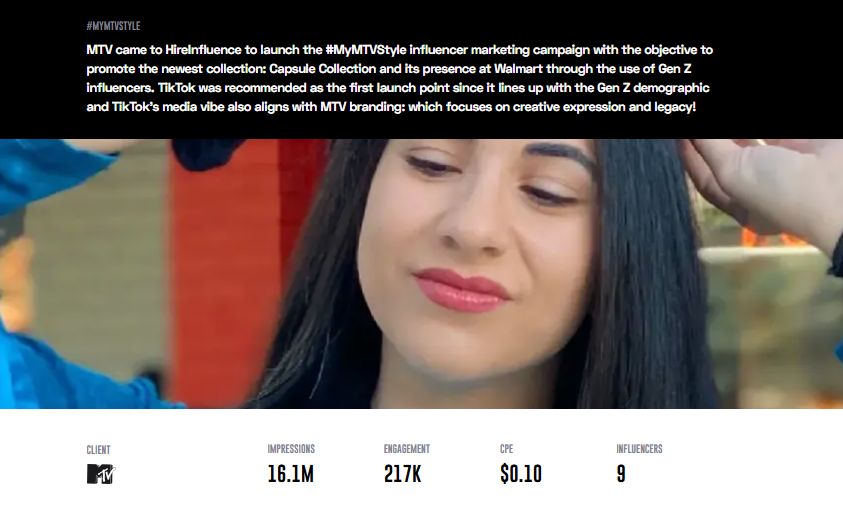
The Ricola retail clicks are the clearest illustration of the point: a creator asset that reaches a commerce surface produces an outcome an impression cannot, and reaching that surface is a permissions question before it is a media one.
How to Evaluate a Repurposing Agency
First, ask when rights are negotiated. The agency should settle paid, owned, and retail usage before production begins, and it should be able to say what a rights renegotiation costs once an asset has proven itself.
Second, ask which platform tool covers which permission. The agency should know that ad authorization, disclosure labels, and copyright licenses are three separate instruments, and should be able to name what each one leaves unresolved.
Third, ask how the agency measures a creator asset inside a paid campaign. The agency should isolate it, because a majority of the market cannot, and the brands that can are the ones making informed renewal decisions.
Fourth, ask what a brief specifies for reformatting. The agency should require modular composition at the shoot, since an asset that cannot be recut for a product page was never a multi-surface asset regardless of what the contract permits.
Fifth, ask how usage rights are priced. The agency should show duration, territories, surfaces, and exclusivity as distinct components, reasoning from a published cost of influencer marketing guide rather than folding rights into a single production fee that nobody can unpick later.
The HireInfluence Model for Creator Content Rights
Founded in 2011, HireInfluence is a full-service enterprise influencer marketing agency with 25+ people across 10+ states, working from four offices: Houston and The Woodlands in Texas, Austin, Los Angeles, and New York. The firm has run programs for Oreo, Grammarly, Ricola, Southwest Airlines, MTV, and Coca-Cola on a six-figure engagement floor, which reflects the rights, production, and measurement infrastructure that multi-surface deployment demands.
HireInfluence has been a TikTok Shop Lite Program partner since July 2024, a designation that matters here because commerce placements sit at the far end of the rights chain and require the most careful clearance. The agency was named Marketing Agency of the Year at the 2024 MUSE Creative Awards and Digital Marketing Agency of the Year at the 2026 U.S. Agency Awards.
Before founding the firm in 2011, Jason Pampell spent years managing content rights, licensing, and strategic media partnerships for Forbes and Billboard, work that consisted almost entirely of the question this article describes: what may be done with a piece of content, by whom, for how long, in which territories, and on what commercial terms. Publishing solved this problem a century ago and wrote the answer into every contract it signs. Creator marketing keeps rediscovering it one expired license at a time. The HireInfluence team negotiates surfaces before shoots, because an asset a brand cannot deploy is not an asset, it is a receipt. Brands can reach the firm through its contact page or read more about its history in the about section.
The research leaves nothing ambiguous. When every surveyed marketer already repurposes creator content and more than half name usage rights as a barrier to doing more of it, the constraint on the channel is not creative, audience, or budget. It is paperwork, executed months earlier by people who did not yet know which video would matter.