
Enterprise brands planning for influencer mentions and AI search generally assume they are early to a surface that is about to become universal, and a probability-based survey of 5,119 US adults conducted in February 2026 describes something stranger. About half of American adults say they use AI chatbots, and about half say they do not use them at all. Roughly three-quarters of adults 65 and older never use them. Chatbots are now the technology Americans name first when asked what comes to mind about AI, at about three-in-ten. And the attitudes underneath the adoption run the other way: views on AI tilt more negative than positive in every age group, roughly half of adults under 30 expect AI to harm society against 14% who expect benefit, and confidence in actually using the tools reaches only about three-in-ten among adults under 30 before collapsing to 6% among those 65 and older. The heaviest users are the least convinced. Adoption and trust are unrelated properties.
Table of Contents
Why a Distrusted Surface Changes What a Mention Is Worth
The prevailing strategic frame treats AI search as a channel, which implies a destination. On a channel, presence is the objective: appear in the answer, and the work is done, in the way that appearing in a search result or a feed was once close enough to done. That frame survives only if the audience treats what the surface says as authoritative. The survey evidence says it does not. A population that uses a tool at scale while telling researchers it expects that class of technology to make things worse, and while declining to describe itself as confident using it, is not a population accepting verdicts. It is a population collecting leads.
That distinction is the whole strategic question, and it changes what a brand mention in an AI answer actually is. If the answer is a verdict, a mention is an endorsement and the game is placement. If the answer is a lead, a mention is a claim awaiting corroboration, and the game is whether corroboration exists anywhere the person will look next. Those two readings imply opposite investments. The first says buy visibility in the answer. The second says the answer is the cheap part, and what determines the outcome is what a skeptical person finds when they go checking, which is a question about everything a brand has accumulated outside its own domain.
The age structure in the data sharpens this rather than softening it. It would be convenient if distrust were concentrated among the people who barely use the tools, because that pattern resolves itself as adoption spreads. The survey shows the opposite arrangement. Adults under 30 are the most likely to use chatbots and the most likely to say AI will damage society, with roughly half saying so and only about one in seven expecting a positive effect. Confidence among that same cohort tops out around three-in-ten. The people who will define this surface’s norms are fluent in it and skeptical of it simultaneously, and a marketing plan that assumes their skepticism is a transitional artifact is planning for a population that does not exist.
There is a second structural fact in the data that gets consistently misread. About half the country does not use chatbots at all, and among adults 65 and older the share who never use them is roughly three-quarters. A surface with that shape is not an emerging universal. It is a large, demographically skewed slice, and any brand whose customers include people over 50 is looking at a channel that reaches a minority of them. Treating AI visibility as a replacement for discovery infrastructure rather than an addition to it means quietly withdrawing from a majority of an older customer base in exchange for a minority of a younger one that does not trust the surface it was reached on.
What this leaves is a specific and unglamorous conclusion about influencer mentions. Creator content is the largest body of speech about consumer brands that the brand did not write, and its value on this surface is not that it manufactures a mention. It is that a person arriving from an AI answer with a name and a doubt lands somewhere a human being is visibly saying something checkable. That is the same job creator content did before this surface existed, which is why the correct response to AI search is mostly not a new program. It is the recognition that a brand with nothing said about it anywhere has no answer to a skeptic, and that skepticism is now arriving at industrial scale with a product name already attached.
What Enterprise Brands Should Expect From an AI Search Partner
Program strategy and design. The agency has to build the program around what happens after the mention rather than around the mention itself, which means treating the AI answer as an entry point into a verification path and designing what that path finds. That is a campaign architecture question rather than an optimization question, and it belongs inside dedicated campaign services where the shape of the program is still open.
Creator sourcing and verification. The agency has to source for checkability, because a skeptical arrival is looking for a person rather than a placement. A creator whose history in a category is visible and consistent survives that inspection; a creator assembled for a single campaign does not, and the inspection is now the common case rather than the exception. Verification of audience authenticity carries a compounding penalty here, since a fabricated audience produces exactly the pattern a suspicious person is scanning for.
Platform and commerce integration. The agency has to know where a verification path actually terminates, because it usually ends at a transaction surface rather than at a brand site. A person who took a name from a chatbot, checked it against a creator, and went looking to buy has crossed three surfaces, and a program that instruments only the first has learned nothing about whether any of it worked.
Creative direction and content production. The agency has to direct creative toward specificity, because vague enthusiasm fails a check that specific claims survive. Content that names what a product does, what it costs, and what it does not do gives a skeptic something to confirm; content built from adjectives gives them nothing and reads as the thing they were already suspicious of. The UGC overview covers how that supply gets built at volume.
Audience and segment-specific execution. The agency has to segment by whether the audience is even on this surface, since the adoption split runs sharply by age and a single strategy applied across an older and younger customer base will misfire on one of them. The older segment is not reachable this way in any meaningful share, and pretending otherwise produces a plan that reads well and covers half a market.
Cross-platform orchestration. The agency has to place corroboration on the surfaces a person actually checks, which is a different question from where the original content performed best. A creator’s strongest channel and the channel a doubtful person visits to verify are frequently not the same, and the second one is what matters once an AI answer has done the introduction. The TikTok influencer marketing resource is useful reading on how one adjacent surface behaves in that role.
Paid amplification. The agency has to accept that amplification cannot manufacture the thing this surface rewards, because paid distribution increases how many people see a claim without changing whether the claim withstands checking. Amplification is worth running once corroboration exists and is close to worthless before it, which is a sequencing constraint rather than a budget one. That sequencing runs through the specialties and services capability.
Attribution and measurement. The agency has to measure a path that crosses surfaces which do not report to each other, and be honest that the AI leg of it is largely dark. What can be instrumented is the landing and the action, and a program that reports confident numbers about chatbot-sourced traffic is reporting an inference rather than an observation. That candor is a property of an analytics capability that is willing to say what it does not know.
Program Delivery Across AI Search Surfaces
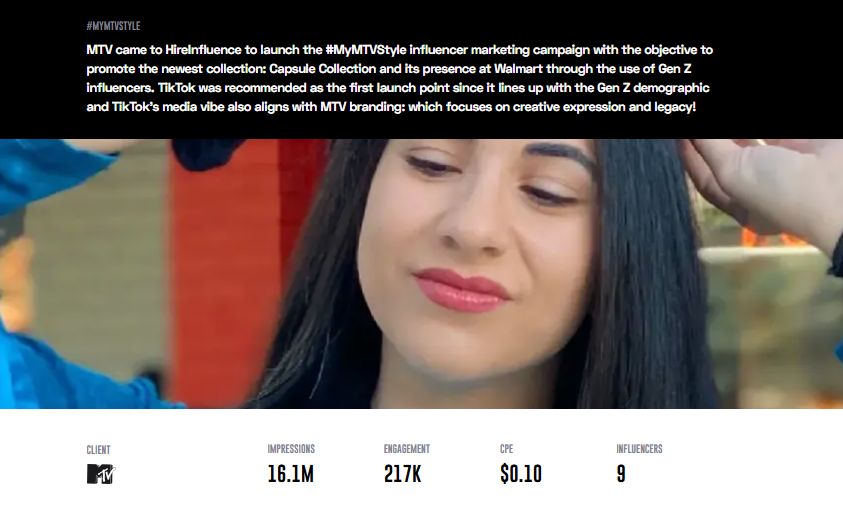
The Oreo and McDonald’s #OREOShamROCKout campaign is the useful reference point, having returned 1.7M impressions at a $0.06 cost per engagement, because efficiency at that level comes from content people chose to engage with rather than content that was pushed at them, and chosen engagement is what a corroboration path is made of. The MTV #MyMTVStyle activation delivered 16.1M impressions and 216,600 engagements at $0.01 CPV and a $1.50 CPM on TikTok.
Southwest Airlines #SouthwestSaysAloha produced 56M impressions and 3M engagements. The Grammarly creator program ran 133 creators to 214M impressions and 33.1M views, which is the kind of accumulated third-party speech that gives a skeptical arrival something to find. The Ricola #CoatYourThroat program ran 18 influencers to 26M impressions, 20.5M reach, and a 13.17% engagement rate, and closed the loop with 62,500 MikMak retail clicks, a recorded action at the end of a path rather than an impression at the start of one. The Ricola case study and the work portfolio set out how those programs were built.
How to Evaluate an AI Search Agency
First, ask what the agency claims it can influence about an AI answer. The agency should distinguish clearly between what it can observe, what it can affect indirectly by changing what exists to be retrieved, and what it cannot touch, and an agency that will not draw those lines is selling certainty it does not have.
Second, ask how the verification path is designed. The agency should be able to describe where a doubtful person goes after the mention and what specifically will be waiting there, in terms of named creators and named surfaces.
Third, ask what the plan does about the half of the population that does not use these tools. The agency should have an answer that does not consist of waiting, because the older segment of most enterprise customer bases is not arriving this way in any material share.
Fourth, ask how the agency will know the program worked. The agency should concede that the chatbot leg is largely uninstrumented and should propose measurement at the landing and the action instead of producing attribution it cannot support.
Fifth, ask what this costs relative to the programs it is being added to. The agency should be direct that this is mostly a reallocation rather than a new line, since the asset that serves a skeptical arrival is the same creator content a brand should already be building; the cost of influencer marketing guide frames that comparison.
The HireInfluence Model for Influencer Mentions and AI Search
HireInfluence has operated since 2011 as a full-service enterprise influencer marketing agency, with 25 or more people across 10 or more states and offices in Houston and The Woodlands, Austin, Los Angeles, and New York. Engagements start at six figures, which reflects the verification and measurement infrastructure the firm runs rather than the volume of content it ships. The agency won Marketing Agency of the Year at the 2024 MUSE Creative Awards and Digital Marketing Agency of the Year at the 2026 U.S. Agency Awards, and has held TikTok Shop Lite Program partner status since July 2024. Programs for Meta, Walmart, MTV, Oreo, McDonald’s, and Microsoft have produced the kind of durable third-party record that a verification path depends on. The contact page and the about section describe how that work is structured.
Before founding the firm in 2011, Jason Pampell spent years managing content rights, licensing, and strategic media partnerships for Forbes and Billboard. A trade title’s real influence was always legible secondhand, in what got repeated in rooms the publisher never entered, and a licensing desk’s working knowledge was that a property’s value lived in its circulation among people who had no relationship with the publisher at all. A retrieval surface assembling an answer out of what other people said about a brand is that same fact, running faster and without a masthead.
The survey settles what the coverage obscures. When about half a population uses a tool, the other half never touches it, and the fluent, youngest users are the ones most convinced the technology will do harm, the output of that tool is not a verdict anyone is waiting to receive. When an answer is a lead rather than a ruling, the mention was never the asset; what a person finds when they go looking to check it always was.