Brands building tiktok shop influencer marketing programs frequently treat the storefront as the product and the creator as the promotion, and a 2026 consumer study built on a nationally representative survey of 6,000 US shoppers aged 16 and older suggests that the relationship runs the other way. 70% of TikTok Shop consumers report having purchased a product a creator recommended. 88% of the shoppers who buy on creator recommendations made those purchases within the past year, which means the behavior is recent and accelerating rather than long established. 73% say they turn to the platform for inspiration when they are considering creator-backed products, and more than half of the shoppers who discovered a new beauty brand there went on to buy from that brand on the platform. The seller side moved in step: US small businesses with under $15 million in annual revenue grew their sales 66% in 2025, and more than 215,000 of them now sell actively on the platform, up 25% year over year. Read together, the research describes a channel where the creator is not promoting the storefront but constituting it, and that inversion should determine how a brand designs the program.
Table of Contents
Why Discovery Commerce Reshapes TikTok Shop Influencer Marketing
Traditional ecommerce is search first. A shopper knows roughly what they want, types it, compares results, and buys. Every optimization in that world serves an intent the shopper brought with them. Discovery commerce removes the premise. The shopper did not arrive with intent. They arrived to be entertained, encountered a creator using a product, and formed the intent and acted on it inside the same scroll. Nothing about that sequence resembles a search funnel, and a program designed for one will underperform in the other.
The consumer data makes the mechanism unusually legible. When 70 percent of shoppers on the platform have bought something a creator recommended, the recommendation is not softening a purchase decision that was already forming. It is the event that creates the decision. GlobalData’s survey work for the platform found that 73 percent turn to the app for inspiration specifically when weighing creator-backed products, which is a very different sentence from saying they consult reviews. Inspiration precedes intent. Reviews follow it. A brand that budgets for the second and neglects the first has misread where the money is made.
The 88 percent figure deserves separate attention, because it dates the behavior. Nearly nine in ten of the shoppers who buy on creator recommendation did so within the past twelve months. That is not a mature habit being measured at steady state. It is a habit being formed, which has two consequences for enterprise planning. The first is that historical benchmarks are close to worthless here, since the baseline moved underneath them. The second is that category norms are still being set, and the brands establishing creator relationships now are establishing the reference point that later entrants will be compared against.
The small-business result explains why large brands so often struggle on this surface. Sellers under $15 million in revenue grew 66 percent in a single year, and more than 215,000 of them are now actively selling. Those sellers do not win because of budget, because they have none. They win because content volume, creator proximity, and product demonstration are the things the platform rewards, and a small team can produce all three faster than an enterprise approval chain can review them. The advantage is structural rather than financial, which means an enterprise brand cannot buy its way past it. It has to build an operating model that can match the cadence.
The beauty finding closes the loop from discovery back to revenue. More than half of the shoppers who found a new beauty brand on the platform later bought from that brand there. Discovery is not a top-of-funnel courtesy that hands off to a website. It converts in place, in the same session or a later one, without ever leaving the app. That collapses awareness, consideration, and purchase into one measurable surface, and it means a creator roster is not a media buy that generates impressions for someone else’s checkout. The roster is the storefront, and the program should be resourced accordingly.
What Enterprise Brands Should Expect From a TikTok Shop Partner
Program strategy and design. The agency has to decide which products are demonstrable before it decides which creators to approach, because the platform rewards visible transformation and punishes specification comparison. A product that cannot be shown working in fifteen seconds needs a different channel or a different creative premise, and that judgment belongs inside dedicated campaign services at the strategy stage.
Creator sourcing and verification. The agency has to select for demonstrated commerce behavior rather than reach, since the creator who moves product and the creator who moves impressions are frequently different people. Verification here means examining a creator’s own conversion history, the specificity of their comment sections, and whether their audience treats their recommendations as purchase guidance or as entertainment. Those are separable signals, and only one of them predicts revenue.
Platform and commerce integration. The agency has to connect creator content to product catalogs, commission structures, and inventory in a single operating loop, because a program that generates demand it cannot fulfill converts an opportunity into a refund. Brands new to the mechanics can start from the firm’s TikTok influencer marketing resource.
Creative direction and content production. The agency has to sustain content volume without sacrificing the qualities that made the format work, which is the central production problem this channel presents. A UGC overview describes the model that supports demonstration at scale.
Audience and segment-specific execution. The agency has to recognize that discovery is not a demographic exercise. A shopper who encounters a product through a creator they trust behaves differently from one who encounters it through a demographic match, and the trust relationship is the variable that determines whether the encounter converts. Segment strategy on this surface therefore means mapping communities and interest graphs rather than age brackets, and the roster has to be built so that each community sees the product introduced by someone already inside it.
Cross-platform orchestration. The agency has to plan for demand that will not stay in the app. Shoppers who discover a brand through creator content often complete a purchase elsewhere, in another retail environment or on the brand’s own site, which means attribution and inventory planning have to anticipate spillover rather than treat it as leakage. Orchestration also protects the brand from the opposite failure, where a program succeeds on one surface while the rest of the commercial organization is unaware it is happening.
Paid amplification. The agency has to know which organic creator content deserves budget and which is better left alone, because amplifying a video that converts poorly simply buys a larger sample of the same result. That discipline sits inside a specialties and services capability that can read commerce signals rather than engagement signals alone.
Attribution and measurement. The agency has to measure revenue per creator and per asset rather than reach per campaign, since a video with fifty thousand views and a hundred sales is worth more than one with five hundred thousand views and ten. That distinction requires an analytics capability wired to commerce outcomes from the first day of the program.
Program Delivery Across Commerce and Creator Campaigns
Commerce claims are only worth as much as the delivery record behind them. The #MyMTVStyle campaign for MTV generated 16.1M impressions and 216,600 engagements at $0.01 cost per view and a $1.50 CPM on TikTok, which demonstrates the cost structure available when creator content carries a program on that platform. The #CoatYourThroat program for Ricola reached 20.5M people across 26M impressions with 18 influencers, sustained a 13.17% engagement rate, and drove 62,500 MikMak retail clicks, the clearest available example of creator content producing measurable retail action rather than impressions alone, and it is documented in the Ricola case study.
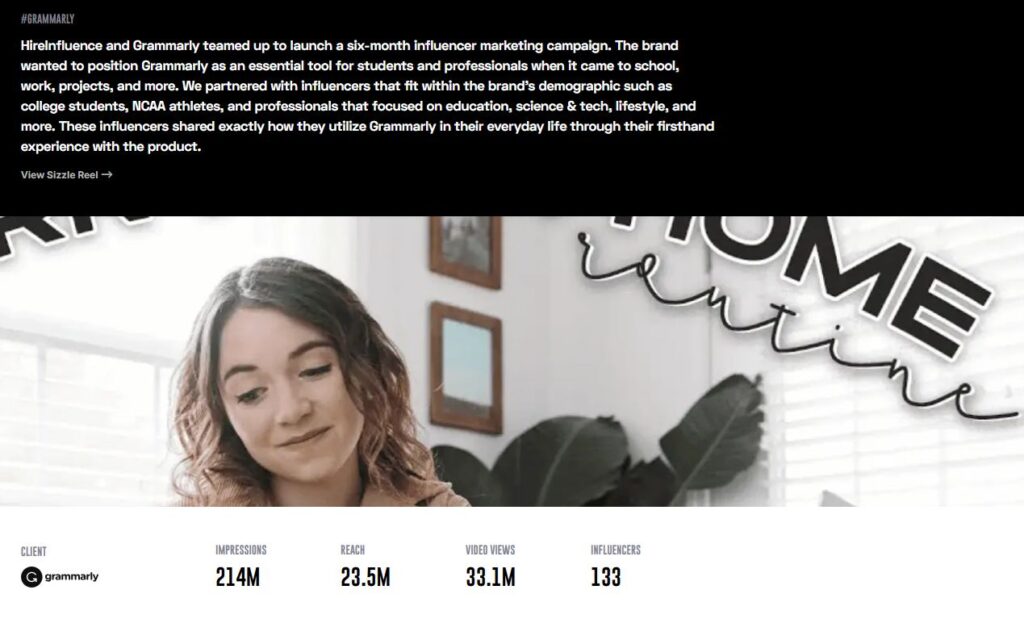
The Grammarly creator program engaged 133 creators to produce 214M impressions and 33.1M views with $15M in earned media value.
The #SouthwestSaysAloha program for Southwest Airlines delivered 56M impressions and 3M engagements. The #OREOShamROCKout activation for Oreo and McDonald’s produced 1.7M impressions at $0.06 cost per engagement, and further programs are collected in the work portfolio. The retail-click figure from the Ricola program is the number that matters most for commerce planning, because it is the one that survives the transition from attention to action.
How to Evaluate a TikTok Shop Influencer Agency
First, ask how the agency evaluates a creator’s commerce performance. The agency should discuss conversion history, comment specificity, and demonstration fluency, and it should be able to explain why a creator with strong reach was excluded from a commerce roster.
Second, ask how commission structures are set. The agency should reason from category margin rather than from a default rate, explain how the offer compares to the category median, and describe what happens to program economics when commission and paid amplification are stacked on the same sale.
Third, ask how content volume is sustained. The agency should describe a production and approval model capable of matching the cadence that smaller sellers achieve naturally, because enterprise approval chains are the most common cause of underperformance on this surface.
Fourth, ask how the agency handles demand that converts off the platform. The agency should treat retail and owned-site spillover as an expected outcome to be measured rather than as attribution loss to be argued about, and it should have instrumented for it before launch.
Fifth, ask what a commerce-led creator program costs and which variables drive it. The agency should separate creator fees, commission, content volume, usage rights, and amplification budget into distinct lines, working from a published cost of influencer marketing guide rather than a figure assembled to fit the brief.
The HireInfluence Model for TikTok Shop Programs
Founded in 2011, HireInfluence is a full-service enterprise influencer marketing agency with 25+ people across 10+ states, working from four offices: Houston and The Woodlands in Texas, Austin, Los Angeles, and New York. The firm has run programs for Target, Oreo, Grammarly, Microsoft, MTV, and Coca-Cola, and operates on a six-figure engagement floor that reflects the commerce integration, creator verification, and measurement infrastructure these programs require.
HireInfluence has been a TikTok Shop Lite Program partner since July 2024, which is the credential most directly relevant to this channel, because it places the firm inside the commerce mechanics rather than adjacent to them. The agency was named Marketing Agency of the Year at the 2024 MUSE Creative Awards and Digital Marketing Agency of the Year at the 2026 U.S. Agency Awards.
Before founding the firm in 2011, Jason Pampell spent years managing content rights, licensing, and strategic media partnerships for Forbes and Billboard, work that turned on a single recurring judgment: which talent belonged with which property, and on what commercial terms. Commerce-led creator programs ask exactly that question, except the property is a product and the terms include commission. The HireInfluence team builds rosters on that logic, matching creators to products their audiences already trust them to evaluate, rather than assembling reach and hoping conversion follows. Brands can reach the firm through its contact page or learn more about its history in the about section.
The consumer research settles the strategic question. When most shoppers on a commerce platform have bought something because a creator recommended it, and when the majority of that behavior is less than a year old, the creator roster is not the marketing layer sitting on top of the storefront. It is the storefront, and brands that continue to budget for it as promotion will keep paying for discovery that someone else converts.