Brands and creators looking up the branded content toggle on TikTok want to know what the switch does, and the mechanical answer is short: it is the in-app setting a creator turns on to disclose that a post is a paid partnership, which labels the content for the audience and makes the partnership official to the platform. The setting is small and the consequences of skipping it are not, because TikTok’s systems scan for commercial intent and content that should be disclosed but is not can have its reach throttled. The toggle is where a legal obligation and a platform mechanic meet in a single switch, and understanding it as both is what keeps a brand from treating a compliance requirement as an optional setting.
Table of Contents
What the Toggle Does
The branded content toggle is a disclosure control. When a creator publishes a post made in partnership with a brand, turning the toggle on adds the disclosure label that tells viewers the content is a paid partnership, and it registers the post with TikTok as branded content rather than ordinary organic posting. That does two things at once. It satisfies the platform’s requirement that commercial relationships be disclosed, and it informs the audience, which is the entire purpose of disclosure. The switch itself is trivial to operate. Its weight comes from what it represents, which is the point at which a material connection between a brand and a creator becomes visible rather than hidden.
The platform enforces this more actively than many brands assume. TikTok’s systems look for signs of commercial intent in content, from brand mentions to product placement, and content that carries those signals without the corresponding disclosure is treated as a problem the platform can act on, including by limiting the content’s reach. For a brand, that turns disclosure from a purely legal concern into an operational one as well: a post that skips the toggle is not only a compliance exposure but a post the algorithm may suppress, which means the undisclosed version can underperform the disclosed one. The toggle is the rare compliance control that the platform has given a direct performance consequence.
Why the Mechanic Is Not the Whole Obligation
Here the brand has to hold two things at once, because the toggle is necessary and it is not sufficient. Turning on the platform’s disclosure setting is a mechanic that sits alongside the legal obligation rather than discharging it, and a brand that treats the toggle as the entirety of its disclosure responsibility has confused a switch with a compliance posture. The obligation to disclose a material connection is a legal one, it follows the endorsement across every surface and format, and it is not satisfied merely because a platform tool was enabled in one place. The governing analysis of that obligation, including why disclosure liability reaches the advertiser rather than stopping at the creator, is a separate and larger subject, set out in the firm’s guide to FTC influencer disclosure guidelines for enterprise brands. The toggle is how disclosure is executed on TikTok. It is not the reason disclosure is required, and it is not the whole of what a brand has to do to be compliant.
The practical rule that follows is to treat the toggle as one required step inside a disclosure system rather than as the system itself. The creator turns it on, and the brand also ensures the disclosure is clear in the content where it needs to be, applies consistent standards across every platform the program runs on, and keeps a record that disclosure happened. The switch is the platform-specific instrument. The compliance is the discipline around it.
Program Delivery Across Disclosed Creator Programs
Disclosure done properly is a feature of programs that also perform, which is what the roster demonstrates. The #OREOShamROCKout activation for Oreo and McDonald’s delivered 1.7M impressions at $0.06 cost per engagement with disclosure intact across every post. The #CoatYourThroat program for Ricola reached 20.5M people across 26M impressions with 18 influencers, sustained a 13.17% engagement rate, and drove 62,500 MikMak retail clicks, documented in the Ricola case study, a compliant program that converted.
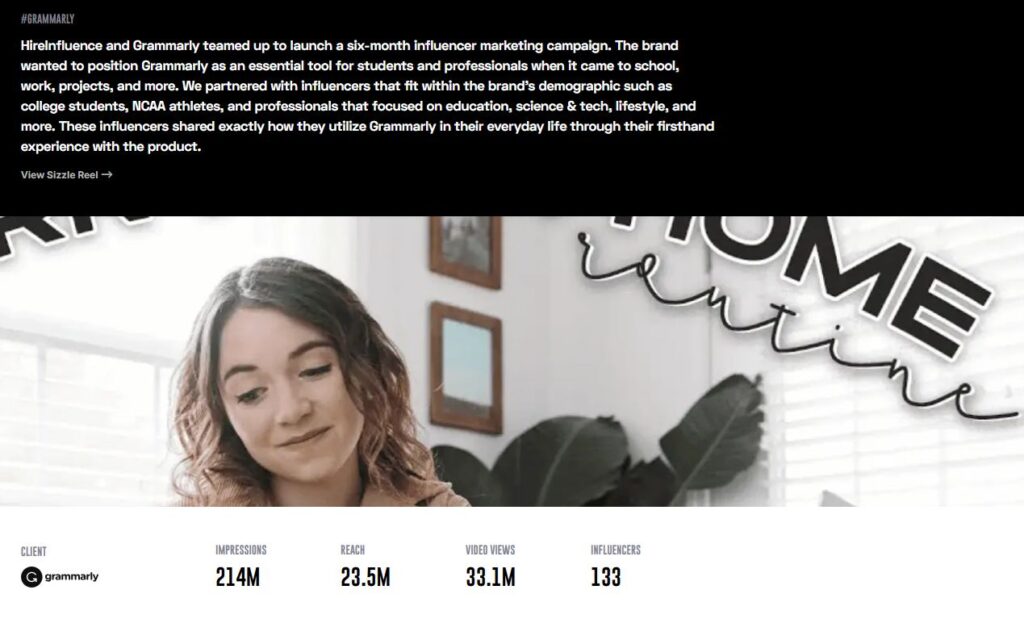
The Grammarly creator program coordinated 133 creators to 214M impressions, 33.1M views, and $15M in earned media value, a scale at which disclosure is an operational system rather than a per-post afterthought. The #SouthwestSaysAloha program for Southwest Airlines produced 56M impressions and 3M engagements, and the #MyMTVStyle campaign for MTV delivered 16.1M impressions and 216,600 engagements at $0.01 cost per view. Additional programs appear in the work portfolio. Across all of them the disclosure was handled and the performance survived it, which is the standing answer to the worry that disclosure costs reach.
The HireInfluence Model for Disclosure Execution
Founded in 2011, HireInfluence is a full-service enterprise influencer marketing agency with 25 or more people across 10 or more states, working from offices in Houston, The Woodlands, Austin, Los Angeles, and New York. The firm runs programs for brands including Coca-Cola, Microsoft, Walmart, Meta, Grammarly, and Southwest Airlines on a six-figure engagement floor, and it has been a TikTok Shop Lite Program partner since July 2024, a designation that turns on commerce mechanics which themselves create disclosable connections. It was named Marketing Agency of the Year at the 2024 MUSE Creative Awards and Digital Marketing Agency of the Year at the 2026 U.S. Agency Awards.
Founder and CEO Jason Pampell spent years managing content rights, licensing, and strategic media partnerships at Forbes and Billboard before founding the firm in 2011, and the branded content toggle is a disclosure of exactly the kind that world treated as sacred. A publication marked the line between editorial and advertising without exception, because the moment a reader could not tell which was which, the credibility that made the publication worth reading was gone. The toggle is that line rendered as a switch: it tells the audience what they are looking at, and it protects the trust that makes creator content valuable in the first place. A brand should ensure the toggle is on, understand that it executes an obligation rather than defining it, and treat disclosure as the discipline that preserves the very authenticity it is running the program to use.