Creators, in most cases, briefed on substance rather than structure. Disclosure is not what makes content read as an ad: TikTok ran an internal study across nearly two million videos and found no performance difference between properly disclosed and undisclosed branded content. What reads as an ad is brand-first structure and studio pacing.
Table of Contents
- The disclosure question, settled
- Where the ad-shaped feeling actually comes from
- Choosing the production source
- How to brief so the output is native
- The one-way decisions to get right before anything is made
- How to tell a good brief from a controlling one
- What should disqualify an agency, including this one
- Program Delivery Across Native TikTok Content
- The HireInfluence Model for TikTok Content
The instinct behind the question is usually that the disclosure label is the problem, and brands acting on that instinct end up under-disclosing while still producing content that performs badly. Choosing the best TikTok content agency and briefing it well both depend on separating two things that get conflated: the commercial relationship, which is disclosed and costs nothing in performance, and the content’s construction, which is where the ad-shaped feeling actually comes from. This article deals with production source first and briefing second, because getting the source wrong makes the briefing question unanswerable.
The disclosure question, settled
TikTok’s position is documented and it is not ambiguous.
The platform compared nearly two million videos with and without proper branded content disclosure and found no performance difference, and states that turning on the disclosure setting does not affect how content is recommended. The penalty runs in the opposite direction: commercial content that is not properly disclosed may not be eligible for distribution in the For You feed.
Two mechanics matter and both are one-way. Selecting Branded Content, meaning promotion of a third party, produces the Paid partnership label. Selecting Your Brand, meaning a business promoting its own products, produces a Promotional content label. They are not interchangeable. And once a disclosure label is added, TikTok does not allow it to be changed.
Compensation includes in-kind, so gifted product carries the obligation alongside paid posts, affiliate commissions, and ambassador arrangements. Disclosed branded content may also be added to the TikTok Commercial Content Library where law requires, meaning a post can outlive the campaign.
An agency arguing that disclosure suppresses reach is arguing against the platform’s own published research and should be asked to produce a source.
Where the ad-shaped feeling actually comes from
Four things make content read as advertising on TikTok, and none of them is the label.
Brand-first structure. Opening on the product rather than on a reason to keep watching. The format punishes this because the first second is a scroll decision, and a brand logo is a scroll signal.
Studio pacing. Cuts, lighting, and sound design calibrated for a screen the viewer chose to sit in front of, appearing in a feed the viewer is moving through. Production value reads as spend, and spend reads as an ad.
Scripted language. Copy written to be approved rather than to be said. Creators reading brand copy sound like people reading brand copy, and audiences identify it immediately.
No reason for this person to be saying this. The strongest signal of all. Content works when the speaker has an evident reason to care about the subject, and fails when they do not, regardless of how it was shot.
The last one is a casting problem rather than a production problem, which is why production source is the first decision.
Choosing the production source
Creators suit almost everything on TikTok where the content needs to be believed. They produce natively because it is what they do anyway, they carry a reason to be speaking, and they know their own audience’s tolerance. The trade-off is that output is licensed rather than owned, bounded by term, territory, and media type, and advertising use requires a Spark Ads authorisation with a fixed term where expiry is terminal and a new code must be generated.
In-house suits reactive content, ongoing cadence, and anything where speed matters more than credibility. The brand’s own account can develop a voice audiences accept, and many do. It does not solve the credibility problem for a viewer who does not already follow the brand.
Studio suits very little on TikTok, and brands should be sceptical of a recommendation for it. The cases where it genuinely applies are regulated claims requiring exact scripting, and product demonstration requiring precision no creator setup can deliver. Both are real. Neither is most content.
How to brief so the output is native
The briefing principle that works is specify substance, leave structure alone.
Specify what must be true. The claims that must appear, the demonstrations that must happen, the disclosures required, and anything that must not be said. This is the brand’s legitimate territory and it should be precise.
Do not specify how. Pacing, opening, structure, language, and framing are the creator’s territory and are the reason the content will work. A brief specifying shot order is commissioning a studio ad from someone who does not run a studio.
Give a reason, not a script. Creators need to know why this product matters to their audience. Given that, they will build the rest better than a brief can.
Set the approval expectation up front. Creators accept substantive corrections and resist stylistic ones. A brand that intends to rewrite delivered content should say so at contracting, because it changes both the price and who will accept the brief.
Say what the content is competing against. Creators calibrate to a feed, not to a brand book, and telling them what the audience is scrolling past produces better judgment than any amount of tonal direction.
The one-way decisions to get right before anything is made
TikTok’s irreversibility deserves restating in a production context, because these are decisions made during production that cannot be revisited.
The caption locks permanently at authorisation. No edits afterwards.
Private videos become public during a campaign and cannot be reverted while it runs.
Authorisation expiry is terminal. A duration should be selected against flight length with margin, from the documented options of 7, 30, 60, or 365 days.
A video code cannot be deleted until every ad using it is deleted.
How to tell a good brief from a controlling one
The line between specifying substance and dictating structure is easier to see in examples than in principle.
Substance, correctly specified: the video must show the product being opened, must state that the partnership is paid, must not claim a health benefit, and must mention that it is available at a named retailer.
Structure, wrongly specified: the video must open on the product, must be under thirty seconds, must use the campaign hashtag in the first line, must feature the tagline verbatim, and must follow a problem-solution-product sequence.
The second brief will produce something the creator’s audience recognises as an advertisement, and it will do so while the creator follows every instruction correctly. That is the failure worth naming, because it is nobody’s fault at the point it occurs and it was determined weeks earlier.
A useful test before a brief goes out: remove every requirement that is about how rather than what, and ask whether the remaining list still protects the brand. It almost always does, and the brief is now half the length.
What should disqualify an agency, including this one
HireInfluence builds custom-scoped, fully managed programs rather than packaged or self-serve buys, so a brand whose TikTok need is a daily in-house posting cadence should resource that internally rather than engage an agency for it. The firm represents brands rather than creators. And a brand that intends to script creator content line by line should commission studio production instead, because it will pay creator rates for studio output and get the worst of both.
Program Delivery Across Native TikTok Content
The #CoatYourThroat programme for Ricola produced a 13.17% engagement rate, and the campaign is documented in full in the Ricola case study. That figure is one campaign’s result rather than a platform benchmark.
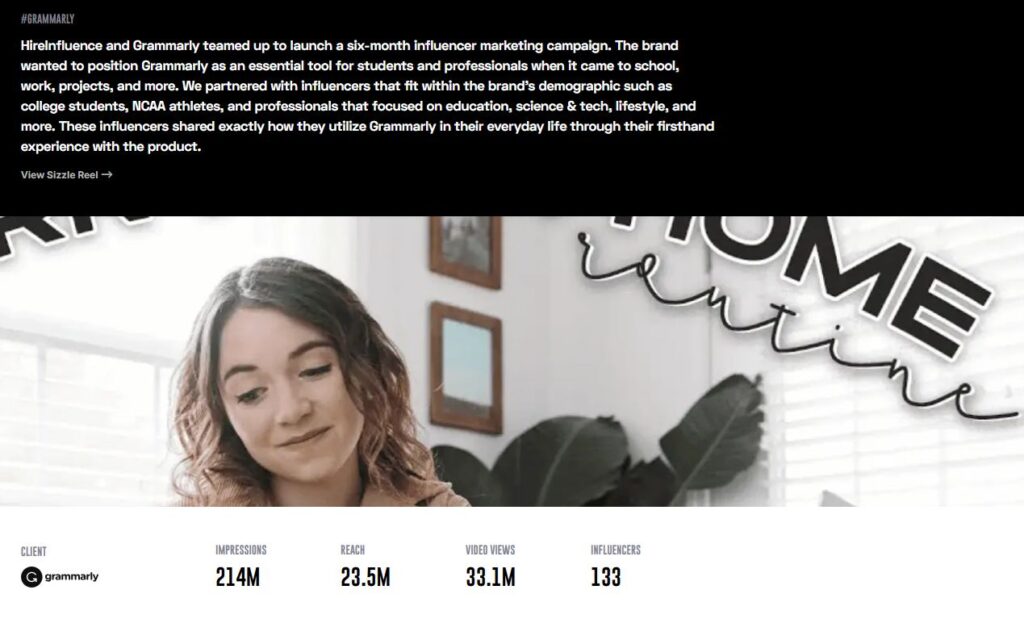
The Grammarly creator programme ran with 133 creators, generating 214M impressions and 33.1M views, produced by positioning the product inside routines the audience already recognised rather than by scripting a demonstration. The #SouthwestSaysAloha programme for Southwest Airlines delivered 56M impressions and 3M engagements.
Additional campaign detail is published in the work portfolio.
The HireInfluence Model for TikTok Content
Founded in 2011, HireInfluence is a full-service influencer marketing agency built for enterprise brands, headquartered in Houston with offices in Austin, Los Angeles, and New York. The firm runs creator programs for brands including Adidas, Honda, MTV, McDonald’s, NFL, and Oreo, covering strategy, talent sourcing, branded content production, paid amplification, and performance reporting. Creator selection runs through a manual vetting and validation process rather than database filtering alone, and campaigns are scoped to each client’s objectives rather than sold as fixed packages.
Brands briefing TikTok work should read the guidance on Spark Ads as a brand amplification tool, which covers the authorisation decisions that have to be made during production, and the FTC influencer disclosure guidelines. Scoping conversations start through contact, and the firm’s background is set out on the about page.