A youtube influencer marketing agency works with a platform built for depth, where audiences arrive to research and decide rather than only to scroll. A 2026 social media content strategy report found that 24% of users turn to YouTube for product discovery, that consumers are now slightly more likely to interact with short-form video at 52% than with long-form at 48%, and that 56% of companies plan to invest more resources into the platform this year, making it the fifth most prioritized social network for marketers. The same research showed that over half of US marketers planned to use YouTube for influencer marketing, and that YouTube Shorts alone averages roughly 200 billion views a day. Those figures describe a platform with two distinct modes, long-form video that supports consideration and short-form video that drives discovery, and a specialist agency is built to work across both.
Table of Contents
Why YouTube Rewards a Specialized Approach
YouTube does not reward the same tactics that win on faster, feed-driven platforms, and treating it as interchangeable with them wastes what makes it valuable. Its defining feature is depth: audiences come to YouTube to research products, watch reviews, and follow tutorials, which makes it the platform where consideration actually happens. That changes how an agency approaches a program, because a YouTube hire is often about education and trust rather than a quick impression, and the creators who do that well are not always the ones who perform on short-form platforms. A specialist selects for the ability to hold attention and explain, not just to entertain in passing. Sprout Social’s research supports the point, showing YouTube used heavily for product discovery and consideration, which means a creator’s value on the platform is measured by how well they help an audience decide rather than how quickly they can catch an eye.
The long-form and short-form split is the second reason specialization matters. YouTube now runs two formats at once, long-form video that carries depth and Shorts that drives discovery, and the data shows audiences engaging with both in nearly equal measure. An agency that works on YouTube regularly knows how to use each mode for what it does best, pairing Shorts that introduce a product with long-form content that helps an audience decide, rather than forcing one format to do the other’s job. A brand that treats YouTube as a single format leaves half the platform’s value unused.
Shelf life is the third reason, and it is one that other platforms cannot match. A YouTube video discovered through search keeps drawing views, and driving consideration, months or years after it is published, while content on faster platforms cycles out within days. A specialist plans for that longevity, structuring creator content so it continues to work as an evergreen asset rather than a one-day event. That durability changes the math on a program, because a single well-made video can keep returning value long after the campaign that produced it has ended. A brand that measures a YouTube hire only by its first-week views misses most of what it paid for, since the platform’s search-driven discovery keeps surfacing strong content to new viewers for as long as the topic stays relevant.
Content depth is the fourth reason a specialist earns its place. YouTube audiences reward content that is genuinely useful, a real review, a real tutorial, a real walk-through, and they are quick to abandon content that is thin or purely promotional. An agency fluent in the platform knows how to brief creators toward substance while carrying a brand message, a balance that matters more on YouTube than on platforms where a short clip can succeed on style alone. Handing a YouTube creator a shallow script produces content the platform’s audience will simply skip.
Taken together, these dynamics explain why a general approach underperforms on YouTube and a specialized one does not. The platform asks for creator selection based on the ability to educate, briefs that use long-form and short-form for their distinct strengths, content built to last, and real depth over promotion. A brand can develop that fluency over time, but an agency that already lives on the platform brings it from the first campaign, which is the case for specialization in plain terms.
What Enterprise Brands Should Expect From an Influencer Partner
On YouTube as anywhere, a capable partner owns a coordinated set of functions rather than a single service. The eight responsibilities below describe what enterprise brands should expect.
Program strategy and design. The agency has to turn a business objective into a plan that fixes platforms, creator tiers, and timing before any hire, which is the substance of dedicated campaign services. On YouTube that plan has to decide how long-form and short-form content work together toward the goal.
Creator sourcing and verification. The agency has to build a relevant shortlist and confirm the audiences behind it are real, checking authenticity, engagement quality, and audience location before recommending anyone. On YouTube, sourcing weighs a creator’s ability to hold attention across longer content, not just to catch it briefly. A creator whose long-form videos keep viewers watching to the end is a stronger signal for a consideration-driven platform than one whose short clips spike and fade, and reading that difference is part of what a platform-fluent partner brings.
Platform and commerce integration. The agency has to align the program with the platforms where the audience buys, which on YouTube means connecting review and tutorial content to the consideration and purchase stages. A working grasp of each channel, including a TikTok influencer marketing resource that ties content to conversion, informs how creator content routes an audience toward a decision.
Creative direction and content production. The agency has to guide creators toward content that fits the brand while preserving the depth YouTube audiences expect, since the platform rewards substance over a quick pitch. Knowing what makes a UGC overview effective shapes how briefs balance direction against the creator’s own approach.
Audience and segment-specific execution. The agency has to deploy creators against specific segments rather than treating one large following as good enough, tailoring the program to the communities a brand wants to reach. YouTube’s category communities, from gaming to fitness to fashion, reward that precision.
Cross-platform orchestration. The agency has to sequence activity so YouTube reinforces a brand’s other channels instead of standing alone, coordinating timing and messaging into one campaign. That coordination also protects budget, since a long-form YouTube asset can seed short-form content elsewhere when the plan clearly allows for it.
Paid amplification. The agency has to extend content that earns organic traction with paid distribution, reaching audiences past a creator’s own subscriber base. That amplification sits inside a broader specialties and services capability that pairs organic creator work with paid media.
Attribution and measurement. The agency has to connect creator activity to outcomes a brand can defend, tying spend to reach, engagement, and where possible the consideration and conversion YouTube content drives over time. A dependable analytics capability is what captures value that accrues long after a video goes live.
Program Delivery Across Enterprise Campaigns
Delivery shows what a platform-fluent program produces. A creator program for Grammarly enlisted 133 creators to generate 214M impressions, 33.1M views, and $15M in earned media value, the kind of scale and consideration that suits a platform built for depth. The #CoatYourThroat program for Ricola worked with 18 influencers to reach 26M impressions, 20.5M reach, a 13.17% engagement rate, and 62,500 MikMak retail clicks, a result documented in the Ricola case study.
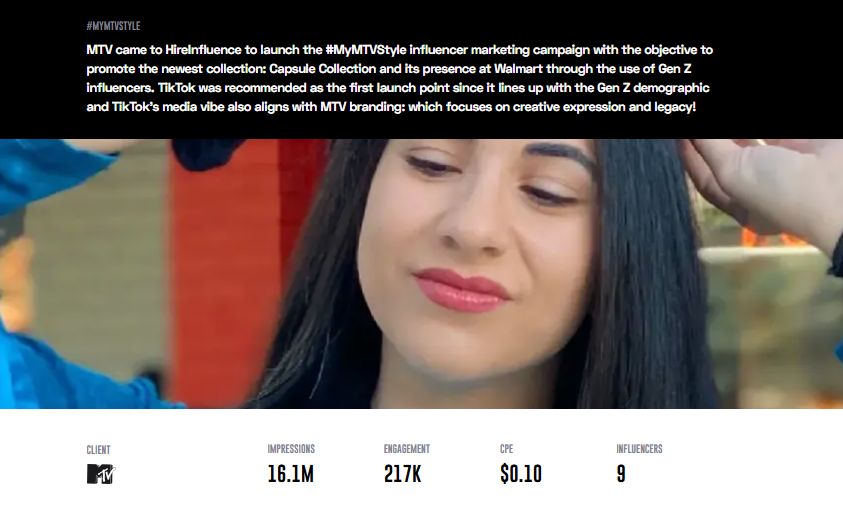
The #MyMTVStyle activation for MTV delivered 16.1M impressions and 216,600 engagements at a $0.01 cost per view and a $1.50 CPM on TikTok, and the #SouthwestSaysAloha campaign for Southwest Airlines reached 56M impressions and 3M engagements.
Set against the broader work portfolio, these campaigns point to one pattern: content matched to a platform’s strengths produces reach and retail action that hold up at enterprise scale.
How to Evaluate a YouTube Influencer Marketing Agency
A few questions reveal whether a prospective partner truly understands the platform. First, ask how the agency approaches YouTube specifically. The agency should be able to explain how it uses long-form and short-form content for their distinct strengths and how it selects creators for depth, because a partner that treats YouTube like a short-form feed will underuse it.
Second, ask how the agency verifies the creators it recommends. The agency should explain how it confirms audience authenticity and engagement quality, since inflated subscriber counts are as much a risk on YouTube as anywhere else.
Third, ask how the agency defines and measures success. The agency should tie its work to outcomes the brand cares about and explain how it reports reach, engagement, and, where the campaign allows, the consideration and conversion that YouTube content drives, including value that accrues over time rather than only at launch.
Fourth, ask how the agency plans for content longevity. The agency should be able to describe how it structures creator content to keep working as a searchable, evergreen asset, because shelf life is one of YouTube’s clearest advantages over faster, disposable platforms.
Fifth, ask how the agency prices programs and where the budget goes. The agency should walk through what drives creator rates and how spend splits across sourcing, production, amplification, and measurement, and a cost of influencer marketing guide is a useful reference for checking whether a proposal is reasonable.
Inside the HireInfluence Approach to YouTube
HireInfluence has operated as a full-service enterprise influencer marketing agency since 2011, with a team of more than 25 people across 10-plus states and offices in Houston and The Woodlands, Texas; Austin, Texas; Los Angeles, California; and New York, New York. That footprint supports programs that need the platform-specific fluency YouTube demands rather than a generalist approach applied to every channel alike. Running creator programs across categories for over a decade, on a platform where content keeps working long after launch, is what builds the judgment to plan for consideration and shelf life rather than only for a launch-week spike.
The agency’s client roster includes Microsoft, Southwest Airlines, Target, Coca-Cola, Meta, and McDonald’s, and it works to a six-figure engagement floor that matches the scope of the programs it runs. As a TikTok Shop Lite Program partner since July 2024, it connects creator content directly to commerce, and its recognition includes Marketing Agency of the Year at the 2024 MUSE Creative Awards and Digital Marketing Agency of the Year at the 2026 U.S. Agency Awards.
That way of working reflects the background of founder and CEO Jason Pampell. Before founding HireInfluence in 2011, Jason Pampell spent years managing content rights, licensing, and strategic media partnerships for Forbes and Billboard, experience with long-form content and rights that shapes how the HireInfluence team structures creator agreements, usage rights, and evergreen content on platforms like YouTube. Brands planning a YouTube program can reach the team through its contact page, or read more about how it works in the about section.
The through-line from the research is worth restating plainly: with YouTube serving as the platform where audiences research and decide, the brands that work with partners fluent in its long-form and short-form modes are the ones that turn consideration into results that keep compounding well past a launch date.