B2B paid media has a trust problem. Display ads are ignored. Branded LinkedIn content reaches a fraction of what it once did. Programmatic impressions accumulate in reports that nobody reads to leadership. The buyers who matter (VPs, CMOs, procurement directors) have learned to filter brand-produced advertising out of their professional attention.
Table of Contents
The agencies solving this problem are not the ones buying more inventory. They are the ones putting creator voices in front of B2B buyers through paid channels, using the same influencer-led content strategy that has already transformed consumer marketing but applied specifically to the professional buyer decision-making context.
HireInfluence specializes in precisely this.
The B2B Paid Media Landscape in 2026
LinkedIn dominates B2B paid media by a wide margin. According to Brenton Way’s 2026 analysis of LinkedIn marketing statistics, 82% of B2B marketers run ads on LinkedIn, more than any other social network for B2B advertising, and 79% of B2B marketers rate it as delivering the best results among all paid social channels. LinkedIn generates leads at a rate 277% higher than Facebook and Twitter combined. B2B marketers who invest in LinkedIn see conversion rates that consistently outperform every other social platform.
But those numbers reflect the platform’s reach potential, not the creative performance gap that separates effective B2B paid media from wasted spend. Company page organic reach on LinkedIn has dropped 60 to 66% from 2024 to early 2026, according to the same Brenton Way data. Brand-produced content on LinkedIn is reaching fewer people than it did two years ago, even when amplified through paid distribution.
What is filling the performance gap? Creator and thought leadership content. LinkedIn posts featuring industry creators generate significantly higher engagement than traditional brand-published content. Personal profiles outperform company pages by 561% on engagement. B2B buyers trust people, not logos.
How B2B Influencer Paid Media Actually Works
B2B influencer content operates differently from consumer influencer content. The creators who move B2B buyers are not lifestyle personalities with large Instagram followings. They are industry practitioners, subject-matter experts, analysts, and thought leaders whose LinkedIn and YouTube audiences match the professional profile of the buyers a B2B brand needs to reach.
When that creator content is produced around a B2B brand and distributed through paid channels via influencer whitelisting, the performance dynamics mirror what consumer brands have observed: audiences respond more positively to content from trusted professional voices than to content from brand ad accounts. The trust transfer holds in a B2B context because it is rooted in professional credibility rather than lifestyle aspiration.
HireInfluence has managed B2B influencer programs including the Grammarly campaign, which deployed 133 top-tier lifestyle and professional creators across YouTube, TikTok, and Instagram. The program generated 214 million impressions, 33.1 million views, and $15 million in earned media value.
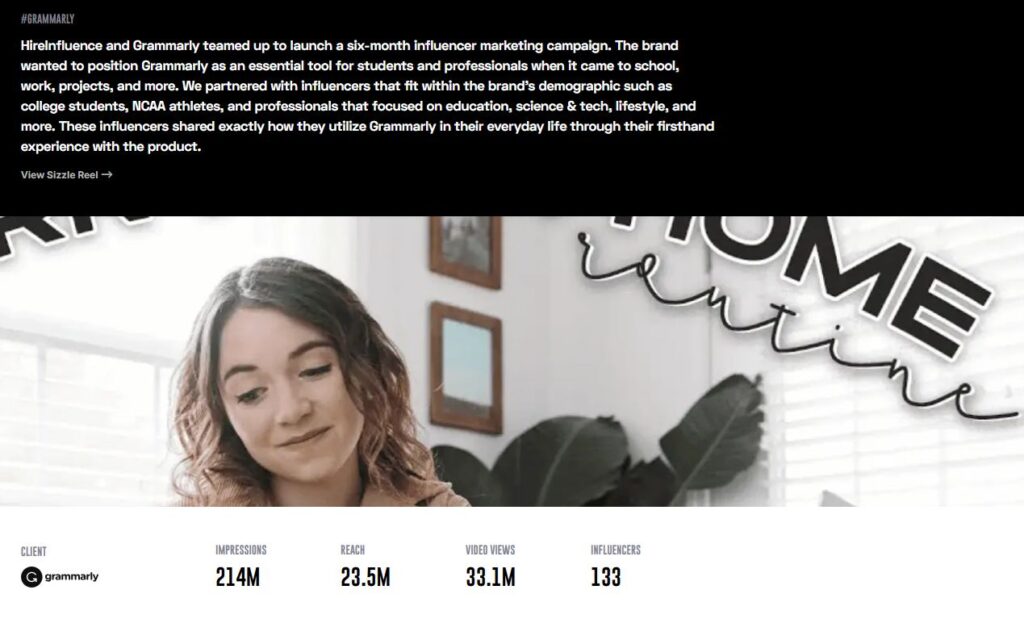
Grammarly is a B2B and B2C product targeting professionals, writers, and business teams. The creator mix reflected that dual audience: lifestyle creators for consumer reach and professional creators for the business buyer segment.
The Paid Amplification Layer in B2B Programs
B2B influencer content without paid amplification has limited reach. The creator’s existing audience may not map precisely to the brand’s target buyer profile. Paid distribution solves this: the brand licenses the creator’s content, runs it through paid channels targeting the specific professional audience segments that matter (by job function, company size, industry, seniority), and delivers trusted creator voices to buyers who would never encounter that content organically.
On LinkedIn, sponsored content through creator whitelisting reaches audiences that are already in a professional mindset, evaluating vendors and solutions. The combination of trusted creator voice and precise professional targeting is exceptionally effective for B2B categories where the purchase decision involves multiple stakeholders and a longer evaluation cycle.
HireInfluence manages paid amplification as a native component of every program, with usage rights negotiated in creator contracts upfront. The analytics infrastructure tracks performance across both organic and paid contexts, connecting creator investment to pipeline metrics rather than vanity numbers.
Why B2B Buyers Respond to Creator Voices
B2B influencer marketing has grown substantially because it solves the same trust deficit that has hobbled B2B paid media for years. According to Brenton Way’s 2026 LinkedIn data, LinkedIn generates leads at a rate 277% higher than Facebook and Twitter combined, and audiences exposed to marketing messages on the platform are 6 times more likely to convert after being exposed to both brand and acquisition messages. But organic company page reach on LinkedIn fell 60 to 66% from 2024 to early 2026, meaning paid distribution is now required to reach most of that potential audience.
Putting creator and thought leadership voices behind that paid distribution rather than standard brand creative changes the performance profile of those paid placements. Personal profiles outperform company pages by 561% on engagement. When that personal voice content runs through paid whitelisting, it reaches targeted professional audiences with the credibility of a trusted source rather than the framing of a brand ad. For enterprise brands running B2B paid programs, the performance gap between creator-amplified content and brand-produced creative in the same paid placements is measurable and consistent.
HireInfluence’s approach to B2B paid media programs applies the same operational model it uses for consumer campaigns: creator sourcing aligned to professional audience quality, commercial usage rights secured upfront, paid amplification managed natively, and attribution reporting connected to business pipeline outcomes rather than vanity metrics.
What B2B Brands Get Wrong About Paid Media
Most B2B paid media programs underperform because they treat creative as a secondary consideration. The targeting is sophisticated. The copy is professional. The content looks like a brand ad. And B2B buyers, who spend hours every week on LinkedIn and YouTube consuming professional content, instantly recognize it as advertising and disengage.
The fix is not better targeting. It is better creative, which in 2026 means creator-led content that carries the authentic voice of a professional voice the audience has reason to trust. An industry analyst explaining why a solution matters. A practitioner sharing how they use a tool in their actual workflow. A thought leader whose LinkedIn posts regularly drive discussion in their professional community lending their credibility to a brand’s message.
HireInfluence sources and vets creator talent for category alignment and audience quality, not just follower count. For B2B programs, that means evaluating the professional context of the creator’s audience, the quality of engagement on their professional content, and the relevance of their existing audience to the brand’s target buyer profile.
Measurement That Matters for B2B Buyers
B2B paid media programs need to report against metrics that connect to revenue, not impressions. Reach and engagement are useful proxies during program evaluation, but the reporting that justifies B2B paid media investment to a CMO or CFO connects creator-sourced content to pipeline: qualified traffic, demo requests, trial activations, lead form completions.
HireInfluence’s performance reporting is built around client-defined business objectives rather than standard social media metrics. For the Ricola #CoatYourThroat campaign, that meant tracking 62,500 retail purchase clicks alongside 26 million impressions. For B2B programs, the equivalent is connecting creator content performance to the conversion events that represent qualified buyer intent.
HireInfluence’s minimum engagement starts at approximately $100,000. Named clients include Microsoft, Target, Grammarly, McDonald’s, Oreo, and Southwest Airlines. For B2B brands building paid media programs that put trusted creator voices in front of professional buyers, start the conversation at hireinfluence.com/contact/.