
Understanding how to find influencers for brand partnerships starts with accepting what discovery actually is: a filtering problem, not a search problem. New 2026 authenticity research makes the stakes concrete. According to the findings, 85 percent of consumers are willing to pay more for brands they consider authentic, and 93 percent say authentic engagement is what builds their trust. The same analysis catalogs how often creator audiences fail that authenticity test, pointing to sudden follower spikes with no viral content behind them, comment counts that lag far behind follower counts, repetitive comments recycled from a small pool of accounts, engagement that does not scale with audience size, and follower geographies that do not match a brand’s target market. Candidates are everywhere. Partners are rare. The brands that find the right ones treat discovery as a pipeline with verification built into every stage rather than a browse through follower counts. The research below explains both why the filter matters commercially and what it should be checking.
Table of Contents
Why Authenticity Data Reshapes How Brands Find Influencers
The research, published by Emplifi in 2026, connects two facts that most discovery processes keep separate. The first is commercial: authenticity is not a soft value, it is a price premium, with 85 percent of consumers willing to pay more for brands they read as genuine. The second is operational: the signals that expose an inauthentic creator are visible one profile at a time, but they do not scale. A marketer can audit a single account’s growth curve, comment quality, and audience geography in an afternoon. No marketer can do it across the thousands of candidates a serious enterprise search produces. That gap between what verification requires and what manual review can cover is the real reason finding influencers is hard, and it is the gap a disciplined discovery pipeline exists to close. Authenticity, in other words, is simultaneously the reason to search carefully and the standard the search is scored against.
The pipeline itself draws from more sources than most brands use. Platform-native search and hashtag exploration surface creators already producing in the category. Community mapping identifies whose content a target audience actually shares and debates, which often surfaces mid-sized voices that keyword search misses. Competitor audience analysis reveals which creators already move a rival’s customers. A brand’s own channels are frequently the richest and cheapest source of all: customers already posting about the product are pre-validated for affinity, and elevating them borders on found money, an approach covered in the agency’s UGC overview. Creator databases and marketplace tools add breadth on top. Community mapping deserves particular attention because it locates authority rather than volume: the accounts a subreddit cites, a Discord debates, or a comment section defers to are trusted at a depth follower counts never register. Competitor audience analysis works the opposite edge, identifying creators whose audiences already overlap a rival’s buyers, which turns discovery into a share-of-voice decision instead of a cold search. What none of these sources provide on their own is judgment, and the authenticity data explains why judgment is the expensive part. A discovery process that stops at the long list has done the easy half of the work and skipped the half that protects the budget. There is also a sourcing hierarchy worth respecting: creators discovered through owned channels and community signals arrive pre-warmed, having chosen the brand before the brand chose them, and those partnerships consistently outlast ones initiated through cold marketplace outreach. Databases remain useful for coverage. They are simply the widest and coldest end of the funnel, which is why programs that rely on them exclusively spend the most time vetting and the most money correcting.
Sequencing matters as much as sourcing. Finding should run: define the audience and objective, generate candidates across multiple sources, screen for authenticity using the growth, engagement, and geography signals the research describes, evaluate content quality and brand fit on the survivors, and only then begin outreach. Brands that reverse the order, falling for a creator first and rationalizing the vetting afterward, consistently pay authenticity prices for inauthentic reach.
Velocity expectations belong in the plan as well. A defensible enterprise search, from audience definition through verified shortlist, typically runs three to six weeks depending on candidate volume, and the calendar backs up from there: creators worth finding are worth booking early, and fourth quarter rosters in competitive categories are often committed by late summer. Rushed discovery is where authenticity failures concentrate, because compressed timelines push teams to accept the first plausible profiles a database returns. Brands that treat discovery as a standing capability rather than a pre-campaign scramble avoid both the rush and the compromise.
What Enterprise Brands Should Expect From Influencer Discovery
At enterprise scale, finding influencers is one function inside a coordinated system. Eight capabilities should be working together by the time a shortlist reaches a decision maker. Discovery that ends at a spreadsheet of handles has performed one of the eight.
Discovery strategy and design. The search begins from objectives translated into audience definitions and creator criteria, the structure HireInfluence builds through dedicated campaign services, so the pipeline filters toward a target instead of accumulating names.
Multi-source candidate generation. Platform search, community mapping, competitor audience analysis, owned-channel mining, and database tools each surface candidates the others miss; disciplined programs run them in parallel.
Authenticity screening at scale. The growth spike, comment quality, engagement ratio, and geography checks the 2026 research describes get applied systematically across every candidate, not spot-checked on favorites, which is how a third of the market’s inflated audiences get filtered out before they cost anything. Screening should also repeat over a partnership’s life, since audiences that were clean at signing can be inflated later.
Tier calibration. Discovery should deliberately span tiers, pairing macro creators for reach with micro and nano creators whose smaller audiences engage like communities, then let verified audience quality determine the final mix.
Brand fit and content evaluation. Past content, values alignment, and audience sentiment review determine whether an authentic creator is also the right creator, a distinction follower data cannot make. The review should include how the creator has handled previous sponsorships, because disclosure habits and partnership conduct predict the working relationship better than any media kit.
Commerce readiness. Because partnerships increasingly convert inside platforms, the shortlist should favor creators equipped for trackable links and storefront placements, with platform-specific dynamics like those in the agency’s TikTok influencer marketing resource factored into who gets found for what. A creator without commerce infrastructure is not disqualified, but the onboarding cost belongs in the selection math.
Paid amplification potential. The best discoveries are creators whose content can be licensed and scaled through whitelisted advertising, a downstream function HireInfluence operates through its specialties and services capability, and one that should influence selection upstream.
Measurement wiring. Every found creator enters the program with attribution attached, through the agency’s analytics capability, so the next discovery cycle learns from tracked outcomes rather than impressions.
Finding Influencers at Enterprise Scale: Program Delivery
Delivered programs show what a working discovery pipeline produces. For Ricola’s #CoatYourThroat campaign, HireInfluence sourced and hired 18 influencers spanning micro to celebrity tiers, a portfolio that generated 26 million impressions, 20.5 million reach, a 13.17 percent engagement rate, and 62,500 MikMak retail clicks connecting content directly to purchase; the Ricola case study documents how a deliberately mixed roster performs.
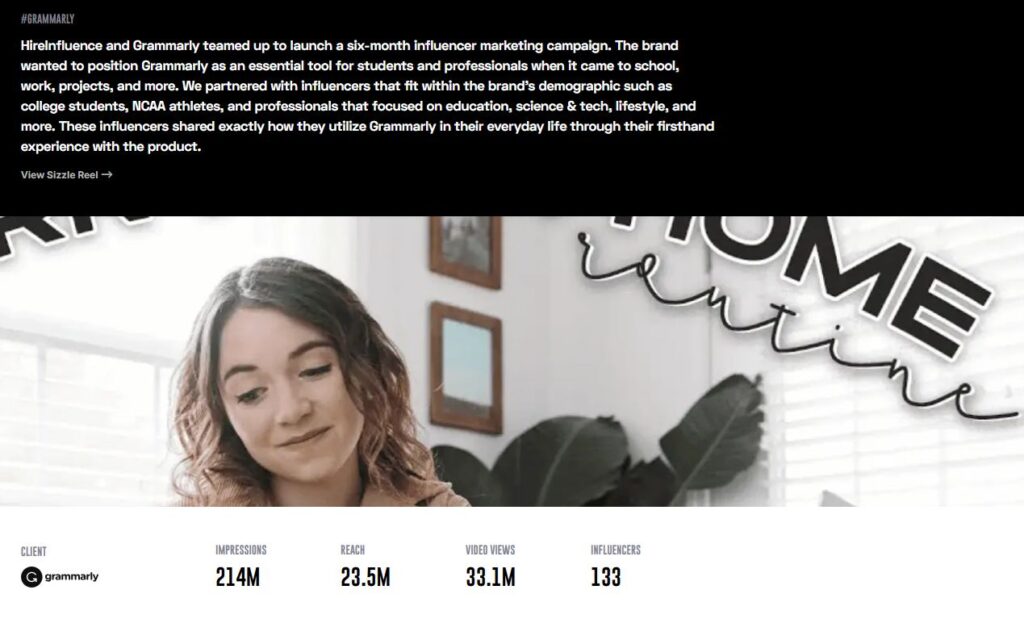
Discovery at volume looks like the Grammarly program, where the agency identified, verified, and managed 133 creators across YouTube, TikTok, and Instagram to produce 214 million impressions, 33.1 million views, and $15 million in earned media value, a scale of sourcing that manual profile review could never support. Efficiency-focused discovery shows up in outcomes too: MTV’s #MyMTVStyle activation paired found creators with a format that produced 16.1 million impressions and 216,600 engagements at a $0.01 cost per view and a $1.50 CPM on TikTok. Southwest Airlines’ #SouthwestSaysAloha campaign added 56 million impressions and 3 million engagements from a roster matched to a travel audience, and further category examples sit in the agency’s work portfolio. Each program began the same way: a defined audience, a multi-source search, and verification before outreach. The sequence is the product. Rosters assembled any other way perform like what they are, which is a list.
How to Evaluate an Influencer Sourcing Partner
Brands that outsource discovery should test the pipeline before buying it, and five questions do most of the testing.
First, ask what sources feed the candidate pool. A partner that names only a database subscription is reselling search access; a partner that describes platform mapping, competitor audience analysis, and owned-channel mining is running discovery. Ask which source produced the best performing creator in their last three programs, since operators know and resellers guess.
Second, ask how authenticity screening works and how many candidates fail it. The answer should reference growth curves, engagement ratios, comment quality, and audience geography, with a real rejection rate attached.
Third, ask how brand fit is evaluated beyond audience data. Expect content review, values alignment, and sentiment analysis, because an authentic creator with the wrong voice is still the wrong partner. A partner that has walked away from a high performing but poorly matched creator can tell that story with specifics.
Fourth, ask how tier mix is decided for a program like yours, and what evidence supports it. The credible answer connects tiers to objectives and verified audience quality rather than to a rate card.
Fifth, ask what it costs and what determines the number. Transparent partners can decompose pricing into sourcing labor, creator compensation, and program management, and the agency’s cost of influencer marketing guide sets the baseline for what an honest breakdown includes.
The Sourcing Model Behind Award-Winning Programs
HireInfluence has operated as a full-service influencer marketing agency since 2011, with a team of more than 25 people across 10 or more states and offices in Houston and The Woodlands, Austin, Los Angeles, and New York. The agency runs enterprise engagements starting near the $100,000 level for brands including Microsoft, Southwest Airlines, Coca-Cola, Walmart, Grammarly, and MTV, and it has held an exclusive TikTok Shop Lite Program partnership since July 2024, which extends discovery directly into social commerce rosters. Recognition includes the 2026 U.S. Agency Awards Digital Marketing Agency of the Year and the 2024 MUSE Creative Awards Marketing Agency of the Year.
Founder and CEO Jason Pampell launched HireInfluence in 2011 after managing content rights, licensing, and strategic media partnerships for Forbes and Billboard, and he brings more than 30 years of leadership experience in sales, marketing, and team building for Fortune 1000 organizations. Finding talent worth licensing was the core of that earlier work, and it remains the HireInfluence team’s core today: discovery is treated as an investment decision, verified before it is signed. The bench that results is cumulative: every verified creator relationship shortens the next search. Brands that would rather inherit a working pipeline than build one can start through the contact page, with additional background in the about section.
The authenticity research ultimately gives the search its standard. Consumers pay more for what they read as genuine, and they withhold trust from what they do not. Finding influencers for brand partnerships means finding the creators who can carry that premium, and the brands that verify before they reach out are the ones the premium ends up paying. Everything else is browsing.