Enterprise marketing teams evaluating a celebrity influencer agency in 2026 are operating in an environment where the celebrity tier has been strategically repositioned within tiered creator portfolios. Linqia’s 2026 State of Influencer Marketing report, published October 14, 2025 and based on a survey of more than 200 enterprise marketers fielded in July 2025 by Centiment, documents the structural shift directly. Linqia’s research finds that 92% of marketers plan to work with both macro (100K-500K) and micro (5K-100K) influencers in 2026, with 60% planning to engage mega creators (500K-5M) and 58% planning to use nano creators (under 5K). Celebrity creators (5M+ followers) are now used by 29% of enterprise marketers, down from 29.5% in 2023 and reflecting a structural rebalancing toward tiered approaches. The same Linqia research finds that 49% of enterprise marketers now partner with specialist influencer agencies (up from 28% in 2025), 62% of marketers are increasing their influencer budgets in 2026, and 33% are spending more than $5 million annually on creator activations. Creative strategy has emerged as the top differentiator marketers cite for selecting specialist agencies. The shift away from celebrity dominance toward tiered approaches reflects what industry analysis frames as the celebrity tier’s specific role within modern influencer marketing: cultural authority, brand launches, and mainstream awareness moments paired with rigorous measurement discipline rather than default activation tier for everyday brand work.
Table of Contents
For enterprise marketing teams, Linqia’s findings establish a specific shift in what a celebrity influencer agency has to deliver. The 29% celebrity adoption rate alongside 92% macro+micro adoption establishes celebrity as the strategic top-tier layer within tiered programs rather than the dominant activation channel. The 49% specialist agency adoption rate (nearly doubled from 2025) reinforces that enterprise brands are turning to specialist agencies specifically to navigate tiered program complexity, with celebrity execution as the highest-stakes layer requiring the deepest specialist expertise. Industry analysis from IZEA and similar primary sources frames celebrity creators within a tiered framework: Celebrity and Mega Influencers provide cultural authority and inspiration, mid-tier influencers provide curiosity and trial, and micro/nano influencers drive loyalty and advocacy. The celebrity tier’s role is the halo effect that elevates the entire program, not the day-to-day execution channel for routine creator activations. This guide breaks down what enterprise brands should expect from a celebrity influencer agency in 2026, how Linqia’s tiered framework reshapes the capability requirements, and what separates a credible celebrity influencer agency from a general talent agency or traditional public relations firm.
Why Linqia’s Tiered Framework Reshapes the Celebrity Influencer Agency Decision
Linqia’s documentation that celebrity creators serve a specific strategic role within tiered enterprise programs (29% adoption alongside 92% macro+micro adoption) changes the structural logic of how enterprise brands approach celebrity execution. When celebrity is positioned as the cultural authority and brand-launch layer rather than default activation tier, the agency capability profile required shifts toward specialist expertise calibrated to high-stakes celebrity moments rather than everyday creator activation infrastructure. The celebrity influencer agency that serves enterprise clients has to demonstrate strategic positioning depth, celebrity relationship management at the level celebrity talent and their representation expect, and program orchestration capability that integrates celebrity activation with the broader tiered creator portfolio.
For enterprise brands specifically, Linqia’s finding that 49% of marketers now partner with specialist influencer agencies (up from 28% in 2025) reinforces why celebrity execution has migrated to specialist agencies rather than general talent agencies or PR firms. Celebrity influencer activation in 2026 requires capabilities that extend beyond traditional celebrity endorsement structures: social-native creator content production, platform-specific format adaptation, audience authenticity validation, attribution measurement linking celebrity content to business outcomes, and integration with broader creator portfolios across nano through macro tiers. The specialist celebrity influencer agency operates at the intersection of celebrity talent management, creator marketing infrastructure, and tiered program orchestration in ways general talent agencies cannot match.
Industry analysis frames the celebrity tier’s contribution within tiered programs as cultural authority and the halo effect that elevates the entire creator portfolio. When enterprise brands activate celebrity creators for product launches, brand repositioning, mainstream awareness moments, or category authority establishment, the celebrity contribution drives the cultural conversation that smaller-tier creators amplify into community engagement. The agency has to demonstrate the strategic positioning capability that connects celebrity activation to downstream creator portfolio amplification, with specific examples of celebrity programs that elevated mid-tier and micro-tier creator program performance.
Linqia’s finding that 81% of marketers report creator content outperforms brand-created assets reinforces why celebrity influencer activation has shifted toward authentic creator-style content rather than traditional celebrity endorsement structures. Celebrity creators in the 2026 environment have to operate as creators (with platform-native content, authentic voice, and audience engagement) rather than as endorsers (with scripted brand messaging and traditional advertising structures). The agency has to demonstrate creative direction capability that supports celebrity creators in producing authentic content while serving brand strategic objectives.
The 62% budget increase finding alongside the 33% spending more than $5 million annually establishes that enterprise creator marketing budgets are growing at scale, but the budget growth concentrates around tiered program expansion rather than celebrity-only activation. The agency has to demonstrate program structure that integrates celebrity activation as the strategic top-tier within tiered programs rather than treating celebrity execution as standalone investment.
What Enterprise Brands Should Expect From a Celebrity Influencer Agency
A credible celebrity influencer agency operates across eight coordinated service functions calibrated to celebrity-tier strategic execution.
Celebrity program strategy and tiered portfolio integration design. The engagement begins with business objectives tied to outcomes that suit celebrity execution (cultural authority establishment, product launch elevation, brand repositioning, mainstream awareness moments, halo effect amplification across tiered programs) and measurement frameworks calibrated to those objectives. HireInfluence structures celebrity influencer strategy through dedicated campaign services built for enterprise programs.
Celebrity selection calibrated to brand authority alignment. Linqia’s emphasis on creative strategy as the top differentiator makes celebrity selection rigor central. The agency has to evaluate celebrity creators for genuine brand alignment, audience authenticity, content track record, cultural relevance, and predictive alignment with brand positioning beyond the surface fame metrics traditional celebrity selection prioritizes.
Celebrity creative direction balancing authentic creator voice with brand objectives. The 81% creator-content-outperforms-brand-assets finding makes creative direction consequential. The agency has to operate creative direction methodology that supports celebrity creators producing platform-native authentic content while serving brand strategic objectives, distinct from traditional celebrity endorsement structures that strip authenticity.
Talent representation and contracting at celebrity tier complexity. Celebrity creators carry representation structures (talent agencies, managers, lawyers, business managers) and contracting requirements distinct from non-celebrity tiers. The agency has to operate at the level celebrity representation expects: usage rights structured for cross-channel deployment, exclusivity terms calibrated to celebrity portfolio considerations, brand safety provisions, content approval workflows, and morality clauses given celebrity-tier brand exposure.
Brand safety and crisis response infrastructure at celebrity exposure. Celebrity creators carry concentrated brand-association risk that distributes differently than nano, micro, and macro creators. A celebrity controversy can damage brand equity in ways no smaller-tier program approaches. The agency has to operate brand safety screening, ongoing monitoring, morality clause enforcement, and crisis response infrastructure calibrated to celebrity-tier exposure.
Tiered program orchestration with celebrity at the strategic top tier. Celebrity execution increasingly operates within tiered enterprise programs combining celebrity authority with macro reach, mid-tier authenticity, and micro/nano engagement. The agency has to demonstrate tiered program orchestration capability with specific examples of celebrity activations integrated across full tiered enterprise creator portfolios.
Paid amplification with celebrity content integration. Celebrity creator content delivers maximum value when paired with disciplined paid amplification across the marketing stack. HireInfluence delivers paid amplification through its specialties and services capability, including whitelisting, dark posting, and cross-platform amplification.
Celebrity program attribution at enterprise scrutiny standard. Celebrity activation budgets attract enterprise CFO scrutiny disproportionate to the per-dollar scrutiny smaller tiers receive. The agency has to demonstrate attribution infrastructure capturing brand lift, awareness impact, cultural conversation analysis, halo effect quantification across tiered programs, and conversion attribution. HireInfluence’s analytics capability is designed to deliver celebrity program attribution depth.
Celebrity Program Delivery
Enterprise brands evaluating a celebrity influencer agency should look at programs that demonstrate celebrity-tier execution depth at the strategic standard tiered programs require.
The Ricola #CoatYourThroat program demonstrates celebrity-inclusive tiered program execution. The campaign activated 18 creators spanning micro through celebrity tier and delivered 26 million impressions, 20.5 million reach, a 13.17% engagement rate, and 62,500 MikMak retail purchase clicks. The celebrity tier within that 18-creator portfolio contributed the cultural authority and halo effect that elevated the program beyond what tiered execution without celebrity inclusion produces. The 13.17% engagement rate (well above macro and celebrity tier benchmarks) reflects the orchestration discipline that combines celebrity authority with smaller-tier engagement depth. The Ricola case study documents the full program architecture.
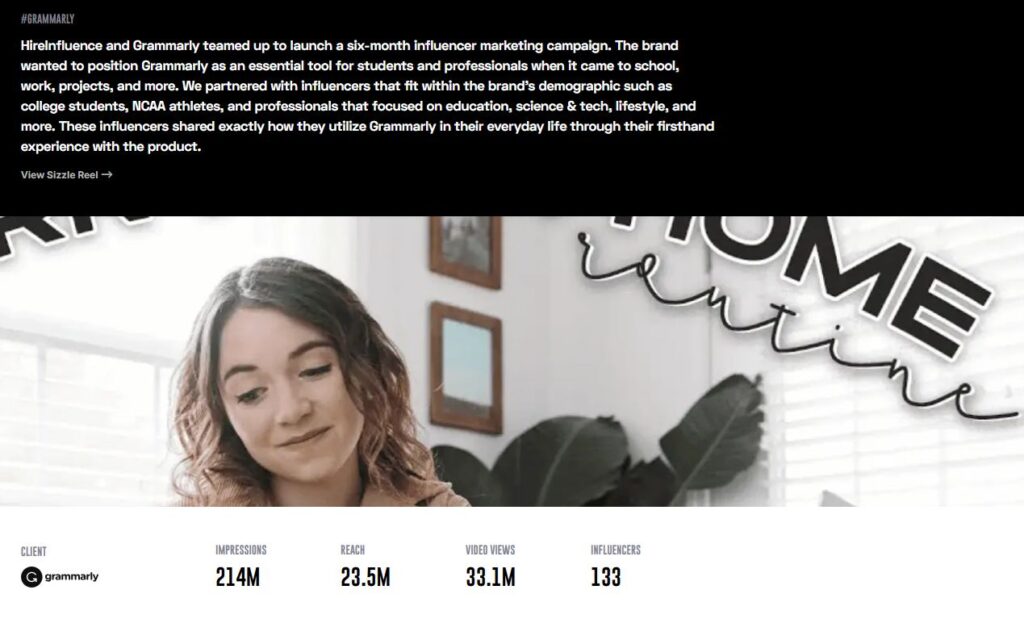
The Grammarly engagement demonstrates multi-platform celebrity-inclusive program execution at scale. The program activated 133 creators across YouTube, TikTok, and Instagram, producing 214 million impressions, 33.1 million views, and $15 million in earned media value. Running 133 creators across three platforms with celebrity-tier integration alongside smaller-tier execution requires the operational infrastructure celebrity-inclusive enterprise programs now require.
The Southwest Airlines #SouthwestSaysAloha campaign offers reach-and-cultural-authority reference relevant to celebrity execution. The program generated 56 million impressions and 3 million engagements, demonstrating the awareness scale celebrity-inclusive programs produce when creator selection, production direction, and amplification align. The work portfolio documents how the agency scales across program complexity including celebrity-inclusive tiered programs.
How Enterprise Brands Should Evaluate a Celebrity Influencer Agency
Five evaluation questions separate credible celebrity influencer agencies from general talent agencies, public relations firms, and basic creator marketplaces.
First, ask about celebrity selection methodology calibrated to brand authority alignment. Linqia’s emphasis on creative strategy as the top differentiator makes selection rigor consequential. The agency should describe how celebrity creators are evaluated for genuine brand affinity, cultural relevance, and predictive alignment beyond surface fame metrics with specific examples of celebrity selections that produced outsized program value.
Second, ask about tiered program orchestration capability. Linqia’s data establishes celebrity as a strategic top-tier within tiered programs. The agency should describe tiered program orchestration with specific examples of celebrity activations integrated across full tiered enterprise creator portfolios producing measurable halo effect.
Third, ask about creative direction balancing celebrity authenticity with brand objectives. The 81% creator-content-outperforms-brand-assets finding makes this differentiating. The agency should describe creative direction methodology with specific examples of celebrity programs that produced platform-native authentic content while serving brand strategic objectives.
Fourth, ask about brand safety and crisis response infrastructure at celebrity exposure. Celebrity creators carry concentrated brand-association risk. The agency should describe brand safety screening, monitoring, morality clause enforcement, and crisis response infrastructure with specific examples of brand safety management at celebrity-tier exposure.
Fifth, ask about attribution infrastructure at celebrity program scrutiny standards. The agency should describe attribution capability for capturing brand lift, awareness impact, cultural conversation analysis, halo effect quantification, and conversion attribution with specific examples of celebrity programs that demonstrated measurable business outcomes at the rigor enterprise CFOs require.
The Celebrity Influencer Agency Model
HireInfluence runs enterprise celebrity influencer programs across consumer categories. The agency was founded in 2011 and maintains offices in Houston and The Woodlands, TX; Austin, TX; Los Angeles, CA; and New York, NY. That national footprint (with the Los Angeles and New York offices anchored in the two densest celebrity industry markets in the country), combined with celebrity program depth built across more than a decade, positions the agency to deliver celebrity-tier execution calibrated to the tiered program dynamics Linqia documents. The about section documents how the company operates.
Engagements typically start at approximately $100,000, aligned with the enterprise delivery standard. Confirmed clients include Microsoft, Southwest Airlines, Target, Coca-Cola, Walmart, Meta, McDonald’s, Oreo, Grammarly, Ricola, and MTV. Award recognition across 2024 and 2026 includes the MUSE Creative Awards, Netty Awards, NYX Awards, Global Digital Excellence Awards, U.S. Agency Awards (Digital Marketing Agency of the Year), and Vega Digital Awards. The agency is also an exclusive TikTok Shop Lite Program partner since July 2024, providing direct access to TikTok’s commerce infrastructure for celebrity programs connecting content to measurable conversion outcomes.
Jason Pampell, Founder and CEO, launched HireInfluence in 2011. Prior to founding the company, he managed content rights and strategic media partnerships for Forbes and Billboard. His 30+ years of leadership experience in sales, marketing, and team building for Fortune 1000 organizations shaped how the agency structures celebrity influencer engagements today.
For enterprise brands ready to evaluate what a celebrity influencer engagement calibrated to current tiered program dynamics should include, the HireInfluence team handles initial conversations directly through the contact page. Brands benchmarking pricing should reference the cost of influencer marketing guide for context on enterprise engagement costs. Those evaluating TikTok-focused strategies should review the TikTok influencer marketing resource, and brands wanting context on UGC strategy fundamentals should review the UGC overview.
Linqia’s 2026 enterprise marketer survey makes the operating environment direct. 29% of enterprise marketers use celebrity creators alongside 92% using macro+micro tiers, 49% now partner with specialist influencer agencies (up from 28% in 2025), 62% of marketers are increasing creator marketing budgets in 2026, and creative strategy has emerged as the top differentiator marketers cite for selecting specialist agencies. The celebrity influencer agency decision for enterprise brands is the decision about which partner has built the capability profile the strategic celebrity-tier execution environment now requires. The brands winning in 2026 are working with partners calibrated to brand-alignment celebrity selection, creative direction supporting authentic celebrity creator content, tiered program orchestration with celebrity at the strategic top tier, brand safety infrastructure, and attribution at enterprise rigor, not those still operating on traditional celebrity endorsement models from an earlier moment in the discipline.