
Neither one alone. On TikTok, paid amplification of creator content runs on an authorisation that has a fixed term, cannot be reactivated once it lapses, and can only be extended by the creator before it expires. That makes amplification a contracting responsibility with a media output, and it needs an owner on both sides plus one person watching the expiry dates.
Table of Contents
- The authorisation is a licence, and it behaves like one
- Three authorisation paths, and only one of them scales
- What each side should own
- What the disclosure setting does and does not do
- What to ask before the scope of work is signed
- What should disqualify an agency, including this one
- Program Delivery Across Creator-Led Paid Amplification
- The HireInfluence Model for TikTok Paid Media
Brands searching for a tiktok paid media agency usually assume the decision is about media buying competence. It is not, because the failure mode on TikTok is almost never a bad buy. TikTok documents authorisation durations of 7, 30, 60, or 365 days, states that expired codes cannot be reactivated and that a new code must be generated, and specifies that a creator can extend an existing authorisation only before it expires, in roughly twenty seconds, through Ad Settings. It also publishes the error codes that result when this is mishandled, including 4025 for an expired authorisation and 900010 for an ad scheduled past the authorisation window. Those are media errors with contractual causes, and the team that can prevent them is the team holding the creator agreement.
The authorisation is a licence, and it behaves like one
Three properties of Spark Ads authorisation are worth stating plainly, because each one converts a media assumption into a contract term.
It expires, and expiry is terminal. A lapsed code cannot be revived. Recovery means going back to the creator for a new code, which means the creator has to be reachable, willing, and still working with the brand. A campaign in its final week is the worst possible moment to discover that none of those three are true.
Extension is only available before expiry. The window closes. There is no grace period documented, and the extension is a creator-side action inside their own account, not something an advertiser can perform.
Some choices are irreversible. TikTok states that the caption locks permanently at authorisation, with no edits afterwards. Private videos become public during a campaign and cannot be reverted while it is running. A video code cannot be deleted until every ad using it has been deleted. These are not settings a media team can adjust mid-flight.
There are practical ceilings as well. TikTok documents a maximum of 10,000 Spark Ads per Ads Manager account and batch authorisation of up to twenty video codes at a time, and videos must be ten minutes or shorter, with banned organic posts ineligible. Error code 4013 covers copy-and-paste damage to a code, usually whitespace, which is a genuinely common and entirely preventable failure.
Three authorisation paths, and only one of them scales
TikTok documents three ways to authorise: a linked account, a post authorisation code, and a push from Ads Manager to an identity authorised in Business Center. There are also codeless paths through Business Center account linking, which grants account-level Spark access, and through campaigns run via TikTok One and the creator marketplace.
The distinction matters for the agency question. Per-post codes are a per-post negotiation and a per-post expiry, which means a register, a calendar, and a person. Account-level linking through Business Center removes most of that overhead but requires a standing relationship and a creator willing to grant it, which is again a contracting outcome rather than a media one.
Brands should also account for a change in progress. TikTok is retiring Custom Identity in early 2026, and new campaigns must launch from a verified TikTok profile. Any agency scoping this work should be asked directly how that transition affects the brand’s existing identities, and any that has not heard of it should be treated accordingly.
What each side should own
The workable division is specific, and it can be written into a scope of work.
The influencer partner owns the authorisation lifecycle. Securing codes, recording durations, tracking expiry, negotiating extensions, and holding the creator relationship that makes renewal possible. This team should also own the disclosure position, because compensation includes in-kind: TikTok’s Branded Content Policy lists gifted product alongside paid posts, affiliate commissions, and brand-ambassador relationships.
The media partner owns the buy. Audience construction, bidding, pacing, placement, and incrementality design. Nothing about Spark Ads changes what good media buying is.
One person owns the expiry calendar. This is the seam, and it is where the money is lost. A 30-day authorisation on a 45-day flight is a failure that is fully visible on day one and fully invisible on a media plan.
What the disclosure setting does and does not do
One widely repeated claim is worth correcting because it distorts planning. TikTok ran an internal study comparing nearly two million videos with and without proper branded content disclosure and found no performance difference, and states that turning on the disclosure setting does not affect how the platform recommends content. The penalty runs the other way: commercial content that is not properly disclosed may not be eligible for distribution in the For You feed.
Two mechanics follow from this. Selecting Branded Content, meaning promotion of a third party, produces the Paid partnership label; selecting Your Brand, meaning a business promoting its own products, produces a Promotional content label. These are not the same label and are not interchangeable. And once a disclosure label has been added, TikTok does not allow it to be changed. Disclosed branded content may also be added to the TikTok Commercial Content Library where required by law, which means a post can outlive the campaign that paid for it.
What to ask before the scope of work is signed
Five questions separate agencies that have run this from agencies that have read about it.
What authorisation duration is proposed, and how was it chosen? The answer should reference the flight length. A 30-day authorisation on a 45-day flight is a failure visible on day one, and an agency that has not connected the two numbers has not built the calendar.
Who tracks expiry, and what is the warning threshold? A named owner and a lead time. Recovery after expiry means generating a new code, which requires a reachable and willing creator, so the warning has to fire while the relationship is still active.
Which authorisation path is being used, and why? Per-post codes, a linked account, or a Business Center push each carry different overheads. An agency that has not chosen deliberately will default to per-post codes and absorb the tracking burden invisibly, until it fails.
How is the Custom Identity retirement being handled? New campaigns must launch from a verified TikTok profile. Any agency unaware of this transition should be assessed accordingly.
What is the position on gifted product? Compensation includes in-kind, and a seeding programme that treats resulting posts as organic has a disclosure problem rather than a clever efficiency.
What should disqualify an agency, including this one
HireInfluence operates on a six-figure engagement floor, so brands looking for a single Spark Ads boost or a one-off creator sourcing exercise are better served elsewhere. The firm represents brands rather than creators. And brands unwilling to give one named person ownership of the authorisation calendar should expect the failure described throughout this article regardless of who is engaged, because the calendar is the job.
Program Delivery Across Creator-Led Paid Amplification
The #CoatYourThroat programme for Ricola ran with 18 influencers, and the full campaign is documented in the Ricola case study. Coordinating authorisation across a roster that size is the practical test of whether a programme has an owner for the seam described above.
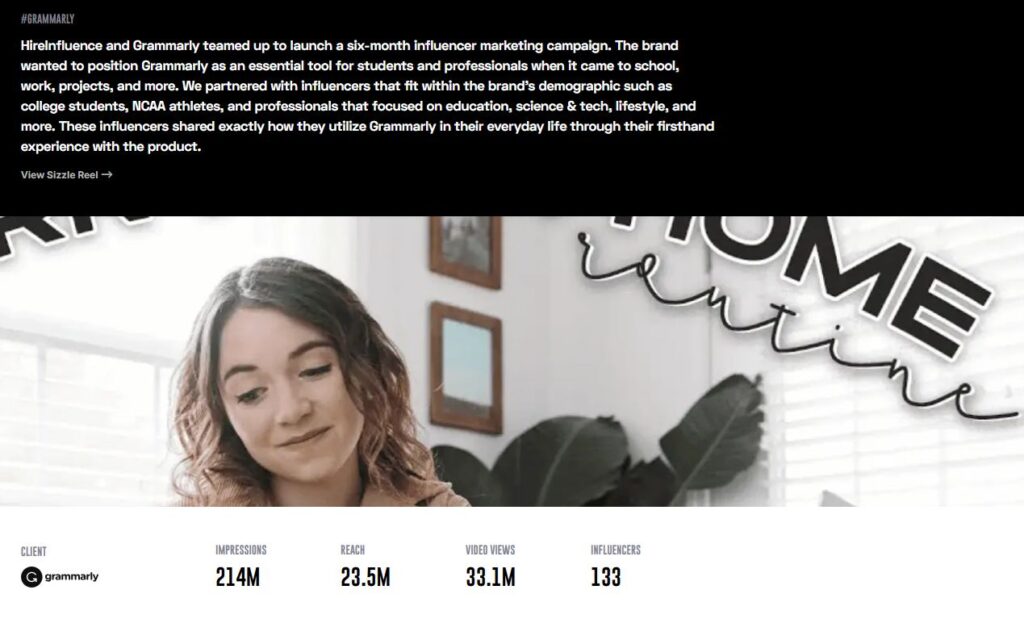
The #OREOShamROCKout programme for Oreo and McDonald’s returned 1.7M impressions at $0.06 cost per engagement, a figure that depends on creator content being cleared for paid use inside the flight window rather than after it. The Grammarly creator programme ran with 133 creators, generating 214M impressions and 33.1M views, which is a volume at which per-post authorisation tracking stops being a spreadsheet task and becomes an operational discipline.
Additional campaign detail is published in the work portfolio.
The HireInfluence Model for TikTok Paid Media
Founded in 2011, HireInfluence is a full-service enterprise influencer marketing agency with 25 or more people across 10 or more states, working from offices in Houston, The Woodlands, Austin, Los Angeles, and New York. The firm runs programs for brands including Coca-Cola, Microsoft, Meta, MTV, Southwest Airlines, and Target on a six-figure engagement floor. It was named Marketing Agency of the Year at the 2024 MUSE Creative Awards and Digital Marketing Agency of the Year at the 2026 U.S. Agency Awards, and it has been a TikTok Shop Lite Program partner since July 2024.
Brands scoping this work should read the guidance on Spark Ads as a brand amplification tool alongside the practical walkthrough of how to run a TikTok influencer campaign, because the authorisation calendar has to be built during campaign planning rather than bolted on at media handover. Scoping conversations start through contact, and the firm’s background is set out on the about page.