Brands encountering TikTok One for the first time often meet it as the place their old TikTok Creator Marketplace login now points, and that redirect is the clearest way to understand what it is. TikTok One is TikTok’s unified hub for marketers, announced in 2024 as a single login that consolidates the tools brands used to reach through separate doors: creator discovery, creative production, campaign briefing, and performance reporting, all in one environment. It is less a new product than a roof placed over existing ones, and for a brand the significance is not the branding. It is that the tools which used to be scattered now sit in one connected workflow, which changes how a creator program is run more than it changes what any single tool does.
Table of Contents
What TikTok One Actually Consolidates
The useful way to understand TikTok One is by what it gathers, because the value is the consolidation rather than any one component. Announced at TikTok’s 2024 marketing event as a one-stop hub, it brought together a set of previously separate tools behind a single login: the Creator Marketplace module for finding and partnering with creators, a Creator AI Search layer for discovery, a Partner Exchange, Symphony AI creative tools, a content suite, and unified campaign reporting. Each of those existed before in some form. What TikTok One did was remove the friction of moving between them, so that a brand can discover a creator, brief a campaign, and read the results without leaving the environment or stitching together tools that did not previously talk to each other. For a brand, that is the whole proposition: fewer tabs, one login, and a workflow where discovery, production, and measurement are connected rather than adjacent.
The consolidation carried the old marketplace’s history with it. When TikTok migrated Creator Marketplace into TikTok One, its notice to users stated that existing marketplace functionality and past campaigns would be available in the upgraded TikTok One account, and creators now reach the marketplace by going through TikTok Studio, which redirects into the hub. A brand does not lose anything it had in the marketplace by the move. It gains the surrounding tools, which is the trade the consolidation was designed to offer.
Why the Consolidation Changes How Programs Run
The reason TikTok One matters to a brand’s strategy rather than only to its logins is that connected tooling makes a particular kind of program easier to run. When discovery, briefing, creative iteration, and reporting live in one environment, an always-on creator program, one that runs continuously rather than as isolated bursts, becomes materially more achievable, because the operational overhead of moving work between disconnected systems is what used to make continuous programs expensive to sustain. TikTok has been explicit that the hub is built to support ongoing creator collaboration and faster iteration, which is a structural nudge toward creator programs that are continuous pipelines rather than one-off activations. A brand reading TikTok One correctly sees not just a tidier interface but a platform designed to reward brands that build lasting creator systems over brands that run occasional campaigns.
That structural direction is the strategic takeaway. The tools inside the hub are worth knowing individually, and the more important signal is what their consolidation is for, which is to make continuous, data-connected creator marketing the default rather than the exception. A brand that treats TikTok One as merely a relocated marketplace has noticed the door and missed the building.
Program Delivery Across Continuous Creator Programs
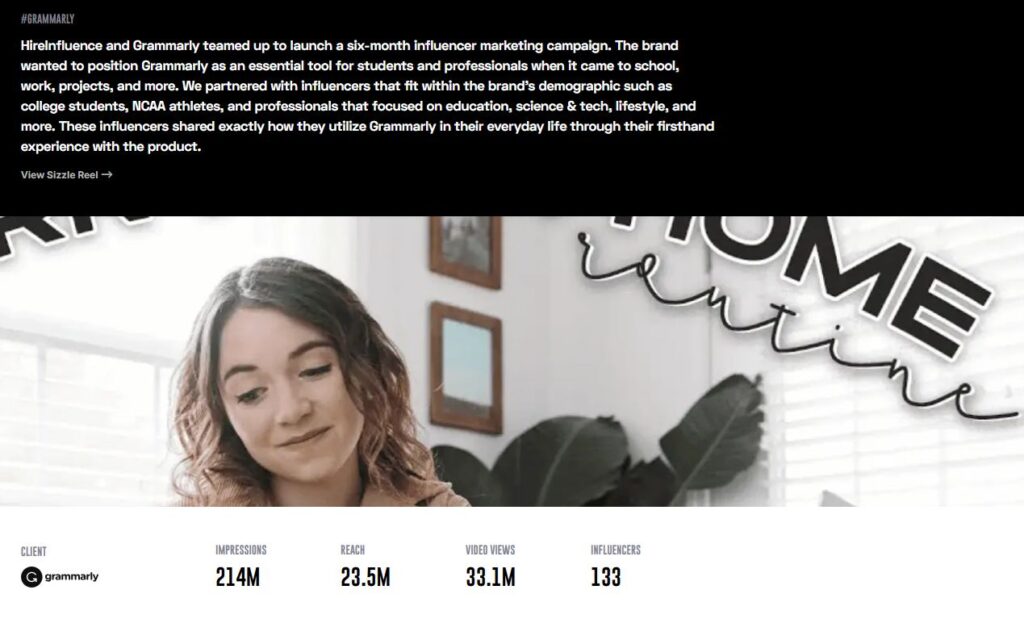
A hub built for ongoing creator programs is only as valuable as the programs run through it, which is where the roster speaks. The Grammarly creator program coordinated 133 creators to 214M impressions, 33.1M views, and $15M in earned media value, the kind of scaled, sustained collaboration a consolidated hub is designed to make manageable.
The #CoatYourThroat program for Ricola reached 20.5M people across 26M impressions with 18 influencers, sustained a 13.17% engagement rate, and drove 62,500 MikMak retail clicks, documented in the Ricola case study. The #OREOShamROCKout activation for Oreo and McDonald’s delivered 1.7M impressions at $0.06 cost per engagement, the #SouthwestSaysAloha program for Southwest Airlines produced 56M impressions and 3M engagements, and the #MyMTVStyle campaign for MTV delivered 16.1M impressions and 216,600 engagements at $0.01 cost per view. Additional programs appear in the work portfolio. A hub organizes the work, and the strategy behind the work is what turns organization into any of those results.
The HireInfluence Model for the TikTok Ecosystem
Founded in 2011, HireInfluence is a full-service enterprise influencer marketing agency with 25 or more people across 10 or more states, working from offices in Houston, The Woodlands, Austin, Los Angeles, and New York. The firm runs programs for brands including Coca-Cola, Microsoft, Walmart, Meta, Grammarly, and Southwest Airlines on a six-figure engagement floor, and it has been a TikTok Shop Lite Program partner since July 2024, which keeps its reading of the TikTok ecosystem current as the platform consolidates. It was named Marketing Agency of the Year at the 2024 MUSE Creative Awards and Digital Marketing Agency of the Year at the 2026 U.S. Agency Awards. How the tools inside the hub fit a working creator program sits in the firm’s guide to running a TikTok influencer campaign. Brands can reach the team through the contact page or read more in the about section.
Founder and CEO Jason Pampell spent years managing content rights, licensing, and strategic media partnerships at Forbes and Billboard before founding the firm in 2011, and TikTok One is the kind of consolidation that world understood as an operating advantage rather than a convenience. A publishing house that unified its commissioning, editing, production, and circulation reporting into one connected operation did not simply save its staff some walking. It made a certain kind of sustained output possible, because the friction of disconnected departments was exactly what made continuous, coordinated work expensive. TikTok One is that unification applied to creator marketing, and its real purpose is to make ongoing creator programs the practical default. A brand that reads the hub as an efficiency has understood half of it. A brand that reads it as a signal to build a continuous creator system rather than a series of one-off campaigns has understood what it is for.